
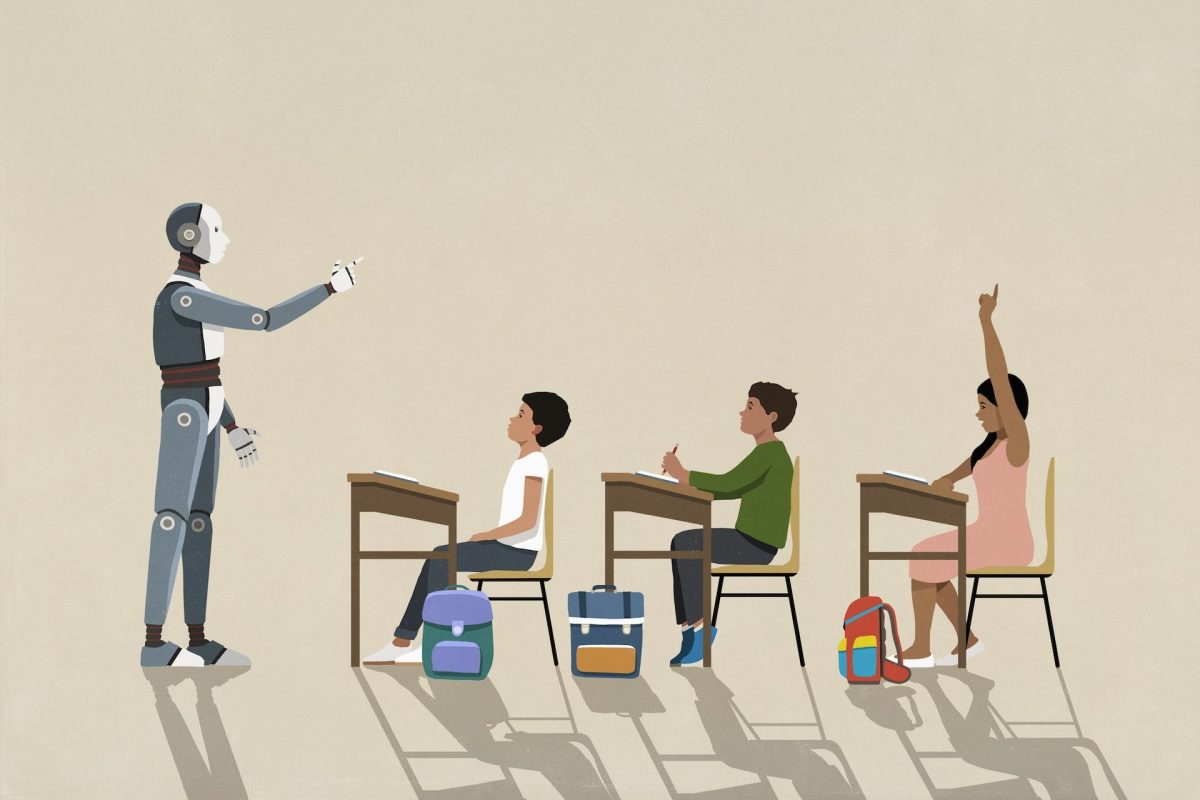

Harvard Business School (HBS) is innovating its educational approach by integrating AI avatars to deliver personalized feedback during its entrepreneurial bootcamp. This initiative aims to expand the school’s reach while enhancing learning experiences for its participants.
The HBS Foundry bootcamp, which spans eight weeks and costs $699, provides entrepreneurs with a dynamic curriculum that includes weekly live instructional sessions. However, the standout feature is the use of AI avatars developed by the startup HeyGen, which facilitate direct feedback during mock pitches and strategic meetings.
In a recent report, New York Times journalist Sarah Kessler experienced this unique setup firsthand. Kessler attempted to pitch an AI-generated avatar of Jeff Bussgang, a co-founder of Flybridge Capital. Although neither the actual Bussgang nor his digital counterpart were particularly impressed with her idea for an “Uber for bananas,” she noted that the AI version maintained a distinctly frozen smile throughout her presentation.
The project’s director, Katharina Rings, initially envisioned the AI aspect as a basic chatbot. However, following feedback from students who craved a more interactive experience, the module evolved into a more sophisticated system.
While some students have voiced skepticism towards AI, participants in the Foundry program have reported a favorable reception to the avatars. Bussgang himself admitted that while his digital twin might come off as “creepy,” he acknowledged that the students genuinely enjoy the feature.
Editor’s Take
This development signifies a transformative step in educational methods, merging technology with entrepreneurship training. By utilizing AI avatars, HBS not only personalizes feedback but also encourages innovation in how students engage with complex ideas. As this technology gains traction, it could reshape the learning landscape across various industries, enabling even more adaptive and responsive educational environments.
Source: techcrunch.com