
Google and Terradot Agreement Enables Climate Impact by 2030
In a groundbreaking initiative announced today, Google has entered its largest carbon removal purchase to date through a partnership with Terradot. This collaboration aims to deliver a substantial climate impact by 2030 by implementing innovative agricultural solutions across rice farms in Brazil. The agreement includes the purchase of one million metric tons of CO2 equivalent (GWP 20) in methane elimination by 2030 and one million metric tons of permanent carbon removal by 2040. This pioneering project represents the first of its kind to combine immediate results through superpollutant elimination with long-lasting carbon removal—all within a singular agricultural framework.
Combining Short- and Long-Term Climate Strategies
The recent UN report emphasizes the urgency of addressing two critical challenges in climate restoration: the need for short-term reductions in superpollutants like methane and the longer-term goal of substantial carbon removal. This partnership is uniquely positioned to tackle both timelines together. The near-term methane reduction efforts aim to manage peak temperatures, while strategies for CO2 removal will address longer climatic impacts. This dual approach is poised to deliver megaton-scale benefits by 2030.
Innovative Rice Farming Technologies
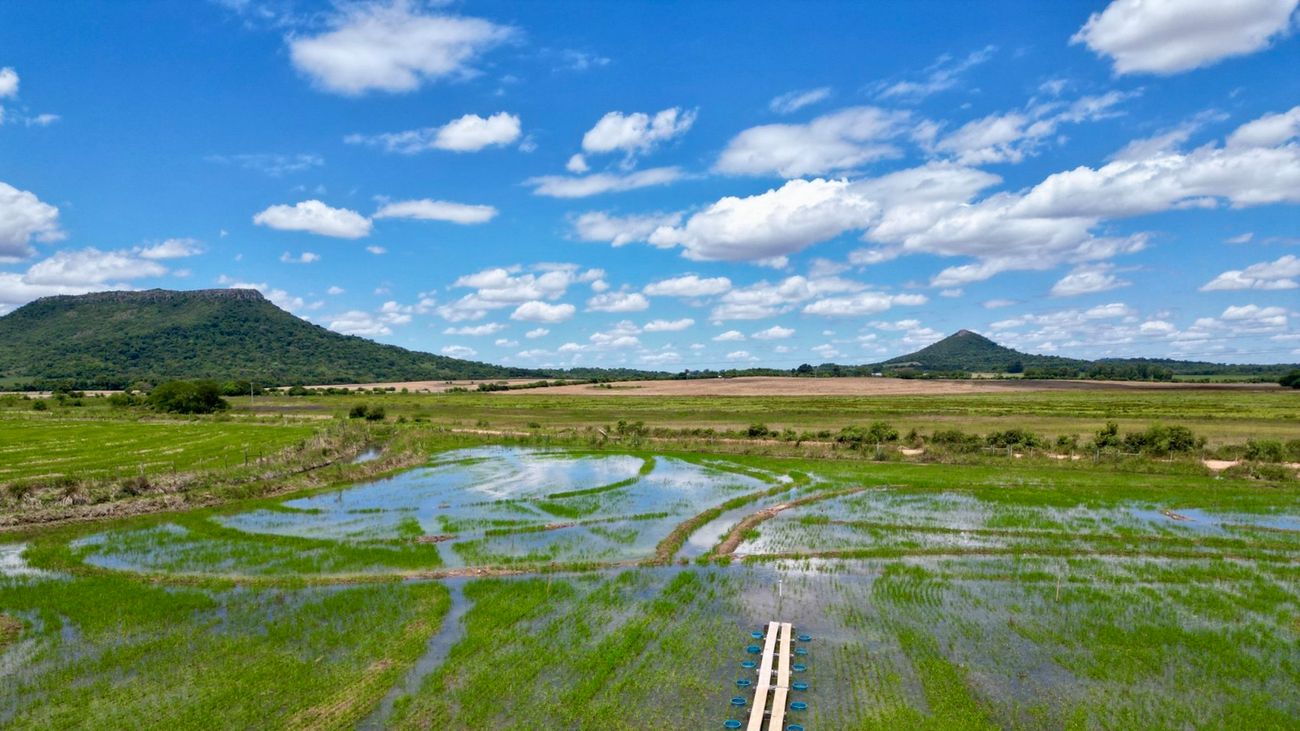
Terradot will implement two complementary technologies across more than 200,000 hectares of rice farms in southern Brazil. The first strategy, known as Alternate Wetting and Drying (AWD), involves periodically draining flooded paddies to reduce methane emissions significantly. In tandem, the use of naturally sourced crushed volcanic rock will promote Enhanced Rock Weathering (ERW), which permanently removes carbon dioxide from the atmosphere. This synergistic approach allows for immediate benefits from methane reduction, with the long-term carbon removal phase gradually taking over.
This innovative farming methodology not only impacts climate change positively but also provides agricultural advantages. AWD reduces water consumption and lowers farming costs, while crushed volcanic rock enhances soil health, benefiting local communities economically.
Blueprint for Global Climate Solutions
This collaboration represents a scalable model for climate action that could be replicated globally. With Brazil’s favorable conditions—tropical soils and close proximity to basalt quarries—this initiative could extend to the1.5 million hectares of rice currently cultivated in Brazil, and eventually to rice-growing regions worldwide. Research is also underway to explore the methane-reducing potential of AWD in diverse agricultural settings.
Google’s partnership with Terradot exemplifies the potential synergy of short-lived superpollutant abatement and permanent carbon removal. This initiative aligns with Google’s broader environmental commitments demonstrated in the 2026 Environmental Report, where the company outlines a comprehensive approach to climate solutions.
For those looking to manage multiple AI models and capabilities more effectively, explore multiple AI tools in one place can facilitate the integration of sustainability insights into various business strategies.
This partnership serves as a practical template for other buyers, suppliers, and governments aiming to maximize their climate impact and usher in a much-needed transformation in agricultural practices.