

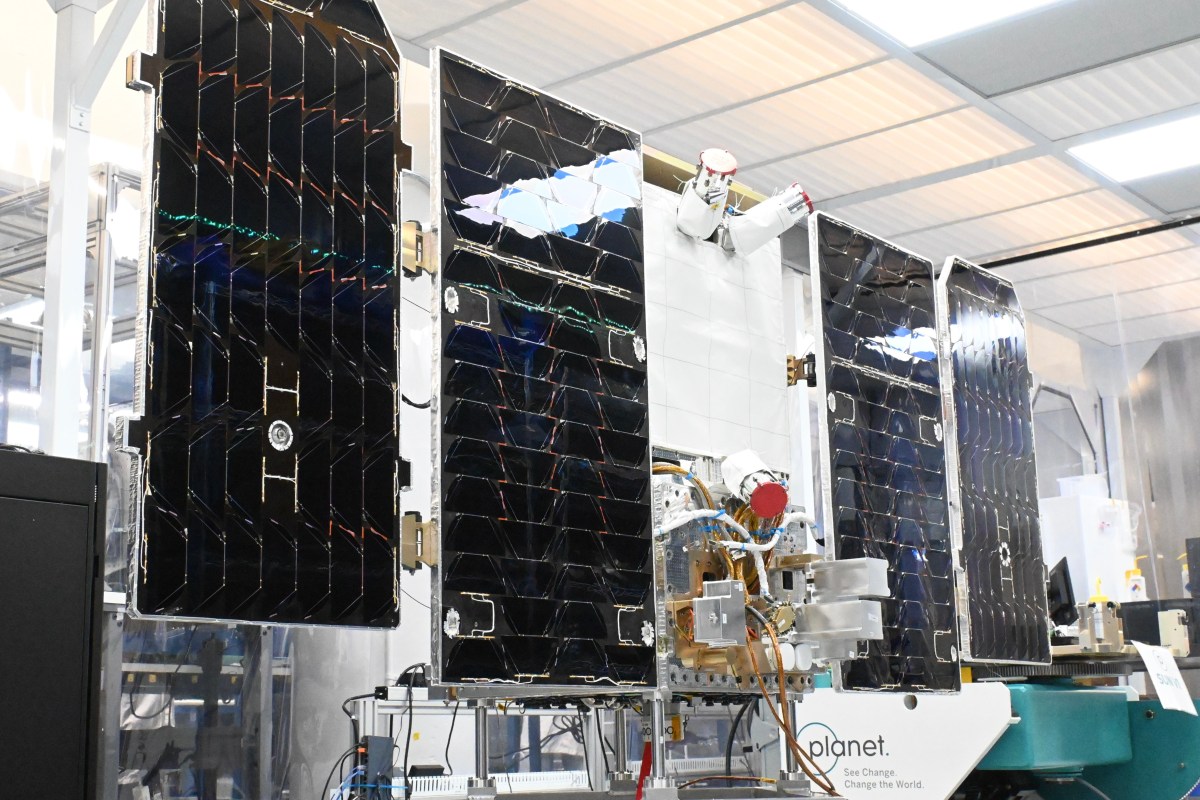

Google successfully launched its prototype orbital compute satellite aboard a SpaceX rocket from California today, marking the first instance of the tech giant sending its advanced chips into outer space.
This satellite, designed and built by Planet Labs, aims to demonstrate that a Google Tensor Processing Unit (TPU), a competitor to Nvidia‘s GPUs, can operate effectively in the unique conditions of space. The satellite is engineered to provide a kilowatt of continuous power, manage thermal conditions of the chip, and execute various models to ensure reliable performance.
“While we have conducted ground testing, there’s nothing that compares to the real conditions in space,” stated Travis Beals, the Google executive overseeing Project Suncatcher. This ambitious initiative seeks to establish large-scale computing clusters in Earth’s orbit.
Once fully operational, this satellite will activate its TPU in 15-minute intervals to prevent excess strain on its power and thermal systems. Built on a standard platform from Planet Labs, the current satellite is only a precursor; both companies are preparing a more advanced version expected to launch next year, capable of handling greater workloads and featuring a laser communication link for collaboration.
The Suncatcher satellite is one of over 100 payloads aboard this SpaceX mission, which includes other AI-focused initiatives from companies like Satlyt and Cowboy Space Company.
What distinguishes Google’s project from those of emerging startups and even SpaceX is its long-term vision. According to Beals, the goal of this “moonshot” project is to create the necessary infrastructure for future space-based AI workloads, envisioning a network of 81 satellites in close formation that can process data in parallel.
“The bandwidth and latency between TPUs are critical for running multi-rack workloads. We are not just considering today’s needs but anticipating where workloads will be in the next five years,” Beals explained. Currently, the technology required to cost-effectively scale orbital data centers is still in development.
Additionally, Google recently published a peer-reviewed white paper on orbital data centers, an important study examining the logistics of computing in space, which will appear in Joule.
While the document does not delve into economic feasibility, it presents interesting insights into Google’s perspective on the future of space access, forecasting that as rocket technology matures, launch costs will decrease significantly.
The research argues that SpaceX has achieved a price-reducing learning curve of around 20% annually since the introduction of the Falcon 1 rocket. This trajectory could potentially lead to a launch cost of about $200 per kilogram by 2035, assuming the Starship can deliver 370,000 tons into orbit over 1,800 launches in the next decade.
This is a significant challenge, especially considering that SpaceX has yet to exceed five launches within a single year. Founder Elon Musk has suggested that Starship may be capable of achieving remarkably high flight frequencies by 2029, although past assertions from him have been met with skepticism.
On a positive note, Google’s updated findings indicate that its chips are likely to endure the harsh radiation of space. Although testing revealed a need to resample chip configurations for better shielding, the company remains optimistic that the chips can manage substantial inference workloads throughout the five-year lifespan of the satellite.
“For typical inference operations, the error rate is very low, at around one in a million,” Beals commented. “However, challenges may arise with large-scale training runs that could involve numerous chips over extended periods.”
Correction: The initial headline misrepresented the required Starship launches as 1,600; the correct figure is 1,800.
Editor’s Take
This groundbreaking development positions Google as a serious player in the future of space-based computing. By testing its technology in orbit, the company is laying the groundwork for advanced AI workloads that could redefine data processing in space. This may herald a new era for businesses relying on AI and large-scale computing, driving innovations that can benefit a variety of fields, from research to satellite communications.
Source: techcrunch.com