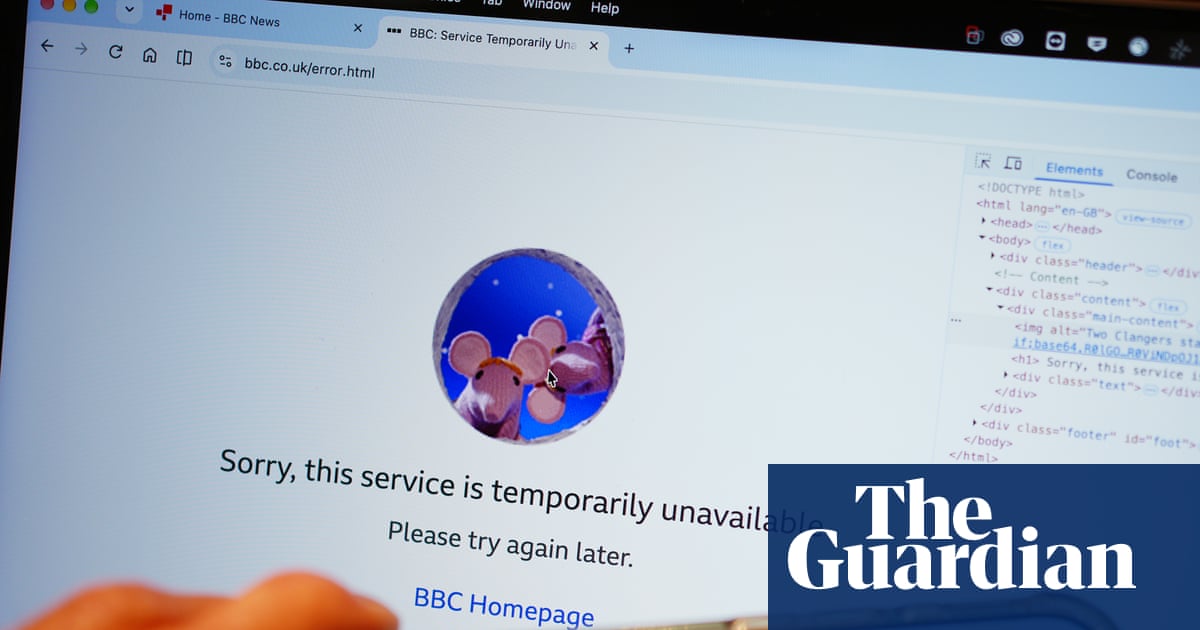

Recent reports indicate a significant global cyber threat as websites worldwide have experienced an overwhelming number of attempts to exploit a newly identified flaw in the PHP programming language. This vulnerability, which affects approximately 70% of the internet, has raised alarms among cybersecurity experts, with the US government warning that it could allow malicious actors to take control of web servers, extract sensitive information, and disrupt online services.
The issue emerged on a Wednesday, prompting various governments and organizations to hastily take their websites offline to safeguard against potential attacks and implement necessary updates. In the UK, the cybersecurity minister, Liz Lloyd, reported that 32 government services were temporarily deactivated as a precautionary measure. She reassured parliament that no critical public services faced compromise, although some limited functions were briefly offline.
Notably, the BBC saw its site for the show “Traitors” go down, while the National Cyber Security Centre (NCSC) alerted around 50,000 associated organizations about the vulnerability. However, they reported no confirmed cases of successful hacking incidents resulting from the flaw. Other platforms like the Internet Archive, Wikipedia, and 4Chan also faced interruptions.
The NCSC expressed particular concern for vulnerable sectors such as educational institutions and charities, which may lack robust cybersecurity resources to effectively implement the necessary fixes. The scale of this vulnerability was described as “unprecedented,” and older systems may require replacements rather than simple patches. The British Chambers of Commerce stated that, as of now, the situation has not severely impacted businesses.
Ciaran Martin, former CEO of the NCSC, labeled the vulnerability as “very bad,” highlighting that, while numerous software vulnerabilities exist, this is among the most serious detected in the past five years. He echoed concerns that state-sponsored actors from countries like Russia and China could seek to exploit the flaw.
Despite the severity of the situation, researcher Ryan Austin from the cybersecurity firm Calif noted that widespread exploitation had not yet been observed. However, Matthew Prince, CEO of CloudFlare, reported tens of thousands of exploitation attempts within mere minutes of the announcement, escalating to millions shortly thereafter.
Another cybersecurity entity, Amazon Threat Intelligence, indicated that the vulnerability, dubbed PHP2Shell, was seeing widespread attempts at exploitation, with various entities seeking methods to leverage the flaw before the official patch was rolled out.
The NSA described PHP2Shell as a critical security concern that necessitated immediate patching across US governmental agencies. In response, the government in South Korea activated emergency measures, raising the cybersecurity alert level and advising numerous companies on remedial steps. Similarly, China’s Ministry of Industry urged organizations to inspect their systems promptly and upgrade to the secure version of PHP.
As the situation evolves, experts continue to monitor the vulnerability’s impact on both public and private sectors, considering the potential for cybercriminal groups and state hackers to exploit the weakness for nefarious purposes. Many sites still remain unaware of whether they have been compromised, further complicating the threat landscape.
Editor’s Take
The discovery of this PHP vulnerability highlights significant risks not only for websites but for the broader digital ecosystem. As many systems may lack the updates required, this could lead to increased incidents of data breaches or disruptions. For users and businesses alike, vigilance and prompt action for updates will be crucial in mitigating these threats. Developers must also consider the implications for legacy systems that may be at greater risk.
Source: www.theguardian.com