

Georgia Convenes Emergency Meeting on AI Risks to Voter Privacy in 2026 Midterms

When citizens head to the polls, the expectation is clear: their votes should remain confidential—from family, neighbors, and government authorities alike. However, recent investigations into the potential capability of artificial intelligence raise profound concerns about the privacy of these ballots.
In a recent study, Max Springer, a postdoctoral fellow at Princeton University’s Center for Information Technology Policy, examined the feasibility of linking voters to their ballots in Georgia. With merely a $20 subscription to an AI large language model and public records accessed through an Open Records Act request, Springer found a shocking way to identify votes. “Within a couple of hours, I set up a pipeline that could analyze and trace secret ballots throughout the state of Georgia,” he stated. “The AI did not hesitate to provide information needed to pinpoint real voters’ ballots.”
This alarming discovery has prompted significant concern from Georgia’s election officials, particularly as early voting approaches for crucial midterm elections that could shift control of the US Congress. The integrity of ballot secrecy is recognized as a vital democratic safeguard, shielding voters from manipulation or coercion. However, Springer’s findings indicate that AI could compromise this secrecy using publicly available election information.
In response to these revelations, Georgia’s State Elections Board convened urgently to address the implications of artificial intelligence making voter identification easier through ballot codes. Brad Raffensperger, the outgoing secretary of state, took immediate action to secure tabulation data, instructing the public release to redact ID numbers post-election. According to Ben Adida, a cryptographer trained at MIT and founder of the election technology non-profit VotingWorks, this measure “substantially addresses” the vulnerability.
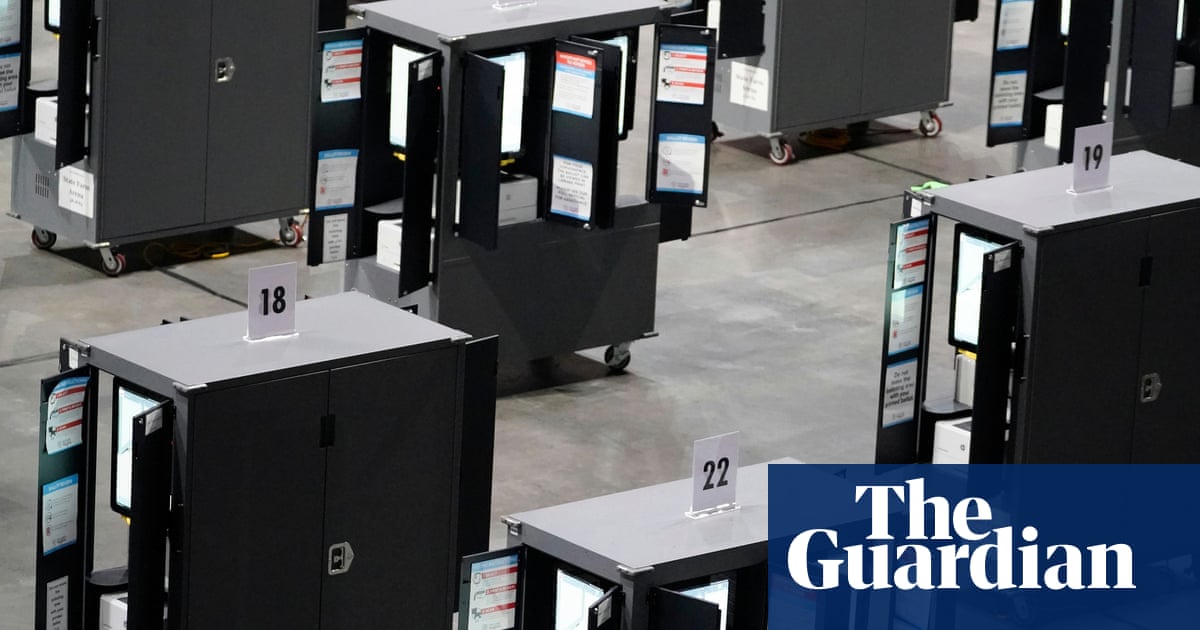
The voting process in Georgia involves voters selecting candidates on a touchscreen, which then prints out a paper ballot that is fed into a scanner for tabulation. Each ballot is assigned a unique identifier, creating a digital record known as a cast vote record (CVR) at the time of scanning. However, the method used by the machines to record these ballots is not sufficiently random, leading to privacy concerns.
By utilizing AI, Springer claims he could reconstruct the voting sequence for approximately 1.52 million ballots—representing nearly 99% of in-person votes across 114 counties he analyzed. He noted that in certain counties, he could identify the exact ballot cast by every voter—rendering ballot secrecy entirely ineffective.
Significantly, past research had already identified vulnerabilities in Georgia’s voting software, which could link voters to their secret ballots. The allocation of identifying numbers to each ballot initially aimed to prevent dishonest practices, but combining the ballot order with other data could allow specific votes to be matched to voters’ identities.
Officials from the secretary of state’s office have expressed concerns about the persistent issue, citing unresponsiveness from legislative funding requests needed to improve Georgia’s voting systems. Various proposals for system upgrades have seemingly been dismissed amidst political tensions within the state, particularly involving Raffensperger and individuals aligned with Donald Trump.
The legal landscape in Georgia creates a complex situation. The state’s constitution mandates a secret ballot, which is legally protected, yet transparency in election records also compels accountability. To counteract potential exploits, board member Salleigh Grubbs suggested a proposal requiring poll workers to randomized ballots, but the suggestion met resistance from other board members who voiced concerns about logistical challenges.
With early voting imminent, significant changes to election processes now appear increasingly unlikely. As one official stated, addressing these vulnerabilities now is “a day late and about $30 million short.”
Editor’s Take
This development underscores the urgent need for robust security measures in elections as artificial intelligence technology advances. If not properly addressed, vulnerabilities like these can erode public trust in electoral systems, posing risks not just to individual privacy but also to the integrity of democratic processes. Stakeholders, including government officials and tech developers, must collaborate to safeguard voter confidentiality amidst growing technological capabilities.
Source: www.theguardian.com