
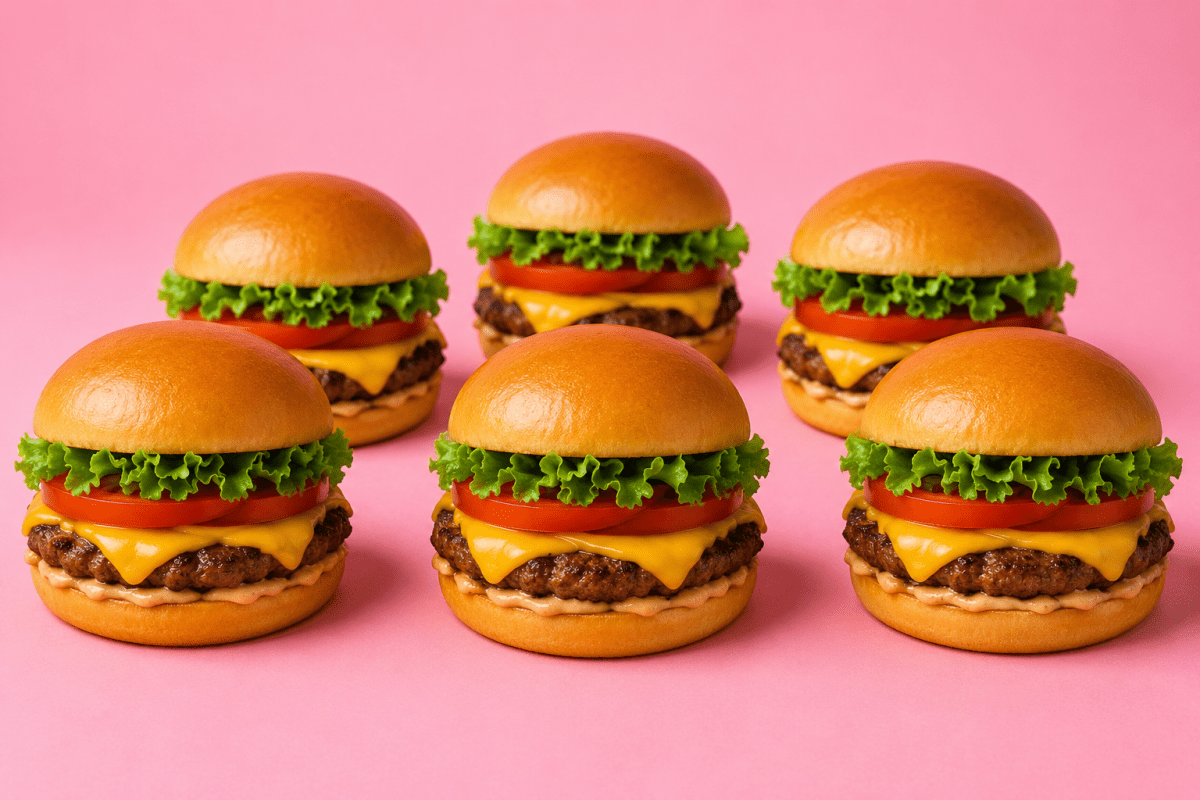

As diners step into restaurants these days, they might notice that the digital menus featuring Generative AI seem strikingly surreal. The vibrant illustrations of bagel sandwiches or burritos often spark an unsettling feeling, as they may appear overly idealized and unnaturally polished. This phenomenon, where the aesthetics of food images generated by AI feel ‘off’, is becoming increasingly common in the culinary world.
Some AI-generated food illustrations are so exaggerated that they resemble abstract art rather than inviting meals. Others present a deceptive normalcy, with only a closer inspection revealing something amiss, according to social media commentary.
“It’s almost like an alien trying to make a pizza without understanding its core principles,” remarked Alex Lisle, CTO of Reality Defender, in a discussion with TechCrunch. This observation highlights a growing concern within the culinary landscape, where AI detection and content verification tools are gaining traction as a response to such issues.
Lisle explains that the models behind these illustrations adopt a specific aesthetic, characterized by an uncanny portrayal—think of perfectly round ice cream scoops and oddly shaped shrimp—leading some to refer to it as the emergence of “Lovecraftian food horrors.”
Large Language Models (LLMs) and diffusion models, essential for the functioning of advanced chatbots and image generators like ChatGPT and Midjourney, rely on massive datasets to identify user preferences. However, as Lisle pointed out, “A lot of this stuff looks like a Chili’s menu from 2015,” stemming from the limited corpus these models draw from.
To add, companies like Amazon are constantly seeking new training data, even resorting to rare books for scanning, which they may destroy after extracting the necessary information. This process raises concerns about the potential for AI-generated content to infiltrate larger datasets, leading to what’s known as model collapse—a significant concern as AI systems attempt to optimize their own outputs.
“Model collapse is almost like a mad cow disease… once the outputs from one model feed back into itself, the inbreeding could render the entire system ineffective,” explained Lisle. Although there is a distinction between model collapse and a less severe phenomenon known as convergence, which still diminishes the quality of outputs.
For instance, when an AI is prompted to create a fast-food restaurant menu, it typically draws upon existing popular menus, such as those from Wendy’s, Burger King, or McDonald’s. This similarity in design further reinforces the style, creating a cyclical limitation in creativity.
AI-generated food imagery often appears more appealing than the actual dishes, reminiscent of meticulously arranged fast-food advertisements. However, this effect can become exaggerated in AI outputs, making the representations increasingly unreal.
As noted by Lee Rainie, Director of the Imagining the Digital Future Center at Elon University, the tendency to optimize data sets for non-offensive and aesthetically pleasing outputs leads to a homogenization of creativity. The AI’s ability to “shave off the edges” results in polished images that can lack authenticity.
An experiment conducted by a user known as Labtec on a social media platform demonstrated how frequent edits to an AI-generated menu led to increasingly surreal food imagery. The discomfort felt by the user underscores a broader unease toward AI-driven creations.
Restaurants are also grappling with this issue, as their attempts to revise AI-generated menus—altering prices or item names—can inadvertently lead to images that feel progressively more unrealistic and unsettling.
“People possess an inherent, often unarticulated awareness when viewing AI-generated content,” Rainie observed, suggesting that this perceptual discomfort contributes to the backlash against AI menus.
Research from the University of Duisburg-Essen has illuminated this phenomenon, revealing an “uncanny valley” effect where images that are nearly lifelike provoke more disgust than clearly artificial images. The increasing societal discomfort with AI-created visuals only amplifies this reaction.
With growing unease around these AI menus, restaurants may need to reconsider their strategies. The implications of idealized visuals stretch beyond consumer experience, prompting a reassessment of what constitutes authenticity in the digital age.
“Seeing and hearing has always been believing,” asserted Lisle, underscoring how shifts in the authenticity of visual content have profound implications, potentially disrupting traditional evidentiary standards in society.
Editor’s Take
This development highlights a critical intersection between technology and consumer perception. As more businesses utilize AI for content creation, understanding how these algorithms shape consumer trust and emotional responses will be paramount. The perceived authenticity of food imagery is a critical factor in the dining experience, and failure to recognize this could lead to consumer backlash, impacting brand loyalty and revenue streams.
Source: techcrunch.com