

A small Swiss enterprise, Freesuns, is contemplating a move to expand its operations into the United States market. Deborah Learoyd, the company’s CEO and managing director, reports an impressive sales growth of 20-30% since its inception in 2019.
Currently, the manufacturing of solar roof components occurs in smaller batches, which limits economies of scale and standardization. However, flexible manufacturing techniques may offer some relief from these constraints.
Learoyd highlights that while production costs for Freesuns products are gradually decreasing, the unique nature of each roof contributes significantly to expenses. “A lot of the cost is actually the fact that every roof is a little bit different,” she explains. This uniqueness necessitates individualized engineering and installation approaches.
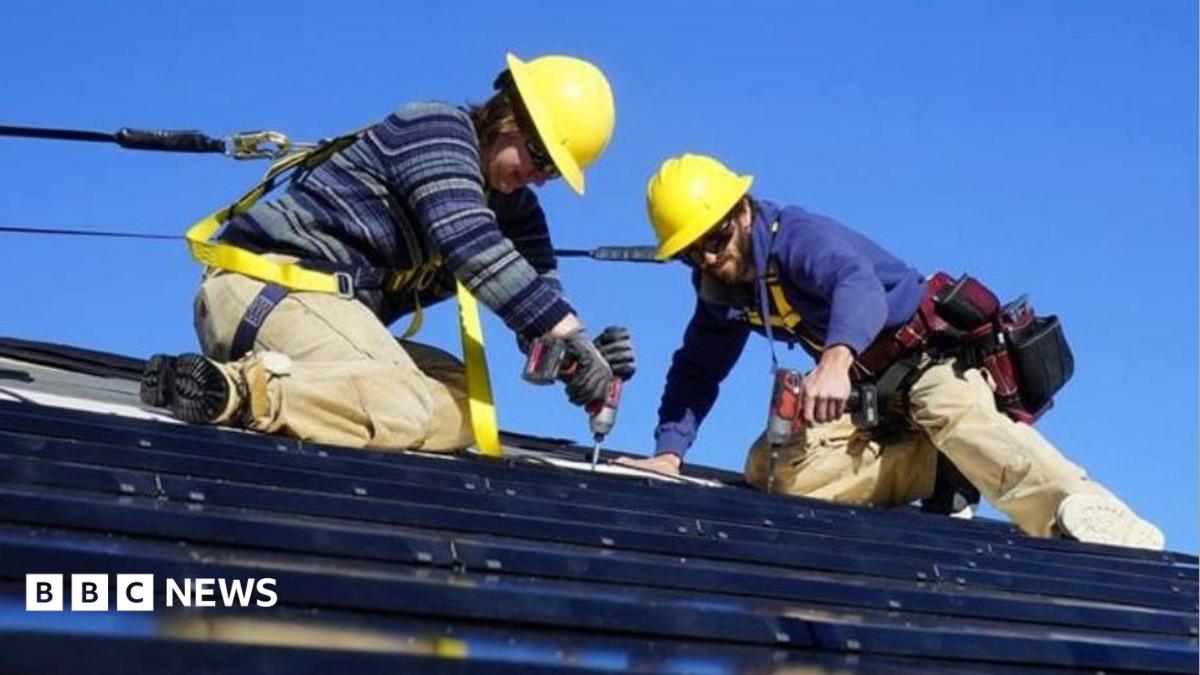
The installation of solar roofs typically requires a collaborative effort among roofers, solar installers, and electricians. This level of coordination is complicated by building regulations that are often more intricate compared to those governing traditional solar panels.
This added complexity can negatively impact roofing businesses, as noted by industry expert Collardson. “You try to put a roofer into the equation and they’re going, ‘This is taking forever. I’m losing money. I could have sold 10 roofing jobs in the time that it takes me to sell this one’,” she elaborates.
Furthermore, repair costs for solar shingles can exceed those for standard photovoltaic (PV) systems. Collardson elaborates, “With traditional solar, we generally have electronics on the panel and a map that shows us exactly how much each panel is producing. So when something goes wrong, it’s easy to spot where.” In contrast, the lack of electronic mapping under solar shingles complicates troubleshooting.
Despite the challenges, thermal cameras can be utilized to diagnose issues. However, accessing problematic spots on the roof can be risky. “You can remove the one in the middle of the array, but you have to walk on the others, and you really shouldn’t walk on them because you’re going to create micro-fractures, and that’s going to cause issues down the road,” she warns.
Before factoring in repair expenses, a solar roof may come with a price tag that is double that of traditional solar panel systems.
Editor’s Take
The expansion plans of Freesuns into the U.S. market underscore a growing demand for innovative solar solutions. As challenges around installation and cost persist, understanding these dynamics is vital for both consumers and industry players. This situation may pave the way for more streamlined collaborations and advancements in solar technology that benefit a wider audience.
Source: www.bbc.co.uk