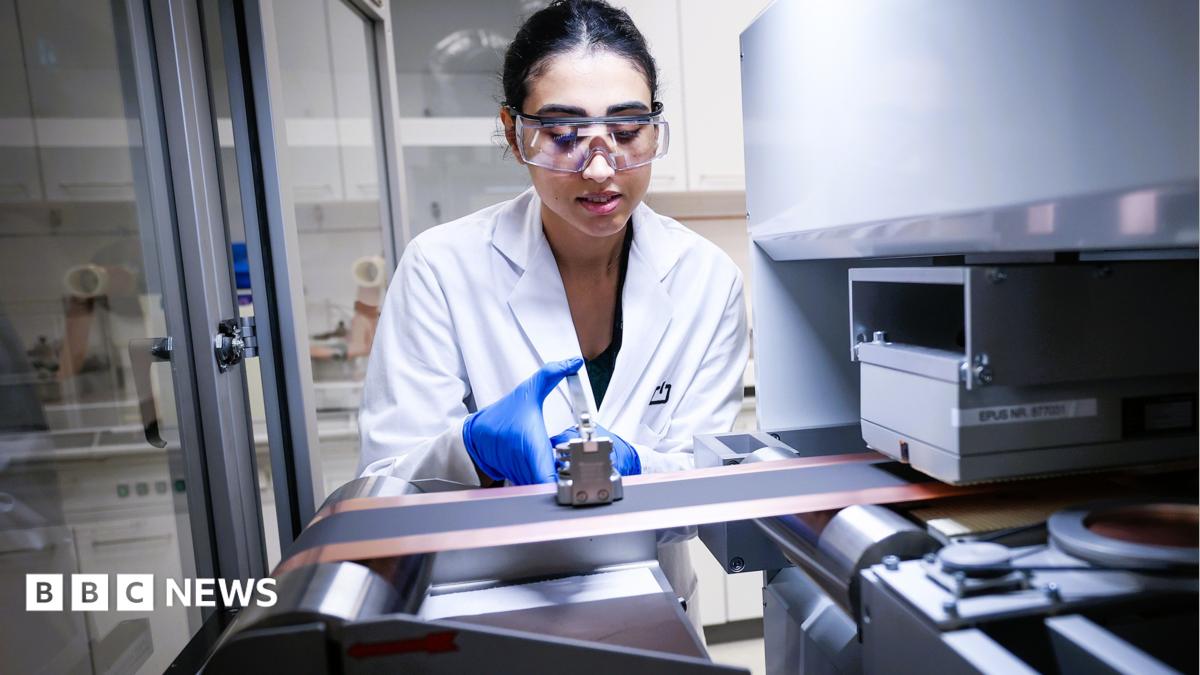

Companies like LeydenJar and Powall are not seeking to create entire batteries but instead focus on significant aspects of battery technology. Both firms maintain commercial ties with clients in Asia.
Christian Rood from LeydenJar believes that businesses like his could strengthen Europe’s role in what has become a global competition in battery technology. “The simple analogy is with semiconductors, where there’s a race for the best chip technology,” he explained, drawing parallels with ASML—a Dutch technology giant that specializes in a crucial phase of chip production without manufacturing the chips themselves.
Rood aspires for LeydenJar to create a distinct position in the supply chain, making its battery anode unique enough to secure a significant role in the industry.
But how does this ambition intersect with Europe’s overall objectives in the battery sector? According to Alexander Brown, a senior analyst at the Mercator Institute for China Studies in Berlin, having key segments of the supply chain in Europe is advantageous. He notes, “If that can be a highly advanced technological part with the potential for high margins, that’s fantastic.”
However, Brown warns of the ongoing efforts by China to lessen its reliance on other regions, emphasizing a dual approach of both collaboration and competition. “China is actively working to develop local alternatives for technologies, including niche markets,” he remarked, suggesting that the nation is keen to replace technologies currently dominated by Western companies such as ASML.
He highlights Europe’s traditional strengths in producing high-quality products that can find global markets but stresses that this should not be the only strategy pursued by policymakers.
Operating in such a specialized field brings its own set of challenges. While LeydenJar has achieved commercial scale, Rood points out that securing funding within Europe can be complex. “There is ample funding available, but the risk appetite differs considerably from that in Asia and the US,” he remarked.
He explained that companies like his often need to explore various funding sources simultaneously—government grants, debt financing, support from the European Investment Bank, and investors keen to acquire a stake in the business. “These sources set challenging conditions, with each requiring due diligence; it’s a labor-intensive process,” Rood added.
On a positive note, Powall’s Colen sees Europe, specifically the Netherlands, as an “innovation powerhouse,” stating that battery technology presents a remarkable opportunity for the continent. “This is a relatively nascent industry with new factories emerging everywhere. They are on the lookout for the right technology, which opens up vast opportunities,” Colen highlighted.
Perhaps, rather than establishing extensive battery manufacturing facilities, Europe’s competitive edge might be found in smaller-scale innovations. As Colen aptly stated, “small changes make big differences.”
Editor’s Take
This shift in focus toward specialized battery technology could redefine Europe’s role in the global energy landscape. By honing in on niche innovations, European firms may not only enhance their competitive advantage but also contribute to broader sustainability goals. For companies and developers in the sector, this suggests a future ripe with opportunities for collaboration and technological advancement, ultimately benefiting global consumers.
Source: www.bbc.co.uk