


Augustus Doricko, CEO and founder of Rainmaker, is well-prepared to discuss the implications of his company’s use of the silver iodide compound. His familiarity with questions regarding chemical safety is evident.
According to Doricko, Rainmaker disperses silver iodide at a rate of 20 grams per flight, covering expansive areas. He emphasizes that the resulting ground concentration is in the parts per quadrillion, which is significantly below the threshold established by the FDA for safe exposure.
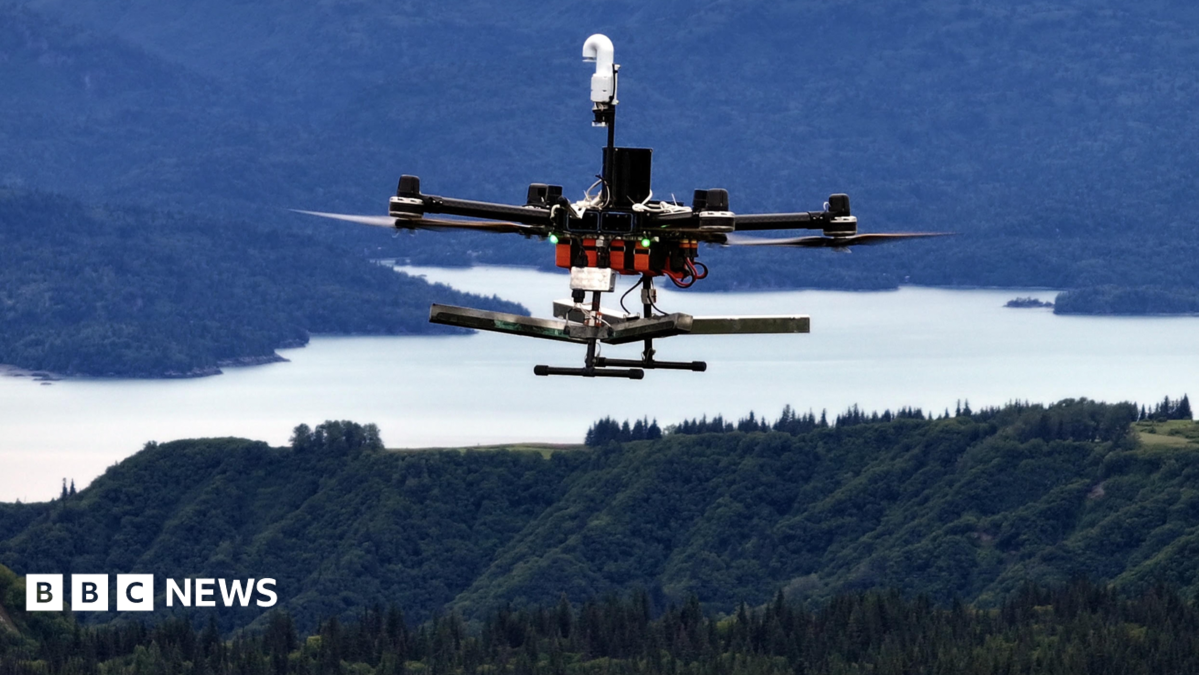
The company employs drones to ascend into cloud formations, which are essential for their cloud-seeding efforts. Doricko states, “Without clouds, we can’t do anything,” underscoring a fundamental limitation of cloud-seeding technology that relies on the presence of clouds to induce precipitation.
Equipped with silver iodide flares, the drones ignite the compound, which atomizes water particles into smaller sizes that can remain suspended in the cold clouds for extended periods. These particles eventually form crystals and, ultimately, rain.
Rainmaker operates in several states, including Idaho, Utah, and Colorado, as well as in regions facing severe water shortages such as Jordan. Doricko points out the dire water scarcity in Jordan, noting that residents often receive running water only a few hours a week, making their work in the region particularly meaningful.
The practice of cloud seeding dates back to 1946, when researchers at the General Electric Research Laboratory first used dry ice as a seeding agent. A year later, silver iodide was identified as a more effective alternative, as dry ice rapidly degrades without producing any useful results.
While seeding agents have been shown to enhance rainfall, their overall impact remains modest. Jon Meyer, assistant state climatologist at the Utah Climate Center, states that under optimal conditions, cloud seeding can yield an additional five to ten percent of precipitation.
Notably, a significant study in 2017 provided encouraging evidence for the cloud-seeding sector, confirming that silver iodide performs as anticipated. This report was among the first to employ radar and precipitation gauges to observe cloud seeding in action.
In recent years, Meyer has observed increased innovation within the cloud-seeding industry, particularly with the introduction of drone technology. “Drones like those used by Rainmaker present new opportunities,” he remarks, “offering a more targeted approach to engaging with responsive clouds.”
Editor’s Take
The advancements in cloud-seeding technology, particularly through drone deployment, highlight a significant evolution in addressing water scarcity issues. This innovation could redefine how we manage water resources, with potential benefits for both arid regions and agricultural sectors. As companies like Rainmaker push the boundaries of traditional methodologies, the entire industry may see transformative changes that enhance water availability and security.
Source: www.bbc.co.uk