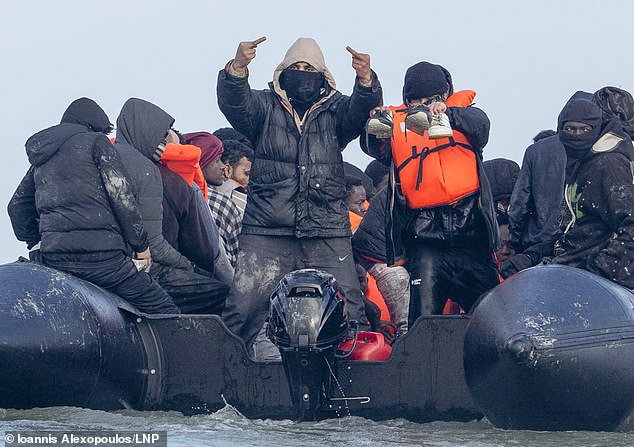
Daniel Hannan: Visual Representation of the Migrant Industry’s View on Taxpayers

Recent discussions surrounding immigration in the UK have been ignited by a controversial image published in the Daily Mail. The photograph depicts a dinghy carrying illegal migrants across the Channel, with one individual displaying a provocative gesture towards the camera, encapsulating the prevailing perceptions of entitlement and disdain.
Such imagery is indicative of broader issues within the UK’s immigration system. Critics argue that the current approach creates conditions where new arrivals respond with contempt, fueled by a perception of a broken and exploitable system that often seems to prioritize the needs of migrants over those of citizens.
In this context, a recent report has revealed that the new provisions under the Employment Rights Act now allow illegal immigrants to take legal action against employers who hire them. This raises significant questions about the balance between labor rights and immigration enforcement.
According to the Equality and Human Rights Commission, employers are mandated to take “all reasonable steps” to safeguard employees from harassment, even in cases involving undocumented workers. This has led to concerns that the essence of citizenship—rights and responsibilities—may be compromised.
Moreover, there have been instances where non-nationals have been granted rights typically reserved for citizens, as seen in a recent tribunal ruling favoring a Malaysian migrant in a discrimination case, despite the individual lacking legal work status in the UK.
The philosophical foundation of citizenship, articulated by 17th-century thinker John Locke, posits that society is built on a mutual agreement among its members to adhere to laws and respect property rights. The distinction between nationals and non-nationals is critical to maintaining this social contract.
However, the current landscape, where privileges can be claimed by individuals who have circumvented immigration laws, challenges this foundational principle. Citizens who contribute to society through taxes and other responsibilities may find their benefits diminished, as rights appear to be extending to those without valid status.
Migrants arriving illegally, particularly across the Channel, often do so by exploiting loopholes or engaging in deceptive practices, which casts doubt on their respect for the UK’s legal framework. This raises important questions about national integrity and the perception of foreigners within the community.
While the UK has implemented effective systems for controlling immigration via air travel, maritime law complicates this effort, requiring the rescue of distressed vessels. Critics argue that this leads to a mismanagement of policy that grants easy passage to those entering the country illegally.
Many believe that immigration policy is overly influenced by judicial activism, which often hinders governmental attempts to enforce immigration law. There is broad consensus across political parties regarding the need to address unauthorized crossings, but significant reforms face challenges.
To effectuate real change, some argue that the UK may need to reassess its international commitments, potentially withdrawing from various human rights conventions that impede the enforcement of its own immigration laws.
Proposals have emerged advocating for a reevaluation of refugee status, suggesting that discretion should reside with the Home Secretary to determine annual admission numbers. This approach aims to balance national interests with compassion for those in need, though it raises questions about its fairness to applicants.
As the immigration debate continues to evolve, it becomes increasingly important to understand the implications of current policies on the citizens and the country’s identity as a whole.
Editor’s Take
This ongoing discussion about immigration is critical as it highlights the tension between maintaining national integrity and providing humanitarian support. The evolving legal landscape could lead to significant changes in how immigration is managed in the UK, impacting businesses, citizens, and migrants alike. The potential shift in policy underscores the need for a balanced framework that respects both rights and responsibilities.
Source: www.dailymail.com