Bomb Threats Force Emergency Landings of Four European Flights, Two from Britain

Emergency Landings Across Europe in Response to Bomb Threats
Four flights, including two from the UK, were compelled to make emergency landings at various European airports today following reported bomb threats.
Two flights en route to Poland were affected, alongside one in Spain and another in Bulgaria. The incidents unfolded on Tuesday, creating a significant safety alert within the aviation community.
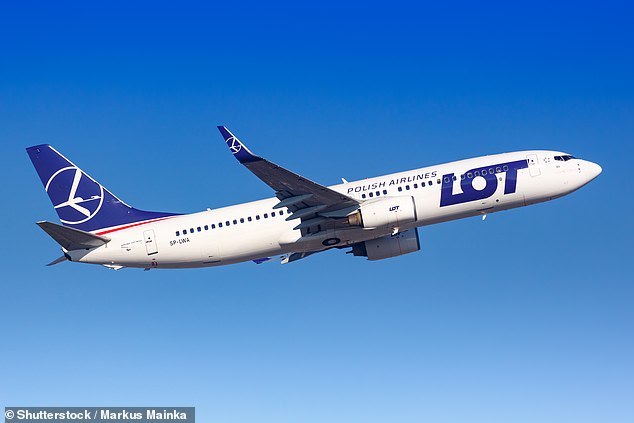
A LOT Polish Airlines passenger flight took off from Heathrow Airport in London this morning, heading towards Warsaw-Chopin Airport. However, it was diverted to Warsaw-Modlin Airport at approximately 9:54 AM local time due to the bomb threat.
Another alert was registered on an SAS flight traveling from Copenhagen to Warsaw, which successfully landed at Chopin Airport and was undergoing security checks, as confirmed by a spokesperson.
In Spain, a Ryanair flight from Manchester to Murcia also reported a bomb threat, while Bulgarian media indicated that a flight from Israel was grounded in Sofia following an emailed threat.
The relationships among these incidents remain unclear. The Boeing 737 MAX 8 safely landed at Warsaw-Chopin Airport at 10:01 AM, where security forces initiated a verification process regarding the threat, according to a statement from Warsaw-Modlin Airport.
As a result of the alerts, Warsaw-Modlin Airport is temporarily closed. An official statement emphasized, “The safety of passengers, crew, and airport employees is currently the highest priority.”

A LOT Polish Airlines flight from Heathrow was forced to land following a bomb threat
Reports indicate that the flight contained around 118 passengers. Furthermore, a runway at Chopin Airport has been closed as a precautionary measure.
Warsaw is served by two airports: Chopin, located within city limits, and Modlin, approximately 22 miles from the capital, primarily catering to budget airlines.
The Ryanair flight carried 121 individuals, including crew members, according to comments from Francisco Lucas, a government delegate in the Murcia region.
A spokesperson for LOT Polish Airlines confirmed the notification of a potential security threat aboard its flight LO286 from London to Warsaw. The aircraft was diverted and subsequently landed at Modlin Airport. Relevant authorities are currently assessing the situation as per established security protocols.
This development follows an incident just a day prior when a fighter jet escorted a Wizz Air passenger plane from London to Bulgaria due to a similar threat. In this case, a Hungarian Gripen fighter jet was dispatched, ensuring the aircraft’s safe landing at Budapest Airport.
According to Hungary’s defense minister, the fighter jet was deployed swiftly to secure the aircraft’s descent safely. The Airbus A321 was originally headed to Sofia and had to turn back over Bosnia and Herzegovina.
After landing at Budapest’s Liszt Ferenc Airport, the aircraft underwent thorough inspections, with Wizz Air stating that no suspicious items were found.

The flight, which was meant to land at Warsaw-Chopin airport, was diverted to Warsaw Modlin
Post-landing, Hungarian police enacted additional security measures. Wizz Air publicly confirmed the bomb threat incident on their London Luton–Sofia flight, stating that protocols were followed, leading to a safe landing in Budapest.
As investigations continue, the situation remains a priority for aviation authorities across Europe, emphasizing the need for stringent security in air travel.
Editor’s Take
This series of bomb threats underscores the persistent risks faced by the aviation industry, highlighting the importance of robust security protocols. For airlines and airports, these incidents may lead to increased scrutiny and the implementation of further safety measures, impacting operations and passenger experiences. Additionally, as threats evolve, the integration of advanced technologies in security checks will be crucial in ensuring air travel remains safe and efficient.
Source: www.dailymail.com