

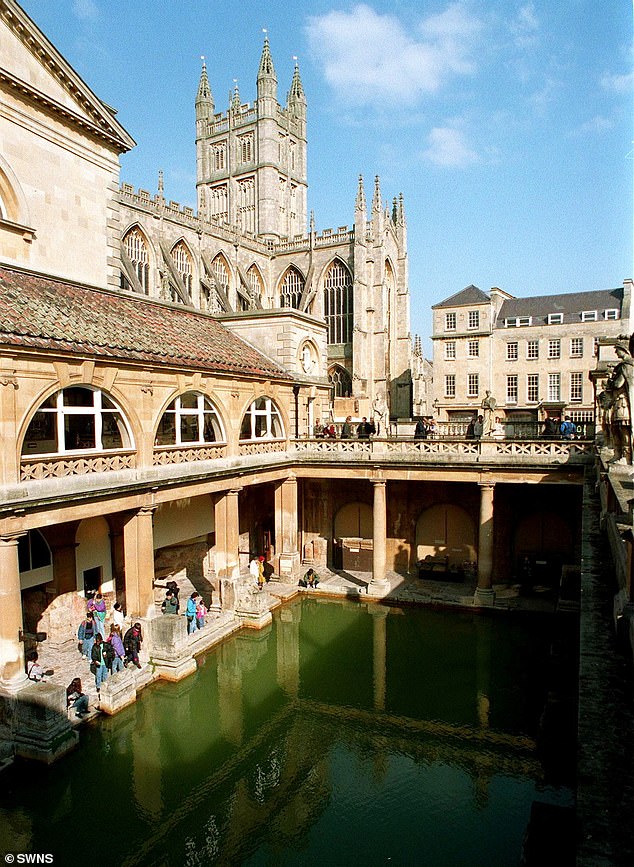
Bath Councillors Propose Renouncing UNESCO Status to Build Homes for Labour Targets

The city of Bath, the only city in the UK with full UNESCO World Heritage status, is considering relinquishing this unique designation in a bid to meet the increased housing targets set by the Labour government. The Liberal Democrat-led council is exploring the possibility of temporarily dropping its UNESCO status after the government raised Bath and North East Somerset’s housing target dramatically from approximately 14,000 to about 27,340 new homes.
Renowned for its remarkable Roman baths and iconic Georgian architecture, Bath currently faces restrictive development regulations tied to its protected status. These regulations demand that new buildings match local heritage materials, such as natural stone and slate, complicating efforts to expand housing.
Bath’s UNESCO listing has also made it challenging to construct new homes in surrounding suburbs as the city’s unique landscape is classified as a ‘hollow in the hills.’ In order to modify this classification, the city would need to be delisted and subsequently reapply for UNESCO status, which could take several years and would require UNESCO’s approval.
To achieve the goal of constructing 5,900 homes within Bath itself, the council has proposed allocating land for a 2,000-home expansion westward from the area between Twerton and the Globe Roundabout. Despite the significance of this allocation, it pales in comparison to housing plans in smaller towns like Keynsham, which proposes nearly the same number of homes despite its much smaller size.
However, the local planning inspectorate has indicated that any plans including this proposal would likely face rejection without support from UNESCO. Councillor Matt McCabe emphasized the political consensus on the need to expand the city while acknowledging the complexities surrounding the UNESCO status. He stated, “We have to change the wording of the UNESCO World Heritage inscription.”
If delisted, the council would need to lead the process with the government, submitting proposed changes to the International Council on Monuments and Sites (ICOMOS) before seeking to regain its UNESCO status. McCabe expressed confidence that the city could re-secure its designation, stating, “I don’t think there is… any reason why UNESCO wouldn’t allow us to rejoin.”
Since first being designated as a World Heritage Site in 1987, Bath’s status was reinforced when it became part of the Great Spa Towns of Europe World Heritage Site in 2021. Local Labour Party members have pushed for ditching the UNESCO designation to enable more housing development, suggesting that UNESCO cities can thrive without local residents being priced out.
Concerns have arisen among residents regarding the potential loss of UNESCO status. Some locals fear that if the city were to give up this designation, there would be risks involved in not regaining it, while others have questioned the wisdom of dismantling the status even temporarily. “If it is just temporary, to remove it, build, then reinstate it, it is really not worth having that status to begin with,” one resident contended.
Other respondents recognized the complex issues surrounding Bath’s development needs and the impact of student housing on the local population. The council’s recognition of these challenges comes alongside an ongoing six-week public consultation regarding the local plan, which is set to end on October 30.
Editor’s Take
This development highlights a critical intersection between urban planning and heritage conservation. The potential loss of UNESCO status poses significant questions about balancing growth with historical preservation. As Bath grapples with its housing crisis, the outcome may set precedents for other historic cities facing similar dilemmas in the future.
Source: www.dailymail.com