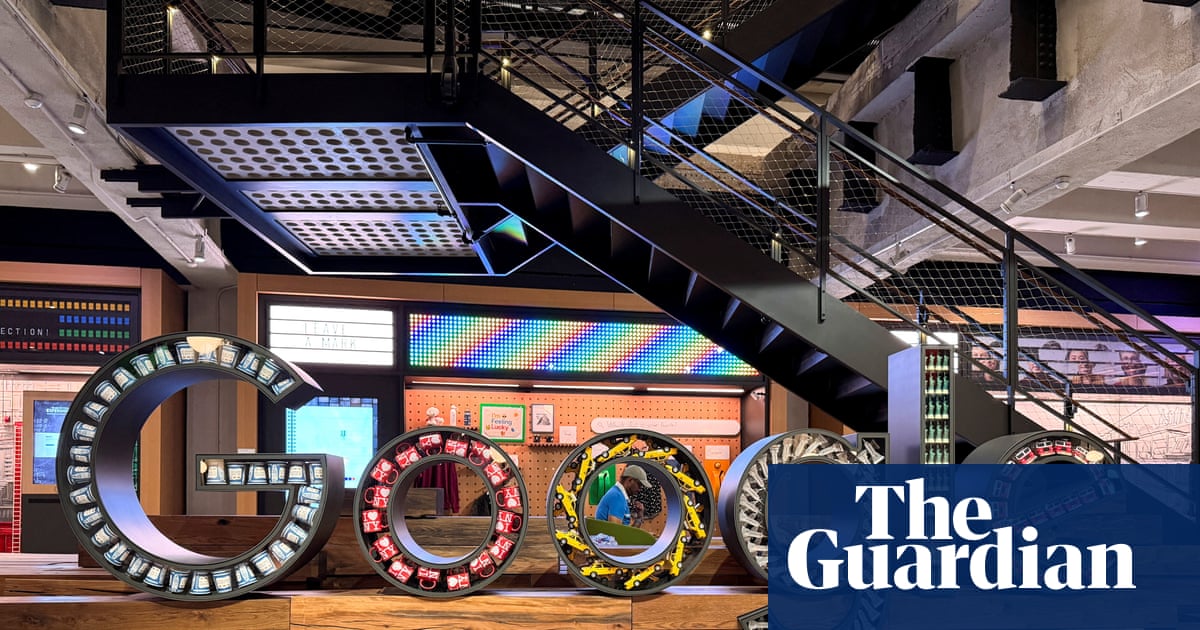

Shares of Alphabet, the parent company of Google, experienced a significant decline in trading, dropping into double digits and causing a loss of hundreds of billions in market value. This downturn followed the company’s report of disappointing profits and a slowdown in its advertising sector, all while it continued to make substantial investments in artificial intelligence (AI).
For the July-to-September quarter, Alphabet’s net profit plummeted by 25% year-over-year to $26.2 billion, translating to $2.12 per share, significantly below analysts’ expectations as reported by FactSet. A notable contributing factor was an $8.7 billion loss on its equity investments, largely linked to its stake in SpaceX, which has faced challenges since going public in June.
On a more positive note, revenue surged by 25% to reach $127.6 billion, although this still fell short of the anticipated $128 billion. Advertising revenue grew by 11%, totaling $82 billion, which also did not meet forecasts. The revenue from Google’s search segment—its largest source of income—rose by 12% to $63.4 billion, a decline from the 17% growth seen in the previous quarter.
YouTube, which is now the predominant content provider on American television, saw a 9% increase in advertising revenue, amounting to $11.2 billion, a drop from the 13% growth of the previous quarter. Meanwhile, Google Music and Premium surpassed 150 million subscribers, including trials.
The Google Cloud segment, which offers computing power and AI tools to businesses, witnessed a remarkable 103% increase in revenue, climbing to $30.7 billion and exceeding analyst predictions. The company attributed much of this growth to its sales of Tensor Processing Units (TPUs), which tripled operating income for this division to $11.1 billion.
Alphabet’s “Other Bets” sector, which includes the autonomous vehicle company Waymo, generated $372 million in revenue but posted an operating loss of $2 billion. Waymo currently services over 500,000 paid rides per week across 15 U.S. metropolitan areas, with a goal to reach one million rides weekly by year-end.
During the quarter, Alphabet invested heavily in capital expenditures, amounting to $51.4 billion—more than double the $24 billion from the previous year. The company forecasts capex spending to be between $195 billion and $205 billion in 2026, with intentions to significantly increase spending in 2027.
Sundar Pichai, CEO of Google, characterized the company’s substantial investment as part of a long-term strategy rather than a short-term allocation. However, this spending exceeded the cash generated by Alphabet’s core businesses for the second consecutive quarter, creating a gap of $9.1 billion.
To finance its AI initiatives, Alphabet raised $28.7 billion through bond sales and $12.4 billion through new share issuance. Following a delay in launching a flagship AI model in July, concerns arose about Alphabet lagging behind competitors like OpenAI and Anthropic. In response, the company accelerated the release of its AI innovations, including the debut of Gemini 4 in late September.
Most recently, a U.S. judge ruled that Google does not need to dismantle its advertising technology operations but imposed restrictions on its functionality to curb monopolistic practices.
Editor’s Take
This financial downturn for Alphabet underscores the challenges tech giants face when balancing rapid investment in AI with profitability. As the competition heats up in the AI sector, it’s crucial for companies to strategically manage their resources while meeting shareholder expectations. For users and developers, these changes could lead to both enhanced services and potential risks associated with rapid technological advancements.
Source: www.theguardian.com