

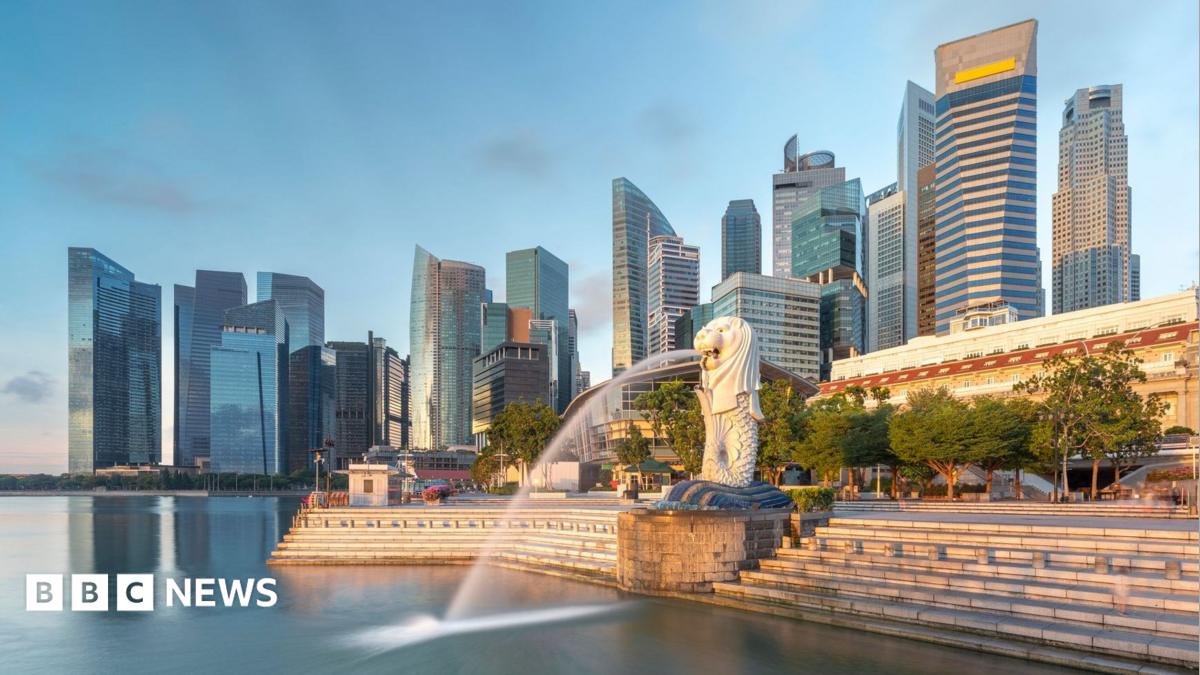

An unfolding controversy involving Nvidia’s founder, Jensen Huang, and an alleged Chinese spy based in Singapore has put the city-state’s status as a global semiconductor center under scrutiny.
On Thursday, Huang stepped down from his position at the prominent US chip manufacturer after admitting to an extramarital affair. Reports indicate his involvement with a woman named Alice Huang, who operated the Singapore-based data center firm Megaspeed, a significant purchaser of Nvidia’s products.
Over the years, Singapore has diligently worked to establish itself as an open and business-friendly economy, providing smooth access to both US and Chinese markets.
In light of the recent boom in artificial intelligence, Singapore has emerged as a critical hub for high-end semiconductor trade.
Last year, Singapore ranked as the second-largest billing center for Nvidia globally, contributing nearly 20% to the company’s overall revenue. However, it is noteworthy that less than 1% of this revenue is attributed to chips that remain within Singapore. Instead, the island functions as a conduit for numerous Asian businesses to place orders that are subsequently dispatched to other regions.
Concerns have heightened since 2022, when the US imposed restrictions on advanced semiconductor exports to China. Officials worry that intermediary nations like Singapore might be exploited by Chinese firms seeking to circumvent these embargoes.
Megaspeed serves as a pertinent example in this dialogue. The company has become the largest buyer of Nvidia’s chips in Southeast Asia and is suspected of providing backdoor access to these chips for Chinese entities through its data centers located in Malaysia, Indonesia, and Thailand.
While Singapore does not outright ban the transfer of advanced AI chips abroad, such actions could potentially violate US export regulations.
The Singaporean government has stated that it does not enforce “unilateral export controls imposed by other countries” but expects all enterprises operating within its jurisdiction to adhere to such regulations.
Although the city-state has made strides in monitoring these activities, it has not been without challenges. Singapore has charged four companies and five individuals, including Chinese nationals, with various offenses, including fraud. This comes in the wake of US concerns that the Chinese AI firm DeepSeek has been acquiring Nvidia chips from third-party sources within Singapore and elsewhere.
Authorities have attempted to investigate Megaspeed but have encountered significant obstacles along the way.
Editor’s Take
This development is critical as it underscores the growing complexities of international semiconductor trade and national security. The allegations against a major player like Nvidia highlight the potential risks associated with technology transfer. For businesses, this may lead to increased scrutiny and tighter regulations on tech exports, while developers and users could face evolving constraints in AI chip availability. The broader implications for the semiconductor industry and global tech supply chains cannot be overstated.
Source: www.bbc.co.uk