

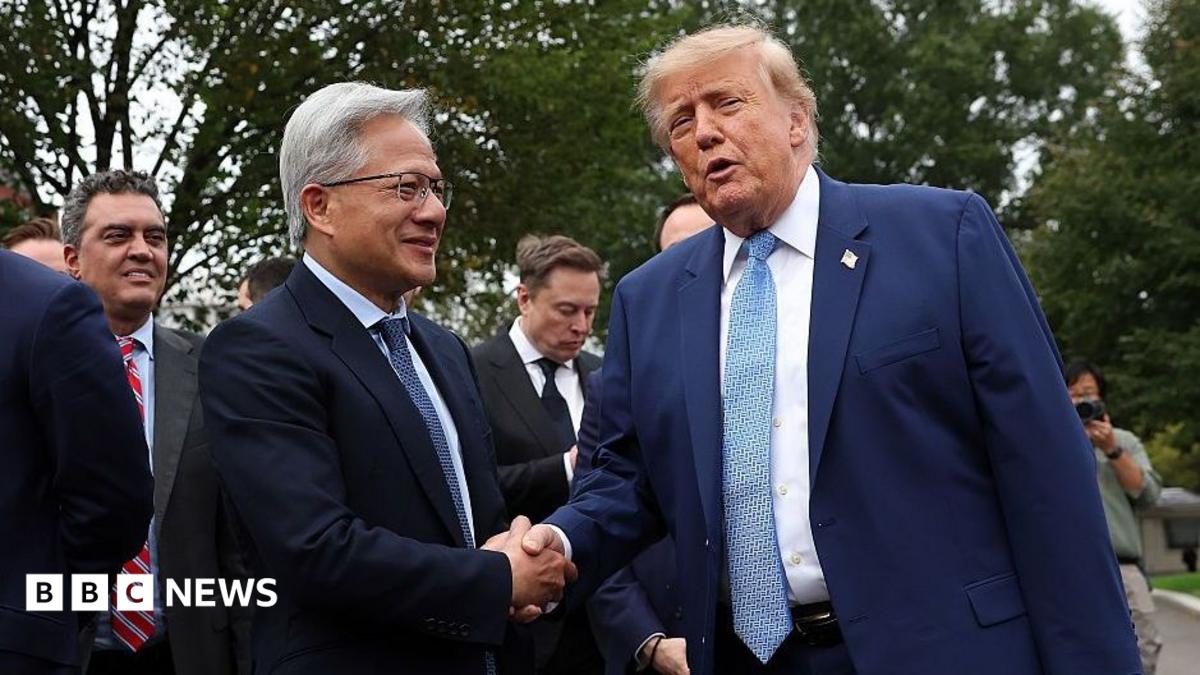

Assessing the Connection Between Donald Trump and Jensen Huang
Recent revelations highlight the close relationship between Jensen Huang, the CEO of Nvidia, and former President Donald Trump. Huang has had direct access to the president, engaging with him multiple times and accompanying him on international trips, including a visit to China.
Huang is not just another tech executive; he plays a pivotal role in a critical debate within the U.S. administration regarding the export of advanced technology to China. Nvidia produces the chips that are essential for the AI boom, yet Washington has imposed export restrictions on these advanced processors since 2022. The rationale behind these restrictions is the fear that they could bolster Beijing‘s military and technological capabilities.
Enforcement of these restrictions proves challenging, as chips can be legally purchased in other countries like Singapore and Malaysia before being rerouted to China. Furthermore, Chinese firms are increasingly gaining access through data centers located outside their borders.
Huang has consistently argued that the restrictions impede Nvidia’s growth by preventing it from entering a massive market while simultaneously aiding Chinese firms in developing their indigenous alternatives. Trump seemed to resonate with Huang’s points, allowing certain chip sales to China last year in exchange for a share of revenues, although the most advanced products, like the Blackwell chips, remain prohibited from sale.
However, the dynamics of their relationship may now be shifting amid allegations of Huang’s alleged extramarital affair with Alice Huang, a past executive at Megaspeed, a company based in Singapore. These allegations have raised concerns that foreign intelligence may have targeted a significant business figure with close ties to the U.S. administration.
Reports indicate that U.S. intelligence suspects Alice Huang of having connections with Chinese intelligence, a claim disputed by Beijing. Meanwhile, Nvidia’s board has stated that there is no evidence that sensitive company information or national security was threatened. Nonetheless, the affair raises pressing questions about government awareness and responsiveness.
This situation has implications for Commerce Secretary Howard Lutnick, whose department manages the export of critical American technology. This has been particularly pertinent given concerns about Megaspeed, an Nvidia customer suspected of facilitating the diversion of advanced chips to China.
On Thursday, Megaspeed’s CEO, Tan Yong Pong, also known as James Tan, expressed the company’s commitment to adhering to U.S. export control laws and its willingness to cooperate with government audits.
A classified memo outlining concerns regarding Alice Huang and Megaspeed was presented to Lutnick, who is now under scrutiny for his decision not to take action against the firm. Reports suggest that other senior officials, including Treasury Secretary Scott Bessent, were troubled by why Megaspeed had not been placed on the Commerce Department’s blacklist.
Additionally, questions arose about why an investigation into the Singaporean company was prematurely halted after Nvidia’s intervention, suggesting a potential conflict between the objectives of Huang, who sought market access in China, and officials concerned about national security risks.
As the implications of these events unfold, the pressure on officials in Washington is intensifying.
Editor’s Take
This developing situation underscores the complex intersections of technology, foreign relations, and national security. As the lines blur between corporate ambitions and geopolitical strategies, stakeholders must navigate the terrain with heightened scrutiny. The outcome could reshape not only market dynamics but also the future of U.S.-China tech relations.
Source: www.bbc.co.uk