

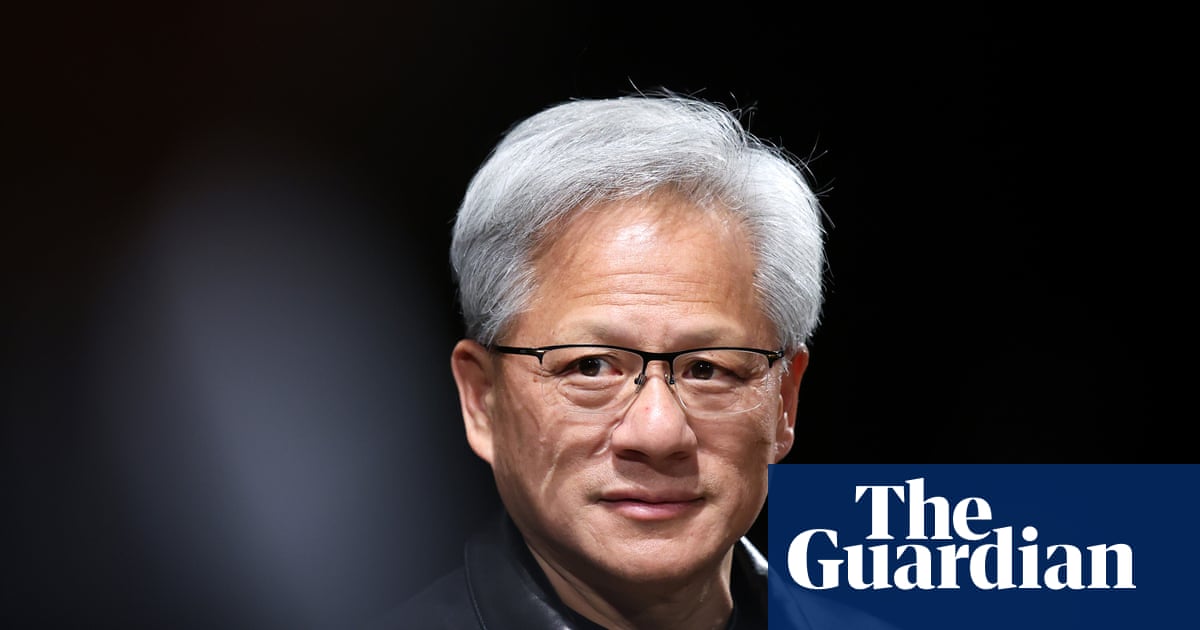
Nvidia’s Future in Question After Jensen Huang’s Departure: Will the AI Empire Endure?

The future of the AI economy hangs in the balance following a significant change at Nvidia, a titan in the field of AI chip manufacturing. The company’s co-founder and chief executive, Jensen Huang, has stepped down, prompting concerns over what this could herald for both Nvidia’s fortunes and the broader AI landscape.
Nvidia‘s remarkable valuation stems from its development and sale of graphics processing units (GPUs), which are vital for training and running advanced AI models, including ChatGPT and Claude. The absence of these chips could cripple the training processes for such revolutionary technologies.
As a result, Nvidia has often been viewed as a cornerstone of the AI ecosystem, even reaching a point where it was deemed the most valuable company globally. However, Huang’s resignation triggered an immediate 13% drop in Nvidia’s share price, igniting fears about the company’s stability.
While Nvidia is not the sole manufacturer of AI chips—other tech giants like Microsoft, Meta, and Google are also developing their own—it is Huang’s intricate network of partnerships that sets Nvidia apart. This web of connections, primarily nurtured by Huang himself, is critical to the company’s performance.
Nvidia has engaged in a vast, complex array of collaborations with businesses focusing on building AI infrastructure. This entanglement, often characterized as a “circular finance” system, linking US tech leaders and various governments, adds layers of complexity to Nvidia’s operational framework.
Huang’s position as a key figure in AI has notably influenced global political decisions. In 2025, he met with numerous heads of state, advocating for the urgent development of “sovereign AI” leveraging Nvidia’s technology. His sponsorship practically guaranteed governmental AI ambitions, culminating in agreements where Nvidia committed to supplying essential chips.
Despite these partnerships, the terms surrounding many agreements remain unclear. Nvidia has pledged to provide thousands of advanced chips to countries like South Korea, yet the timing, payment procedures, and conditions are often shrouded in ambiguity.
Another key aspect of Nvidia’s business model involves financing a network known as “neoclouds“, which purchase Nvidia’s chips and host them in data centers. This arrangement not only boosts demand for Nvidia’s products but also helps mitigate financial risks associated with the management of data centers.
Nvidia has earned the moniker of the “central bank of AI” due to its pervasive involvement at multiple levels of the AI economy. The company has poured substantial investments into various AI startups that could emerge as future clients, circulating hundreds of billions of dollars within a limited network.
A critical player in this context is the Taiwan Semiconductor Manufacturing Company (TSMC), which produces a significant share of the world’s AI chips. TSMC outpaces its competitors owing to its advanced manufacturing capabilities, which come with high costs and significant challenges. While TSMC boasts a refined manufacturing process, it still faces a defect rate of around 40% for its advanced chips, a considerable hurdle in the industry.
Nvidia has cultivated its relationship with TSMC over decades, aiding in process advancements. This long-standing partnership has created a high level of trust, crucial for both companies’ successes.
The uncertainty surrounding Nvidia’s future without Huang raises critical questions. The intricate relationships that Huang fostered are not easily understood, and the company’s dealings are often characterized by opacity. An investigation into its supply chains reveals tangled contracts and export records, leaving many questions unanswered about current demand and future projections.
A notable case emerged recently involving Megaspeed, a small firm that secured an advantageous amount of GPUs at a time when other companies faced shortages. Worryingly, it later surfaced that one of Megaspeed’s executives, who was romantically linked with Huang, was purportedly involved in espionage, allegedly facilitating the transfer of Nvidia chips worth about $7.5 billion to China.
With Huang’s departure, there may be potential for a new era of transparency in Nvidia’s business practices, especially concerning contracts and supply chain operations. However, this newfound clarity could also unveil hidden complexities, revealing intricate debt structures and informal agreements previously shrouded in secrecy.
Huang had a knack for persuading world leaders that Nvidia’s technology was essential for future progress and governance. As the dust settles on his exit, it remains to be seen whether Nvidia can maintain its influential posture in the AI sphere.
Editor’s Take
The resignation of Jensen Huang marks a pivotal moment for Nvidia and the AI industry. His departure could lead to changes in corporate transparency and governance practices within Nvidia. Given the company’s central role as a supplier of AI chips, this shift could affect the technological landscape and influence partnerships globally. As competitors rise and public scrutiny increases, Nvidia will need to navigate these challenges carefully to maintain its standing in the AI economy.
Source: www.theguardian.com