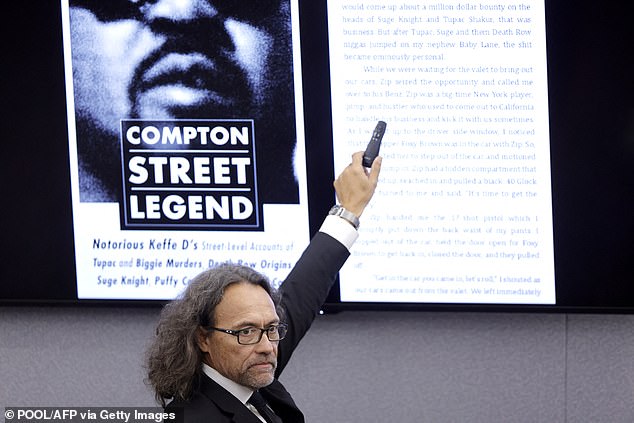

An attorney known for representing the killer of hip-hop icon Tupac Shakur has reportedly passed away at the age of 55. Michael Sanft, based in Las Vegas, was found dead in his home on Friday, just days after filing an appeal for his client Duane ‘Keefe D’ Davis, who was convicted in the high-profile murder case.
Sanft’s death occurred on the same day that a notice regarding Davis’s appeal was submitted to the court, according to reports from FOX5. Davis, now 63, received a 40-year-to-life prison sentence on October 13 after being found guilty of first-degree murder linked to Shakur’s tragic death in 1996.
Charges against Davis followed his own revelations in multiple interviews and a memoir published in 2019, detailing his actions during the shooting. He remains the only individual to have faced charges related to the rapper’s murder.
Reflecting on the case, Sanft expressed his feelings of disappointment with the jury’s decision, noting that he had taken on the case pro bono. The Clark County Coroner’s Office is currently investigating the circumstances surrounding his death, which authorities have stated does not appear to be suspicious.
A police spokesperson corroborated that there was no indication of foul play in Sanft’s sudden demise.

Las Vegas lawyer Michael Sanft, who defended Tupac’s convicted killer Duane ‘Keefe D’ Davis, has died at 55.
After the conviction, Sanft recalled his conversation with Davis, where the defendant encouraged him not to worry about the outcome. The attorney described the mood during their discussions, stating, “I hate to lose,” as he processed the jury’s verdict.
This is a breaking news story. More updates will follow…
Editor’s Take
The untimely death of Michael Sanft raises significant questions in the ongoing narrative surrounding Tupac Shakur‘s murder case. As the legal landscape shifts, this could impact Duane ‘Keefe D’ Davis’s appeal process and further complicate an already controversial case. Legal representation in high-profile cases such as this often shapes public perception and judicial outcomes.
Source: www.dailymail.com