
Donald Trump managed to mask his frustration in front of the cameras following a significant political setback. Just hours after the Democrats regained control of both chambers of Congress in a historic midterm election, the President made an unexpected call to Fox News, where he lauded the opposing party’s efforts. “Democrats did a good job,” he remarked, acknowledging their hard work.
In an interview with the New York Times, Trump expressed his readiness to accept the electoral outcome and indicated a preference for negotiating with Democrats rather than vetoing their legislation during the final years of his presidency.
By the following morning, Trump was at the site of his new White House ballroom, fielding questions with an air of detachment, as if he were addressing issues beyond his own realm. He reiterated his absence from the ballot – despite previously urging voters to consider him as such – and insisted he had no intention of reshuffling his Cabinet, asserting that the election results were not a reflection of their performance.
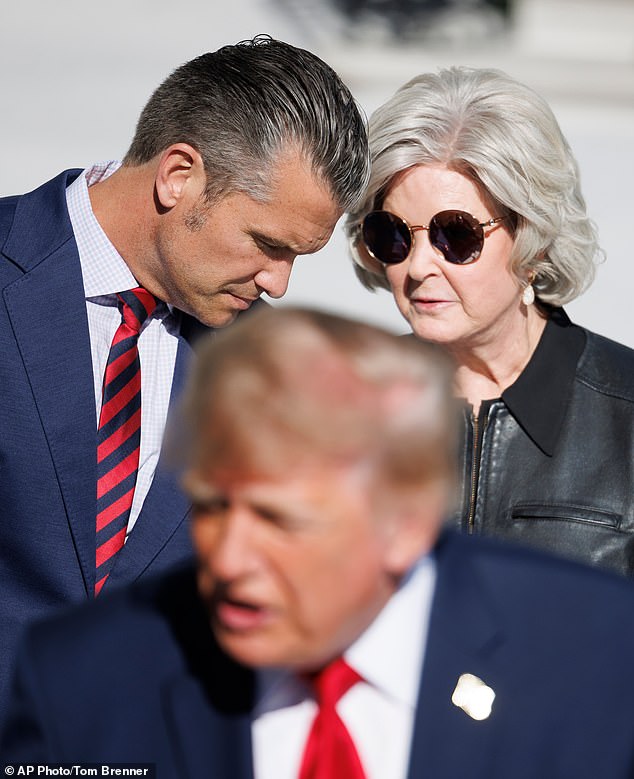
However, beneath his calm facade, Trump was actively contacting advisers to discuss potential changes within his administration, particularly considering the future of Defense Secretary Pete Hegseth. Following suggestions that his Chief of Staff, Susie Wiles, and Secretary of State Marco Rubio could be blamed for the losses, sources indicated that Trump was focused on Hegseth.
Insights from a White House insider revealed that Trump posed questions to his close circle about whether Hegseth should remain in his position. These sources anticipate that Hegseth may be ousted before the new Congress is inaugurated in January, primarily due to the political dynamics rather than Trump’s wrath.
As the Democrats prepare to assume control of the Senate next year, confirming a new Pentagon chief could become contentious, a situation the White House prefers to avoid. “Trump is making phone calls, contemplating it,” remarked a senior Republican.
The criticism aimed at Hegseth is not solely connected to the war in Iran, which has been criticized within conservative circles for contributing to the electoral defeat. Instead, it centers on the information Trump received regarding military operations, with some reports indicating he frequently learned pivotal details too late.
A White House insider elaborated that Trump has grown increasingly frustrated by updates on military actions that he learned about only after the fact, particularly concerning Iran’s air defenses, which he expected would have been neutralized by U.S. forces.
While the White House publicly maintains its confidence in Hegseth, spokesperson Anna Kelly insisted he provides comprehensive operational insights. Nonetheless, seasoned GOP strategists caution that a Democratic-led House may target Hegseth with the prospect of impeachment, causing further complications for the administration. Kentucky Democrat Thomas Massie has even signaled plans to push for impeachment votes once Congress reconvenes next week.
Amid the fallout, Susie Wiles, often blamed by many within the party for this electoral defeat, is expected to navigate this political turbulence skillfully. Insiders suggest she is employing strategic maneuvers to ensure her survival, often playing her allies against each other.
Meanwhile, Vice President JD Vance shifted blame for the election defeat directly onto the Iran conflict during a statement that closely aligned with Trump’s comments. However, many within Trump’s circle view this as a politically calculated move by Vance to deflect criticism as he eyes future ambitions.
The question remains whether Trump had knowledge of Vance’s statement prior to its release. Sources now offer conflicting accounts, with some claiming Trump was caught off guard and others stating that the White House was aware and approved of the message. The quick endorsement from Trump’s son, Donald Trump Jr., on social media offers a glimpse into ongoing political realignments.
In the conflict over future leadership, Ron DeSantis’s name has been rumored as a potential successor to Hegseth. However, top White House officials appear dismissive of any move towards DeSantis, recalling tensions from the past regarding his ambitions within Trump’s political sphere.
As the midterms concluded, Wiles and Trump’s inner circle maintained their distance from others in the party, signifying the ongoing divisions and tactical battles within Trump’s administration. The prevailing sentiment is a focus on strategy and survival rather than outright defection, as various factions vie for influence in a post-midterm landscape that remains tenuous.
Editor’s Take
This political dynamic highlights the complex interplay of loyalty, blame, and survival within Trump’s administration. As potential leadership shifts loom, users and stakeholders should watch how these developments might shape policy decisions and party direction leading into the next election cycle.
Source: www.dailymail.com