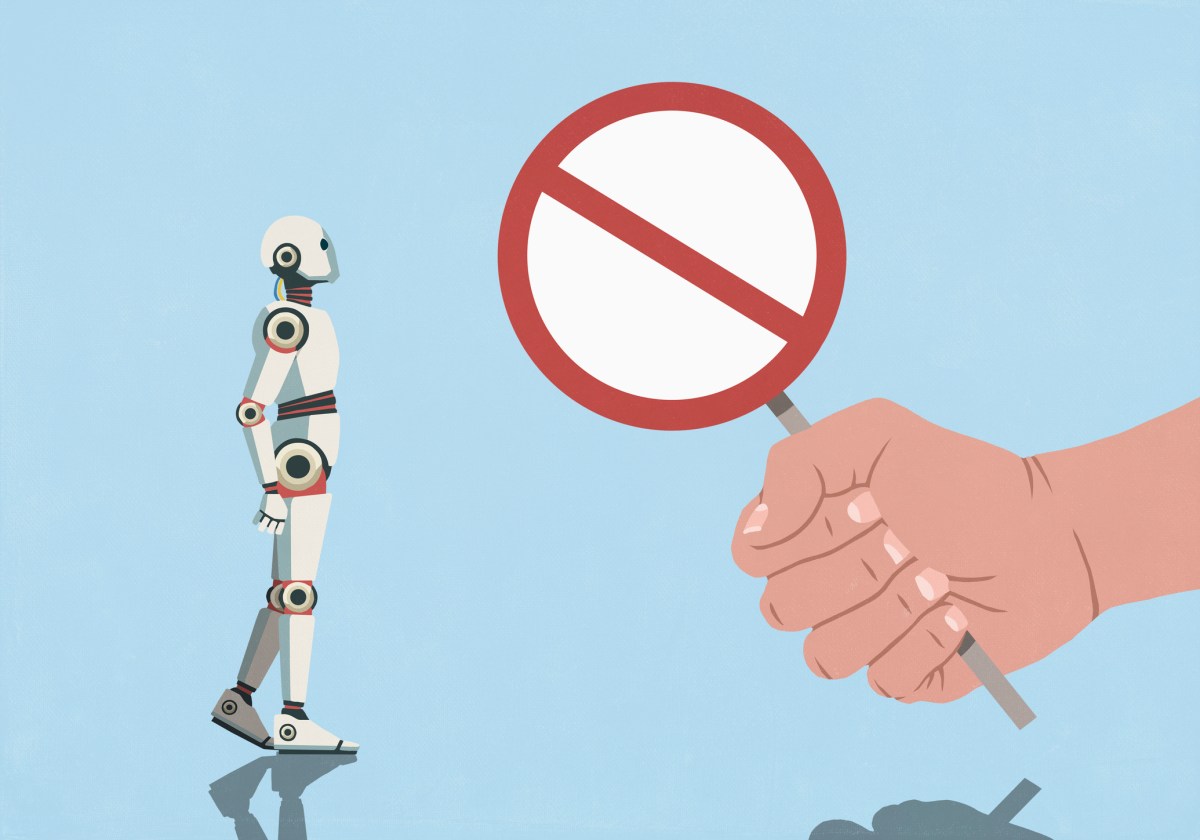

Pope Leo XIV recently declared artificial intelligence (AI) a potential threat to human dignity. However, concerns about AI extend beyond religious affiliations. David Durman, a humanist and administrator at the University of Kentucky, has successfully obtained a religious exemption allowing him to abstain from using AI at work.
Durman describes humanism as “a collection of beliefs concerning the human experience and interactions with the world.” He emphasizes the importance of human well-being and flourishing, advocating for both personal improvement and the enhancement of those around us.
As AI became more integrated into daily life, Durman turned to the American Humanist Association (AHA), a nonprofit promoting secular humanism, to explore legal protections against AI use in his professional environment. He believes that engaging with AI contradicts his personal beliefs.
“The way we become moral actors is through actively using our minds,” Durman explained, discussing how an overreliance on AI might impair critical thinking skills. His perspective reflects broader anxieties regarding how AI may interfere with human capacity for creativity and ethical reasoning.
In a recent statement, Durman expressed his concerns: “AI is affecting people’s livelihoods, poses environmental risks, and threatens the cultural foundations of art and literature essential for societal flourishing.”
Humanism does not oppose religion but resonates with individuals skeptical of a deity or supernatural elements, offering a scientific and moral grounding.
“The concern regarding AI and human dignity spans various beliefs, whether Catholic, Universalist, or Humanist. We want humanists and nontheists to understand that they are also protected by workplace laws,” noted Alexandria Huiskens, staff attorney at AHA.
Durman stands out as the first individual to secure workplace accommodations allowing him to avoid AI, inspired by Erin Maus, a Unitarian Universalist software engineer, who previously obtained similar protections.
“This is about my convictions,” he stated. “I’m not trying to impose my beliefs on others, but I hope to inspire those with similar concerns to seek resolutions appropriate for their situations.”
A representative from the University of Kentucky, Jay Blanton, remarked that requests for religious accommodations are evaluated individually, taking job responsibilities and the context into account.
“In this instance, the university decided an accommodation could be granted while allowing the employee to fulfill essential job functions,” Blanton added. “As technology and job roles evolve, these accommodations may be reassessed for practicality.”
Maus represents a rare case in tech, as few software engineers code without AI assistance. In contrast, Durman’s role primarily involves supporting researchers with grant applications, and he has not been required to utilize AI. Nevertheless, with growing recommendations from peers to adopt such tools, he sought to secure his exemption preemptively.
“I hope that anyone facing similar sentiments feels encouraged to advocate for themselves,” Durman concluded.
Editor’s Take
This development highlights the rising intersection of technology and personal belief systems, particularly concerning AI’s role in our lives. As more individuals seek to align their work with their ethical principles, this could pave the way for broader discussions on the implications of technology use in various sectors. Companies may need to consider flexibility in policy to accommodate diverse workforce beliefs while navigating the balance between innovation and employee rights.
Source: techcrunch.com