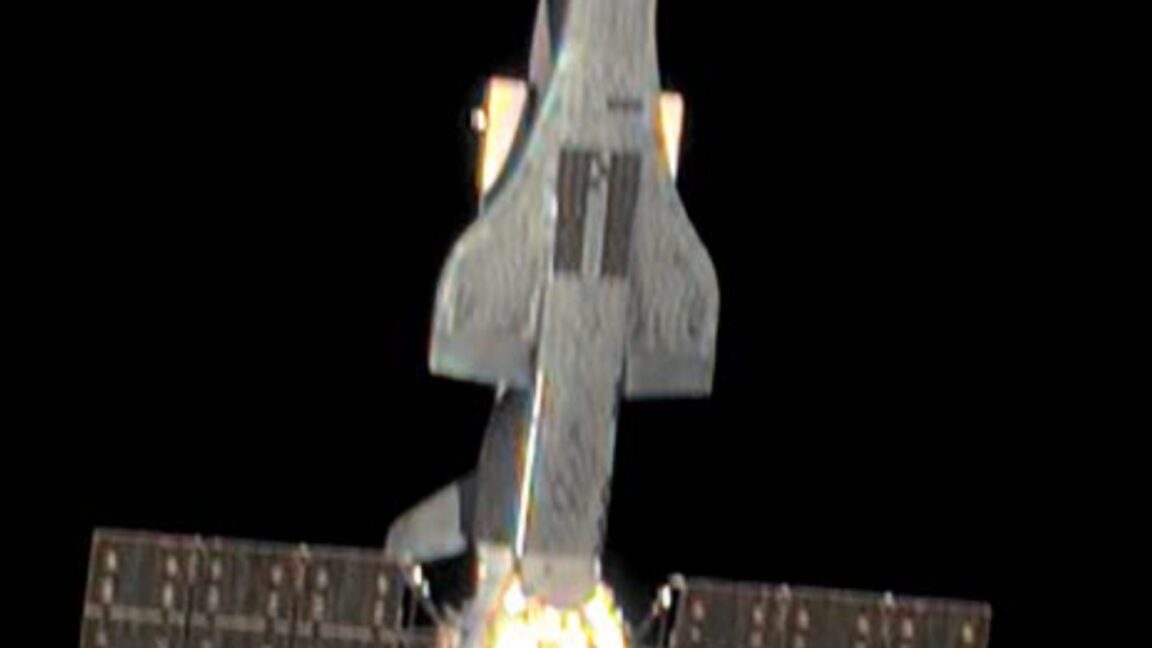

Maxar Technologies and various commercial space firms are demonstrating significant capabilities in the field of Near Earth Intelligence (NEI). This development stands in stark contrast to recent actions by military spacecraft, such as Russia’s Kosmos 2612, which engaged in deliberate maneuvers to approach a US radar imaging satellite. The NEI observations by commercial entities arise from chance encounters at high velocities.
Directed-Energy Weapons: A New Frontier
The Defense Intelligence Agency (DIA) has provided an update on the evolving space threat landscape, particularly focusing on China’s ambitions with anti-satellite technology, or “counterspace” weapons. According to their analysis, the Chinese military likely views directed-energy weapons (DEWs) as highly effective systems for counterspace operations. These weapons could serve to either temporarily or permanently disable satellites, with lasers potentially being used to dazzle sensors on adversarial satellites.
“China possesses multiple ground-based laser systems with varying strengths capable of disrupting, degrading, or damaging satellites in low Earth orbit (LEO),” the DIA stated. “By the late 2020s, it’s anticipated that China may deploy space-based directed energy systems, as well as more powerful ground-based systems capable of threatening satellites in higher orbits.”
The agency also highlighted China’s ongoing testing of ground-based anti-satellite missiles. Furthermore, last year, China made history by demonstrating satellite refueling capabilities in geosynchronous orbit, a feat unmatched by any other nation above low Earth orbit. This capability could enhance the maneuverability and operational potential of its satellites. Additionally, China has tested a robotic arm designed to capture spacecraft in orbit and is expanding its fleet of satellites called TJS, which regularly approach foreign satellites.
The US Space Force has also developed a network of inspector satellites operational in geosynchronous orbit and has recently acquired satellites equipped for refueling. This innovation addresses previous limitations in mobility. Air Force Secretary Troy Meink revealed last month that the Pentagon has officially deployed weapons in space, marking the United States as the first country to acknowledge its possession of orbital weaponry.
Meanwhile, Russia is pursuing its own space-based weapons program, which includes aspirations to deploy a nuclear weapon in orbit, as per US intelligence insights. Furthermore, a more traditional Russian weapon system, dubbed Nivelir, is designed to launch projectiles from one satellite to collide with another. The Russian military conducted simulations involving the Nivelir system in 2020, and in April, Russia launched a series of small satellites positioned closely to a commercial radar satellite owned by ICEYE, which provides vital reconnaissance imagery to Ukraine. One of these Russian satellites reportedly moved within “tens of meters” of the ICEYE satellite before retreating, as confirmed by US officials.
Editor’s Take
The developments in near-Earth intelligence and the advancement of directed-energy weapons underscore a new era of space competition and operational maneuverability. For stakeholders in defense and technology, this signifies an urgent need to adapt to rapidly evolving threats in space. The implications for businesses and developers working in satellite technology could be profound, prompting new innovations in satellite resilience and defensive measures.
Source: arstechnica.com