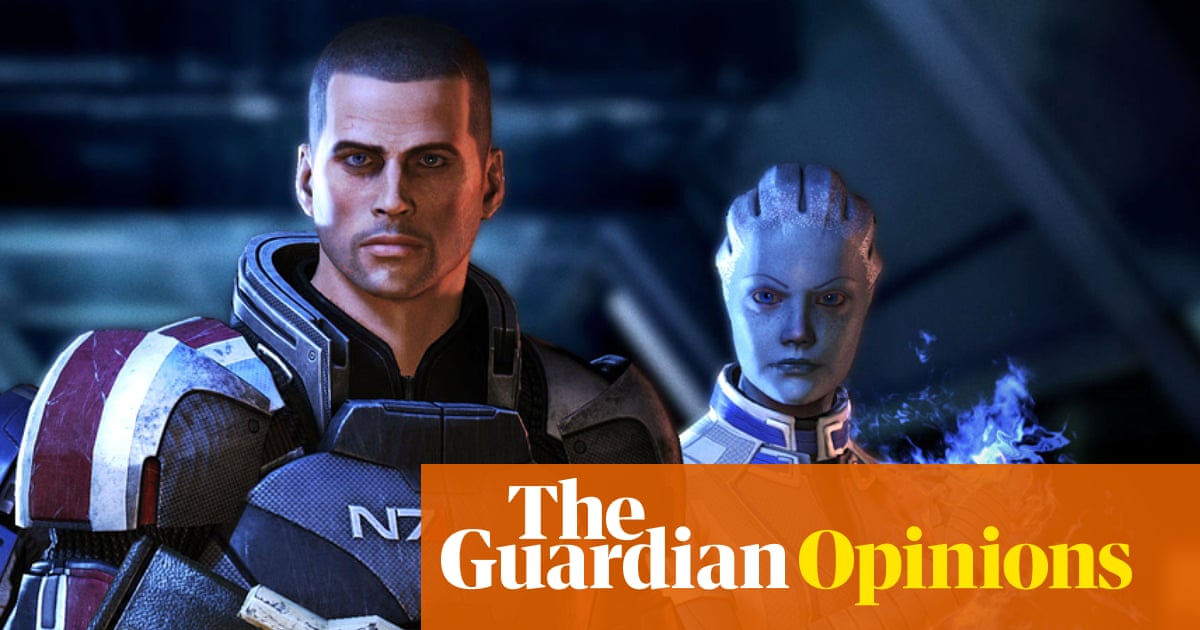

Earlier this week, Electronic Arts (EA) announced the closure of BioWare, a studio celebrated for its three-decade legacy of immersive role-playing games (RPGs), complex narratives, and memorable characters. This decision follows the cancellation of BioWare’s highly anticipated game in the Mass Effect series, leading to significant consequences, including the loss of over 400 jobs. As a seasoned member of the gaming industry and a longtime fan of BioWare, I join many others in expressing sorrow over this loss.
It’s not difficult to understand the factors that led to BioWare’s demise. EA is grappling with a staggering $20 billion in debt stemming from a recent leveraged buyout involving Jared Kushner and a Saudi wealth fund. With financial tightening, EA targeted BioWare, which, despite its loyal fan base and a reputation for defining titles like Star Wars: Knights of the Old Republic and Dragon Age, had not released a critically or commercially successful title in over a decade. The next installment, rumored to be titled Mass Effect: Universe, was initially unveiled in 2020 but remained years away from completion, even after several teasers.
The original Mass Effect trilogy, comprised of three games released between 2007 and 2012, ranks among my favorite gaming experiences. I first engaged with it in 2010 after purchasing my Xbox 360, encouraged by friends who reassured me of its merit. Since then, I have revisited these games countless times, often finding myself torn between which entry to favor, with Mass Effect 2 frequently taking the lead due to its gripping narrative and an unforgettable climactic mission.
The trilogy chronicles the journey of Commander Shepard, a unique agent empowered by the galactic Citadel Council to defend humanity’s interests against the imminent threat of the Reapers, a synthetic race intent on annihilating all organic life every 50,000 years. As Shepard, players are tasked with rallying the galaxy’s finest to confront this looming danger.
Initially, my encounter with Mass Effect was less than favorable. I found the controls awkward and was immersed in a lore-heavy universe that seemed daunting. An early struggle with the game’s clumsy land vehicle, the Mako, led me to abandon the game entirely. However, a subsequent urge to explore this unfinished journey drew me back.
The second attempt proved transformative. Instead of fixating on gameplay shortcomings, I became engrossed in its narrative and characters, from the earnest archaeologist Dr. Liara T’Soni to the beleaguered security officer Garrus Vakarian. The storyline, simple yet compelling—saving the galaxy from a destructive AI—allowed players to shape their journey through consequential decisions that greatly influenced the plot’s trajectory. This sense of agency resonated with me and countless others.
Throughout the game, players can customize not only Shepard’s appearance and gender but also their responses to various challenges. Options varied from promoting inter-species collaboration to asserting control in conflict, with each choice leading to divergent outcomes. The thrill of witnessing the effects of decisions made in one game resonate throughout the sequels created a uniquely personal experience.
Every decision, no matter how trivial, felt impactful. Across the vastness of the galaxy, my influence shaped the destinies of entire races and affected the narrative in unpredictable ways. Such freedom to explore and modify the virtual world is the essence of a truly engaging video game.
The success of Mass Effect extends beyond its gameplay mechanics; it is the rich characters—each with complex backstories—that truly enrich the experience. Themes explored include the morality of artificial intelligence and the burdens of duty. Players could engage deeply with characters, even forming romantic relationships that added emotional weight to the narrative—farewells to squadmates before a heart-wrenching climax are still etched in my memory.
Although it has been over a decade since Shepard’s saga concluded, the trilogy remains highly regarded in gaming circles. I play numerous titles annually, yet few have left a lasting mark comparable to Mass Effect. Its legacy continues to influence action RPGs, despite initial backlash regarding its ending, which was later revised in response to player concerns, ensuring its cherished place in gaming history.
The closure of BioWare signifies the end of an era, posing a significant loss to the gaming community. Despite recent mismanagement and challenges, including the underwhelming performance of Anthem, the cancellation of the upcoming Mass Effect title leaves fans desolate. The potential for another groundbreaking narrative remains an unheard lament. BioWare’s impact on the realm of western RPGs is substantial, and its absence will certainly be felt across the gaming landscape.
Editor’s Take
This closure highlights the fragile nature of even the most revered game studios in an industry often dictated by financial pressures. For fans, the termination of BioWare represents not just the loss of an iconic brand, but a significant shift in the landscape of storytelling in gaming. As developers navigate these challenges, the future of narrative-driven experiences remains uncertain, affecting players, creators, and industry dynamics alike.
Source: www.theguardian.com