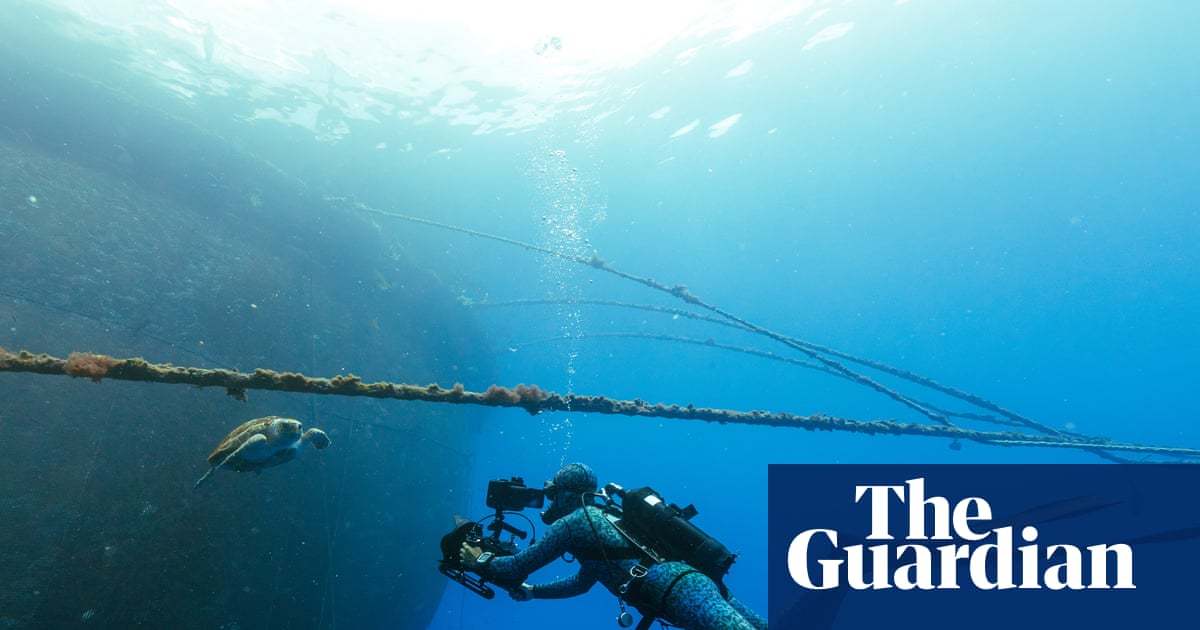

The highly anticipated series Blue Planet III, narrated by the legendary David Attenborough, is set to make waves with a novel approach to footage. In a bid to combat the potential misuse of artificial intelligence in visual media, producers have intentionally incorporated less refined and cloudier visuals. This strategy aims to affirm the show’s authenticity in an era increasingly marred by AI-generated content.
Nearly ten years after the impactful Blue Planet II highlighted the crisis of plastic pollution, and 25 years since its inception, this new installment promises more breathtaking wildlife behaviors, alongside pioneering technologies like the world’s first underwater CCTV camera, aptly named the “stonefish” cam.
Advancements in television and filming technology have significantly enhanced image clarity over the years. However, the rise of AI, coupled with extraordinary footage showcasing remarkable wildlife captured by the BBC Studios natural history unit, prompted producers to embrace what they describe as “organic” footage. This decision reflects a commitment to demonstrate that the depicted creatures are indeed real and not a product of AI fabrication.
In this context, executive producer Elizabeth White noted that AI’s influence encourages greater authenticity in their storytelling. The deep ocean’s inhabitants, she asserts, exhibit astonishing traits that even AI cannot replicate, maintaining the series’ real essence.
Traditionally, certain sequences, filled with plankton or marked by less-than-ideal water conditions, could have been edited out. In contrast, this time, the team is determined to retain such elements, further leaning into a more genuine representation of the oceanic environment.
“As we witness a surge in AI-generated content, we aim to celebrate the raw and unpolished aspects,” White stated. “It’s essential we highlight the real experiences of the natural world.”
The series also showcases unprecedented scenes, including dolphins using sea sponges to master fishing techniques, all captured with advanced underwater technology developed by producer and director Yoland Bosiger. Over four years of filming across five oceans, the production team unveiled a plethora of recently discovered animal behaviors.
Innovative camera systems were deployed, including a “mini-dome” to track octopus movements and leg-mounted scooters for immersive dives, replicating a viral TikTok aesthetic. Other captivating footage reveals fish engaging in complex communication and vast gatherings of crabs moving in unison.
This new installment also addresses the urgent threats facing our oceans due to climate change, including episodes focused on the devastating impacts warmer temperatures have on vital marine creatures like clown fish and their living conditions. The ongoing issues of plastic pollution, highlighted in the earlier series, are revisited as well, offering fresh insights into pollutants and persistent chemicals.
Attenborough, now 100 years old, remains deeply involved, even revising scripts to ensure the narrative resonates. “What’s remarkable is his enduring curiosity,” White remarked. “He still embodies a youthful excitement when experiencing new footage.”
In light of recent cost-cutting measures at the BBC, White refrained from commenting on potential impacts but noted that Blue Planet III achieved savings by utilizing more local filming crews than in prior deployments.
Editor’s Take
The decision to incorporate cloudier footage in Blue Planet III reflects a growing awareness of authenticity’s importance in a world increasingly influenced by AI-generated content. This move not only sets a precedent for future nature documentaries but also reassures audiences about the integrity of the storytelling presented. As consumers become more discerning about what constitutes “real” wildlife videography, this could lead to higher expectations for transparency in all forms of media.
Source: www.theguardian.com