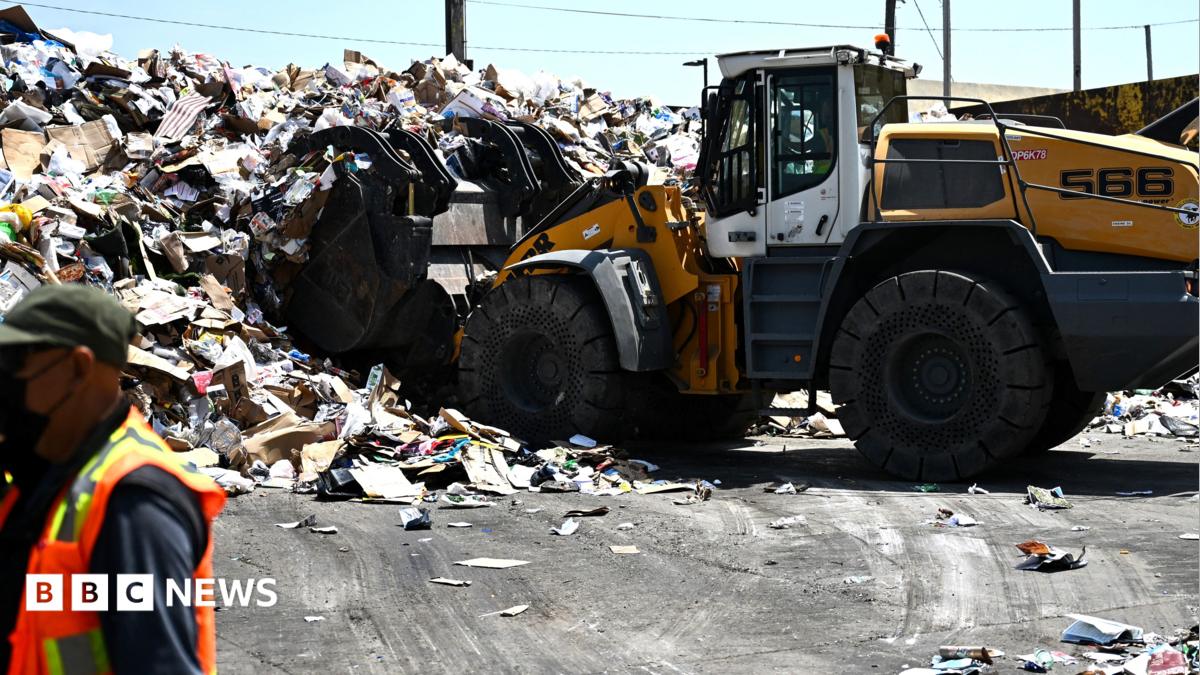

Milpitas, an affluent city located in California’s Silicon Valley, has been grappling with a lingering issue: unpleasant odors emanating from various industrial sites, particularly a sizable 342-acre landfill.
Residents have long endured the foul smells, with Chia-Ling Kong, a tech engineer living just half a mile from the dump, noting, “When I first moved here, I could not open my window for over 10 years.” Although the situation has improved slightly, Kong reports that her community still suffers from “two or three hours of bad smells a day.”
In line with Silicon Valley’s innovative spirit, the local community is placing its trust in technology to tackle the problem. Authorities have mandated the operators of the Newby Island landfill to deploy drones and install odor-monitoring systems to systematically assess and track the chemicals responsible for the offensive smells. Additionally, they are required to automate the collection of gases from the landfill.
Kong expresses optimism about this data-driven approach, stating, “Hopefully with this continuous monitoring, it makes it easier to pinpoint problems at the moment it starts.”
The landfill’s operators assert their commitment to ensuring safe operations and upholding air quality standards. Much like the situation in Milpitas, communities worldwide are voicing their grievances about unpleasant odors disrupting their daily lives. Whether a landfill, sewage treatment plant, or a factory is at fault, the complaints often pile up, and resolutions are not always straightforward.
Many regions lack effective regulations for managing odors. In the United States, for instance, the Environmental Protection Agency does not classify environmental odors as pollutants, leaving states and local governments to address the issue independently.
Urban expansion often contributes to this problem, as growing communities are situated closer to smelly facilities that may have previously been located at a distance. This proximity is increasing the demand for advanced technologies aimed at monitoring and mitigating unpleasant odors.
Odor consultant Micheal Bull highlights a growing public concern regarding neighborhood odors. He notes, “You’re getting developments being built nearer to odorous processes… as land has become more valuable, there is also infilling.” While Bull shares his insights from the UK, similar trends are being witnessed in various global locales.
Editor’s Take
This situation in Milpitas underscores the intersection of technology and community health concerns. The deployment of drones and monitoring systems presents a proactive step towards addressing environmental issues that many communities face. As urban development continues to encroach upon industrial areas, innovative solutions will be vital in managing quality of life, potentially benefiting residents and influencing future regulatory frameworks.
Source: www.bbc.co.uk