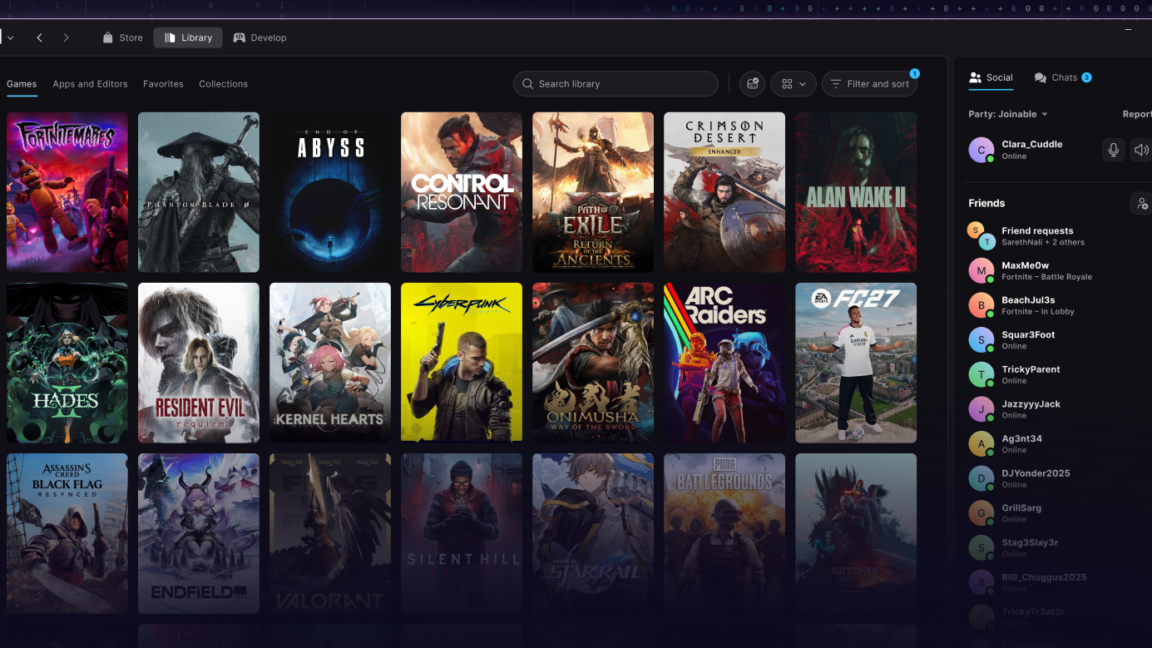

Epic Games Unveils New Launcher Built with AI-Enhanced “Vibe Coding”
After nearly eight years of competition with Steam, Epic Games is taking a bold step to enhance its game delivery platform. The company, known for the popular game Fortnite, has introduced a newly revamped version of its Epic Games Launcher utilizing an innovative approach they refer to as “vibe coding.”
In its announcement, Epic Games highlighted that “programming is hard,” and to address this, they have crafted a version of the launcher that promises to be significantly faster and more responsive than its predecessor. According to information released by the company, the new version was developed from the ground up, incorporating artificial intelligence as a resource for coding and refining features within a fresh technological framework.
Martin Keely, the General Manager of the Epic Games Store, explained to PC Gamer that the development team opted to replicate the functionality of the previous version, but with an entirely new coding approach. This shift, Keely noted, allowed for increased efficiency, enabling a smaller team to successfully overhaul the codebase and expedite the launcher’s release across multiple platforms, including support for Windows, Mac, and an upcoming version for Linux.
We vibe coded the Epic Games Launcher to be faster than the other guy.
Don’t believe us? Test it out for yourself in Preview:
https://t.co/pdtAeEIri4 https://t.co/aMxojUUVPV— Epic Games Store (@EpicGames) October 14, 2026
The initial focus on enhancing startup speed is evident in Epic’s promotional messaging, which emphasizes that the latest launcher is designed to outperform its rivals. Early tests by Ars Technica indicate that the new launcher is capable of transitioning from a cold start to the main store page in a few seconds less than Steam. However, a claimed advantage of 0.06 seconds when returning from the system tray to the Library screen appears negligible, relying on an aspect of user experience that may go largely unnoticed.
Editor’s Take
This development signals a notable shift in how game delivery platforms could leverage AI to enhance user experience. For players, faster loading times may translate to a more seamless experience. For developers and publishers, easier tools for creating and maintaining these platforms could lead to increased competition in the gaming ecosystem. Ultimately, this initiative by Epic Games not only exemplifies innovation within the industry but also raises questions about the future role of AI in software development.
Source: arstechnica.com