
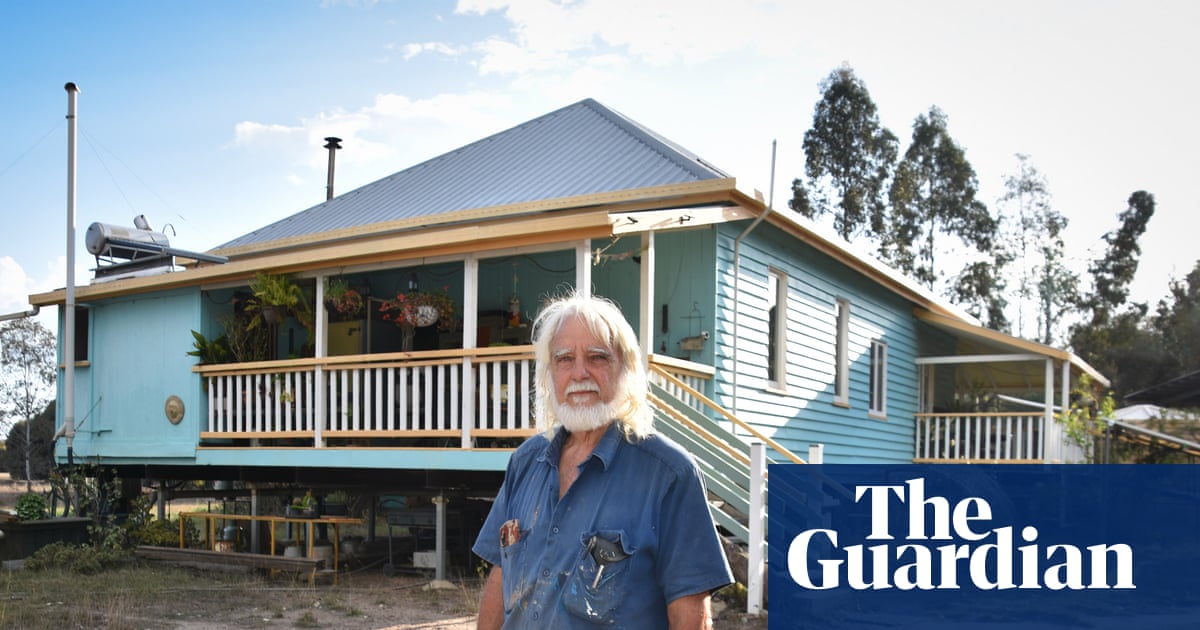

Denver Kanowski, a longtime resident of rural Queensland, has observed the ebb and flow of resource companies in the region for the past 70 years. His modest home, valued at $800, allows him to embrace nature while nestled amidst a gas field, not far from the Linc Energy contamination site, several gas power plants, and a coal mine.
The latest development is a proposed $31 billion data center aimed at powering Claude, a prominent language model from global AI leader Anthropic. If realized, this facility would rank as Australia’s largest data center and is slated to be located roughly 15 minutes from Kanowski’s home, in Kogan, about 180 kilometers west of Brisbane.
In a community weary from the volatility of coal seam gas, many residents share Kanowski’s skepticism: “Once bitten, twice shy,” he remarks. He expresses concern that this ambitious project exemplifies “the power of money and greed, coupled with shortsightedness,” stating, “I’ve read this book before.”
The proposed site spans 725 hectares, currently housing a large feedlot surrounded by gas wells. Developers at Zerra DC assert that the cooling system for the data center will be significantly less water-intensive than traditional facilities, comparable to that of an average shopping center.
However, powering such a facility demands immense energy. The Western Downs data center is projected to require 2.16GW of peak power, equivalent to roughly a quarter of Queensland’s total energy needs. While it promises to create about 1,400 long-term jobs and thousands during construction, many in the community remain unconvinced.
Dalby travel agent Mordechai Winters, who quickly opposed the project after its announcement, describes his disappointment with local council and government decisions. “I was crushed,” he says, fearing that the purported advantages of the data center are overstated and could echo the boom-bust dynamics seen in the gas industry.
Cecil Plains farmer Liza Balmain echoes these sentiments, recalling unmet promises from the gas boom. In a region that felt its impacts acutely, she sees “huge similarities” between the prevailing mindset during that era and the current push for the data center.
Nationwide, Australians are expressing heightened concern. Jo Shulman, CEO of the Environmental Defenders Office, reported a 250% increase in inquiries about data centers this year. “I would say the data center is the new frontier,” Shulman asserts, emphasizing growing apprehensions regarding environmental impacts and community health.
Advocating a pause on future data center developments, Shulman warns that these facilities risk repeating the mistakes seen during the coal seam gas boom.
Local Governance Challenges
Dalby Mayor Andrew Smith maintains that the council should oversee this unprecedented project, which he believes will significantly benefit the community more than the gas industry has. “It’s diversified our economy … it’s created jobs,” he noted. However, the Queensland government recently announced it would centralize control over data center approvals, removing some authority from local councils to ensure a standardized approach across the state.
Smith advocates that all agreements should involve local councils and communities and expressed a desire for thorough planning without rushing the process. Though the data center has potential, winning local trust may prove challenging.
Notably, Premier David Crisafulli has been working to encourage investment in Queensland. He believes the project could open avenues for quality jobs in regional areas and potentially lower energy costs for residents. On the ground, community sentiments remain divided, with many residents uncertain about the long-term implications of the data center.
Kanowski articulates a deeper concern that transcends economic benefits, warning that the facility may contribute to an online “fantasy” environment, disconnecting individuals from meaningful experiences. “They don’t even see the trees,” he laments, fearing for the essence of the local ecosystem and culture.
Editor’s Take
The proposed data center in Queensland stands as a pivotal moment for the region, intersecting technology and community. While it promises jobs and investment, residents’ memories of the tumultuous gas boom cast a long shadow of skepticism. As stakeholders weigh environmental concerns against potential economic benefits, this development could reshape the local landscape in ways yet to be understood.
Source: www.theguardian.com