
Pro-Israel Groups Excluded from East London March Commemorating Blackshirts Battle

On the anniversary of the historic Battle of Cable Street, a moment in 1936 when East End Jews united with their neighbors to confront the British Union of Fascists led by Oswald Mosley, tensions have emerged in the current commemorative march. Pro-Israel Jewish groups faced rejection from hard-left activists who labeled them as “fascists.”
The group Jewish Anti-Zionist Action has announced via social media that individuals associated with pro-Israel sentiments are not welcome at the anniversary rally, stating, “fascists aren’t welcome at the antifascist march.”
The leading voice of this contentious campaign is Talia Woodin, a 27-year-old activist and former co-ordinator of Extinction Rebellion. Woodin, who infamously celebrated Queen Elizabeth’s passing with a social media post, has strong ties to the movement, being the daughter of Mike Woodin, a former prominent figure in the Green Party.
Ahead of today’s event, Woodin criticized the Board of Deputies of British Jews, which organized a separate “festival of Jewish culture” to mark the occasion. In her online commentary, she claimed that the board could not legitimately claim ownership over the march, citing past advisories issued by the Jewish Chronicle to avoid Cable Street instead of resisting fascist forces.

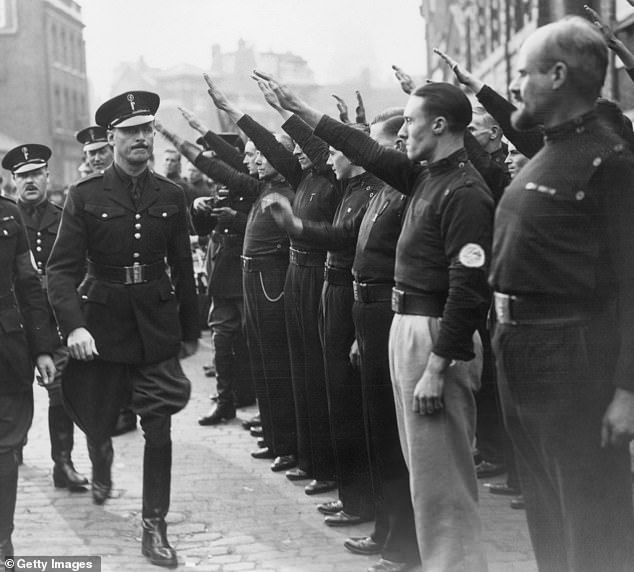
British politician Sir Oswald Ernald Mosley inspects members of his British Union of Fascists.
Woodin’s faction is part of a broader alliance of leftist organizations, including London Community Defence and Jewish Voice for Liberation, which collectively aim to prevent pro-Israel constituents from participating in the march.
In May, London Community Defence stirred controversy by sharing an inappropriate social media post targeting Nigel Farage, which bore a threatening caption. Meanwhile, Jewish Voice for Liberation recently criticized Leeds Minster for eliminating a tribute that included the names of Hamas operatives.
Although a Metropolitan Police source indicated that disturbances are not anticipated during the event, they acknowledged that confrontations between conflicting groups could occur.
Editor’s Take
This controversy highlights ongoing divisions within the Jewish community over issues of identity and political alignment. The refusal to allow pro-Israel groups participation raises questions about inclusivity within anti-fascist movements. As such debates evolve, they could have significant implications for community relationships, political discourse, and activism, influencing how collective histories are remembered and commemorated.
Source: www.dailymail.com