

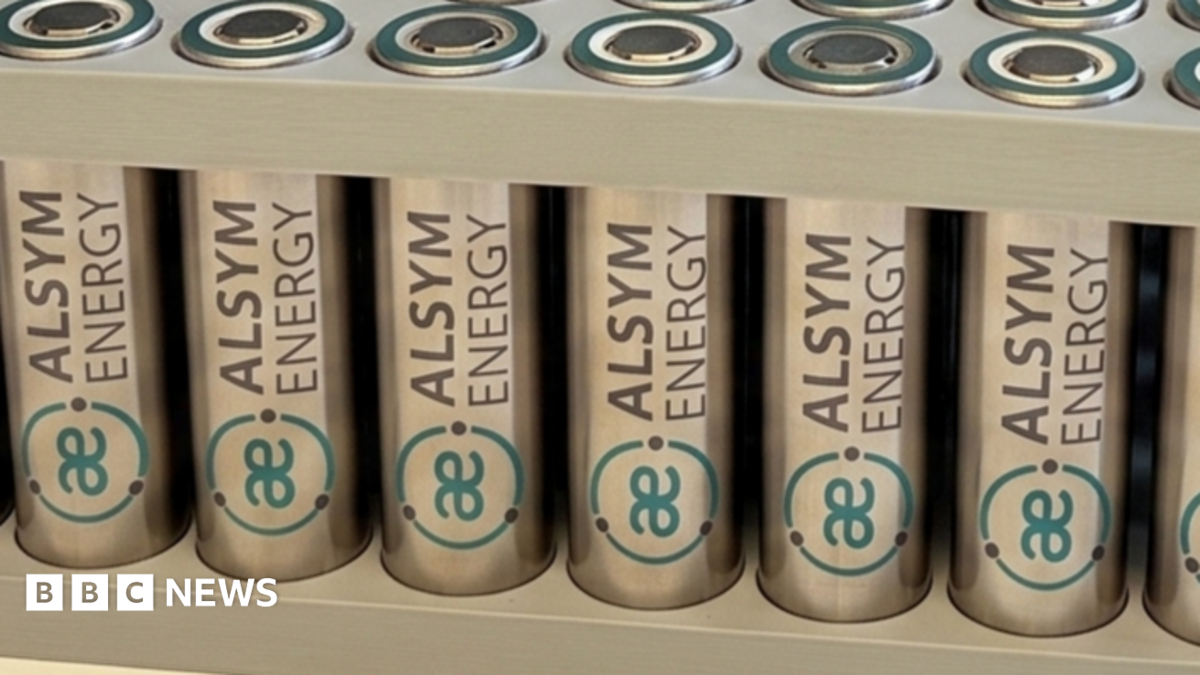

The world of sodium ion batteries is gaining traction, yet a lively discussion persists regarding the optimal and safest designs. Currently, many US companies in this sector are struggling to gain ground, while China stands at the forefront of sodium ion battery production.
The potential for manufacturing batteries in the United States with entirely domestically sourced materials presents a significant incentive, especially in contrast to lithium ion batteries, where China controls a vast portion of the material supply chain and production.
Tan, a representative from Unigrid, emphasizes that China’s involvement has been crucial for his company’s market entry. At present, Unigrid’s batteries utilize sodium ion cells sourced from China, but future plans may include using US-made cells, albeit potentially at a higher cost.
A point of contention in the safety conversation is the inclusion of chromium-3 in Unigrid’s battery cathode. When charged, electrons flow from the cathode to the anode, and concerns arise about chromium-3 potentially converting into the hazardous chromium-6, a known carcinogen.
Prof. Dame Clare Grey of the University of Cambridge, who co-founded the battery firm Nyobolt, cautions that utilizing materials like chromium raises significant safety concerns. She advocates for alternatives if safety is a primary selling point.
Agreeing with Grey’s concerns, Ivana Hasa from the Warwick Manufacturing Group acknowledges the possibility of chromium-3 converting to chromium-6 under specific conditions, although she notes that proper voltage control can mitigate this risk. She regards the safety testing of Unigrid’s technology as promising.
Responding to safety worries, Tan counters that the fears surrounding the toxicity of the battery materials are exaggerated. He points out that Unigrid’s battery has successfully navigated safety certifications for the European market and is currently undergoing assessments for the US market as well.
Tan further asserts that third-party tests have failed to produce chromium-6, despite extensive attempts to prove otherwise through overcharging.
Key factors influencing the efficacy and longevity of sodium ion batteries include the choice of cathode material and the formulation of the electrolyte. Some manufacturers are opting for harder carbon or sodium iron phosphate pyrophosphate (NFPP) instead of chromium.
Overall, confidence in the reliability of sodium ion batteries has seen a notable uptick in recent years, according to Prof. Grey, leading to their integration into grid storage solutions.
As of last December, pricing for lithium iron phosphate (LFP) batteries, a cost-effective form of lithium ion battery, was approximately $81 per kilowatt hour, while Unigrid’s sodium ion technology is priced around $100 per kilowatt hour. Analysts suggest that some companies believe sodium ion could reach prices as low as $30 per kilowatt hour, though significant reductions may take years to realize.
It’s worth noting that sodium ion batteries tend to have lower energy density compared to their lithium ion counterparts, necessitating larger and heavier designs to achieve equivalent power output. Despite advancements, sodium ion technology is unlikely to make a mark in small, energy-intensive devices like smartphones, with expectations favoring its use in larger energy storage applications.
Editor’s Take
The emerging landscape of sodium ion batteries holds significant implications for energy storage solutions. As manufacturers strive for safety and better performance, the shift towards domestic sourcing could reshape supply chains. Users and businesses may benefit from enhanced options as prices potentially lower over time, making sustainable energy storage more accessible.
Source: www.bbc.co.uk