

Credit:
CESifo
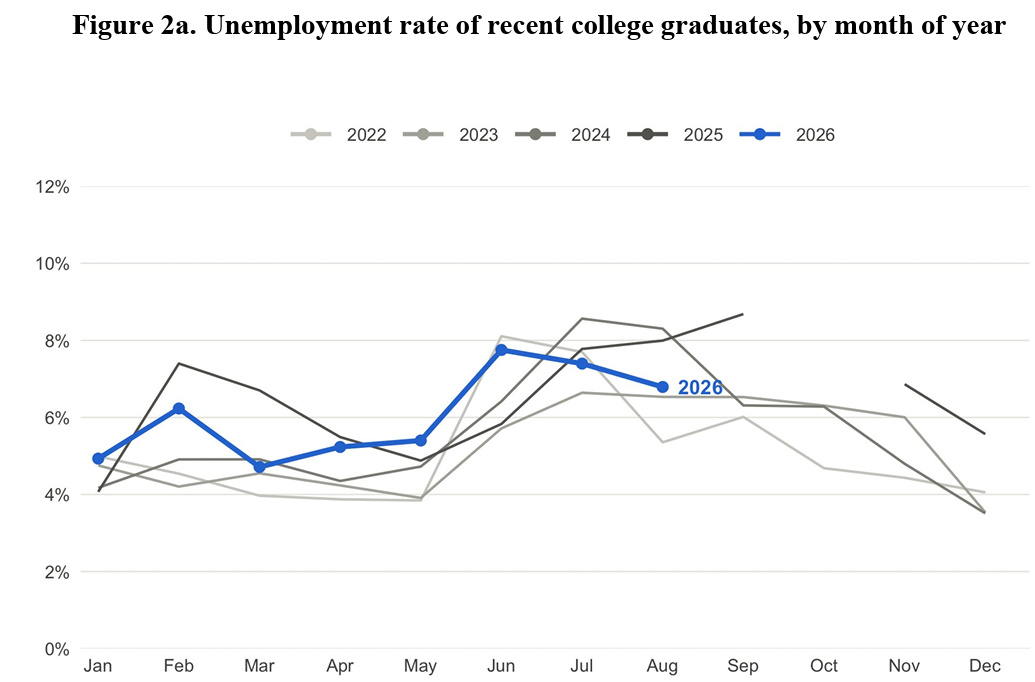
The unemployment rate for young college graduates in the summer of 2026 reached 7.3 percent, a figure that aligns closely with rates observed in preceding years. For instance, rates ranged from 6.3 percent in 2022 to 7.8 percent in 2024. This consistency persists even when considering graduates who expressed interest in employment but were not actively pursuing jobs, indicating they do not qualify as officially unemployed.
Researchers sought to validate these findings through statistical comparisons, examining recent college graduates alongside their non-college counterparts and older graduates aged 30 to 49. They further assessed employment levels in relation to potential AI exposure, based on a 2023 study that examined job roles where AI systems might have the most impact.
The analysis revealed that the variances between these groups from 2022 to 2026 were largely statistically insignificant. The data collectively suggests that the unemployment rate for recent college graduates in summer 2026 was not unusually elevated compared to prior years, according to the researchers.
This raises questions in light of a contrasting study from Stanford University, which reported a more alarming impact on employment. Stanford’s conclusions were derived from payroll data supplied by HR firm ADP, which, while representative of a broad segment of the economy, may overlook some aspects included in a more comprehensive Census survey. Additionally, the ADP research focuses on job supply across various sectors, while the unemployment analysis takes into account the overall demand for those positions—demand that could fluctuate even if job availability changes due to increased AI integration.
The researchers from CESifo emphasize that the Summer 2026 unemployment statistics represent a valuable preliminary assessment of how advancing AI technologies are, or notably are not, influencing the current U.S. job landscape. However, they caution that future classes, particularly those graduating in 2027 and beyond, may face different challenges, and ongoing data collection will be essential for understanding the evolving impact of AI in work environments.
Editor’s Take
This analysis provides essential insight into the current state of the job market for recent graduates amid rising AI adoption. Understanding that unemployment rates remain stable offers a sense of reassurance, yet it highlights the necessity for continual monitoring as AI technologies evolve. Businesses and policymakers need to prepare for potential shifts that may impact future job markets significantly.
Source: arstechnica.com