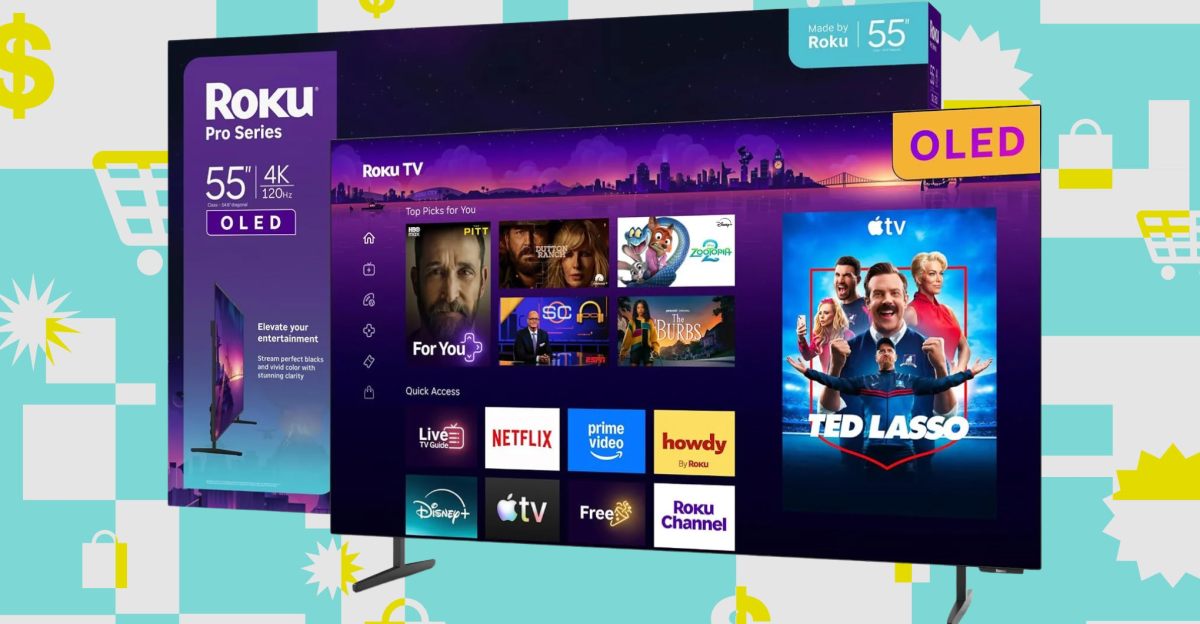

Roku has officially announced the launch of its inaugural lineup of OLED TVs. The starting price of these models begins at $999 for the 55-inch Pro Series version, which features an impressive 120Hz refresh rate OLED panel. This model comes equipped with four HDMI 2.1 ports, along with support for Dolby Vision and HDR 10 Plus. Currently, shoppers can enhance their savings at Amazon using the code ROKUOLED300, which reduces the price by $300, making it the most competitively priced 55-inch OLED available on the market.
If a larger screen size is your preference, the 65-inch variant is also available at a substantial discount. By utilizing the promo code ROKUOLED400, consumers can purchase this model for just $799, down from its original price of $1,299. The immediate appeal of this 65-inch Pro Series model makes it a noteworthy option for buyers seeking quality entertainment without overwhelming their budgets. Although neither model has been officially tested yet, they appear to offer commendable picture quality.
As built-in Roku software powers these TVs, there’s no need for an external streaming device unless users choose alternatives from other brands. Each Pro Series unit is provided with a backlit Roku remote and features like auto low latency mode, alongside variable refresh rate support (notably, AMD FreeSync Premium), catering to gamers’ needs. Additionally, Roku is set to introduce a higher-end Pro Series LX this October, starting at $1,299. This model promises twice the brightness of the Pro Series, with innovative features including a reflection-reducing polarizer and a 144Hz refresh rate.
Editor’s Take
The launch of Roku’s first OLED TVs is a significant milestone, showcasing the company’s venture into high-end display technology. This development offers consumers premium options at competitive prices, making cutting-edge visuals more accessible. As OLED technology continues to gain traction, Roku’s strategy may influence market dynamics, driving innovation among competitors and benefiting users with enhanced viewing experiences.
Source: www.theverge.com