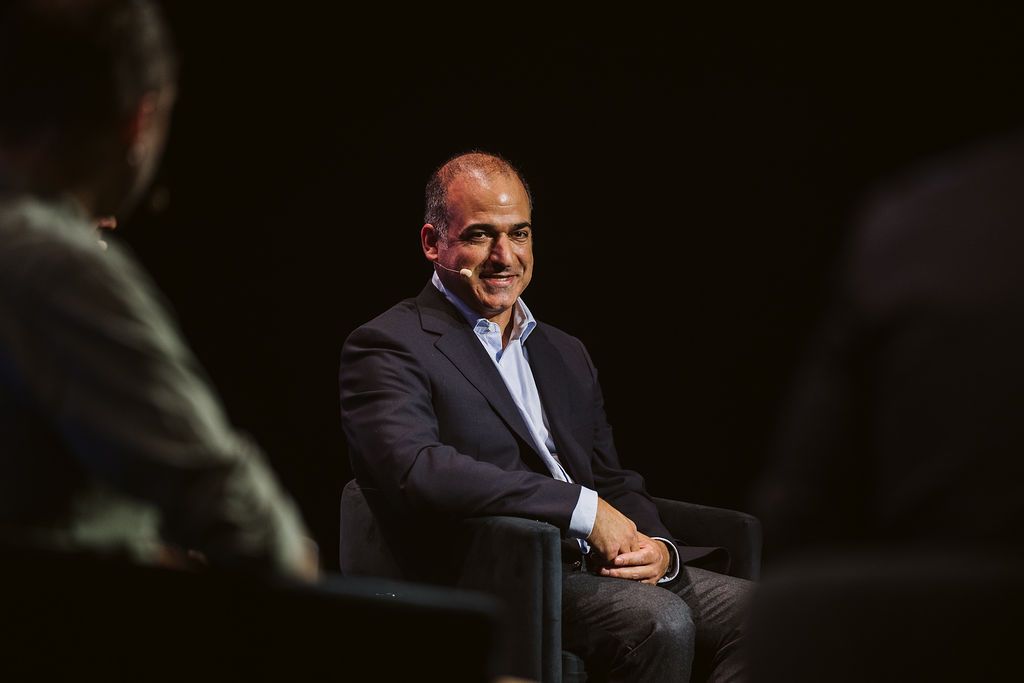

This week, I had the opportunity to moderate a panel discussion on world models at the All In conference, an event unconnected to the renowned podcast. This experience allowed me to explore one of the more enigmatic sectors of the artificial intelligence industry. Prominent players in this domain include Yann LeCun’s AMI Labs and Fei-Fei Li’s World Labs. While both organizations have garnered significant attention and investment, they appear to show limited interest in immediate monetization strategies.
At the essence of world models is the concept of automating spatial intelligence. This field holds promise across various exciting and profitable avenues, including robotics, interactive video, and advanced self-driving systems.
However, when I began to inquire about the practical applications of this technology, clarity became elusive. The most credible voice I encountered was Michael Rabbat, a co-founder and VP of World Models at AMI Labs, who participated in the panel. When pressed regarding the company’s current projects, he remained non-committal, stating, “We’ll talk about it when we’re ready to talk about it.” In an email, he further explained, “We’re still in a research and building phase, so we’re not discussing any product plans or timelines publicly.”
Considering that AMI has only been in operation for less than a year, it’s understandable that they may choose to remain reticent. Yet, this level of secrecy seems to pervade the entire world-modeling landscape. The flagship product from World Labs, known as Marble, is among the most advanced offerings in the sector, facilitating tasks ranging from media creation to developing explorable environments for video games and CGI. While there are applications in robotics, the platform is primarily aimed at showcasing its capabilities.
This culture of confidentiality extends to their data suppliers as well. During the same conference, I spoke with Alex de Vigan, CEO of Physicl, a data provider for the emerging world modeling sector. He expressed some frustration, as he acknowledged that Physicl’s data has proven beneficial for their clients, yet he remains uncertain about the specifics of their projects. “I wish they would tell us more. We could build more useful data if we knew what they were working on,” de Vigan noted.
The ambiguity surrounding world models stems from their inherent versatility. At its core, a world model is comparable to a navigable map, akin to the AI frameworks that enable self-driving vehicles. However, the same conceptual framework that empowers a company like Waymo to navigate traffic can also be employed by humanoid robots to transport items or convert short video footage into interactive environments. AMI has already ventured into various sectors, including manufacturing, biomedicine, robotics, and AI software for healthcare professionals through its collaboration with Nabia. While it is unlikely they will pursue all these avenues simultaneously, one or two may take precedence.
There is a consensus that numerous viable business opportunities exist within the realm of world model technology. As long as funding remains readily available, there is little urgency to concentrate efforts on a singular direction. In fact, diversification could be strategically advantageous. Should AMI announce the development of a next-generation project, such as a humanoid robot like OpenClaw or an advanced rendering system for the film industry, it could prompt other labs to become more active in exploring this rapidly evolving field.
The flip side of this financial abundance is that competitors can also secure funding, which means that the resources that allow for discreet development will similarly benefit emerging rivals once a clear market opportunity is identified. While competition is an inevitable aspect of any industry, maintaining a degree of secrecy can postpone it, providing companies with time to refine their offerings before revealing them to the public.
This situation echoes the principles of the dark forest hypothesis proposed by Cixin Liu: in an ambiguous environment, avoiding detection may be the best approach.
This article was originally published on September 18, 2026.
When you purchase through links in our articles, we may earn a small commission. This doesn’t affect our editorial independence.
Editor’s Take
The trend of secrecy among AI companies, especially in the world model domain, suggests a cautious approach to innovation. This may benefit developers and businesses by allowing for well-thought-out products before facing competition. However, as these technologies advance, users and stakeholders will demand clarity on their practical applications and potential impacts on their industries.
Source: techcrunch.com