
Ilfracombe, Devon recently witnessed an unconventional scene when an elderly woman, clad in smart cropped trousers and a bright red rain jacket, took matters into her own hands — literally. Perched at the top of an extendable ladder, she was seen cutting wires atop traffic lights, equipped only with a pair of pliers. Supporting her was a grey-haired man nursing a takeaway coffee, while onlookers filmed the incident, offering vocal support. “Just cut the wires!” encouraged one spectator, implying a sense of vigilante protest.
The incident, which occurred on August 28, quickly gained traction on social media. While some condemned the act as vandalism, viewing it through a lens of criminality, others hailed the woman as a hero. Comments on social media echo sentiments like, “Not all heroes wear capes,” highlighting a divided public perception.
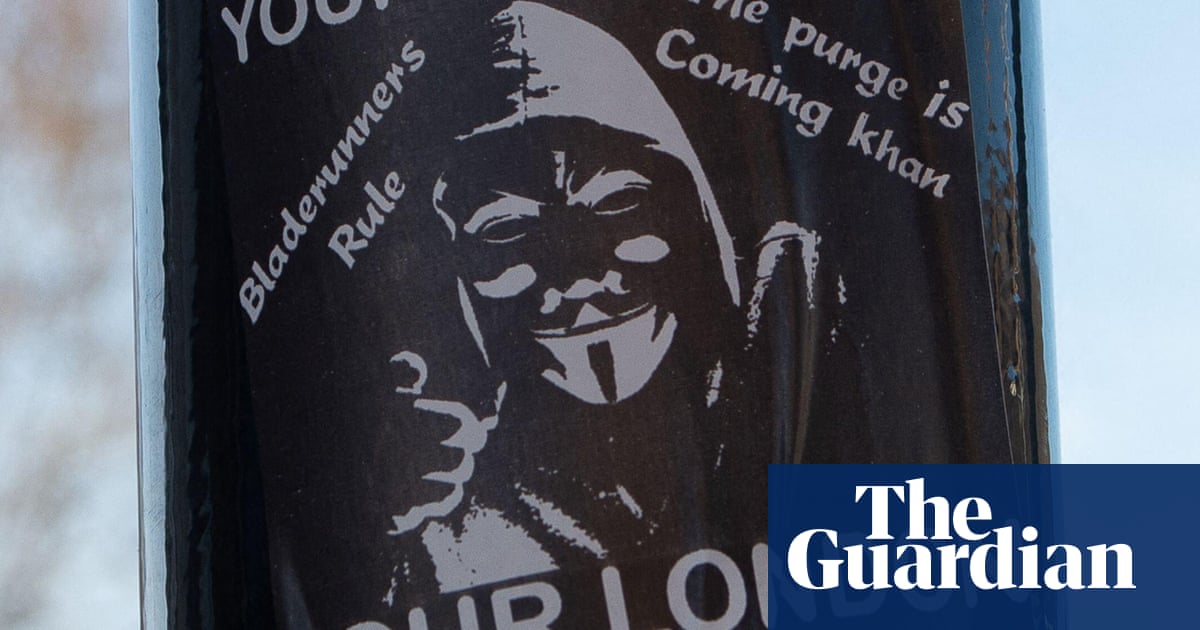
The actions of the elderly couple echo a greater movement among certain groups, notably one calling itself the “Blade Runners.” This faction asserts that traffic scanners positioned above conventional traffic lights serve a darker purpose, alleging they are designed to install advanced surveillance technology. These “phased array electronic assault weapons,” as claimed by the group, are purported to be capable of mass surveillance and are linked to health concerns, including cancer and dementia.
Prior actions by similar activists have involved targeting Ulez cameras in London in protest of what they perceive as intrusive surveillance and associated emission zone charges. There have been sporadic attacks on 5G towers fueled by conspiracy theories alleging a link between the technology and the spread of COVID-19.
Ilfracombe isn’t isolated in experiencing such vandalism; other towns have reported similar incidents. In Cambridge, police requested information regarding the damage of nearly 200 traffic detector units, while in Sleaford, Lincolnshire, around 10 units faced vandalism in a single week, with local councils denouncing the conspiracy theories propelling such actions. A pensioner in County Durham is even facing trial for damaging traffic lights.
Susan Grant-Muller, a professor at the University of Leeds, finds the hostility toward traffic scanners puzzling, as the technology has been in use since the late 1970s. She points out that activists rarely target the traditional red, amber, and green lights but instead focus on auxiliary sensors designed to ease traffic flow. These sensors monitor vehicle and, in some cases, pedestrian volume, to optimize traffic light phasing.
“The cameras don’t record personal information,” asserts Grant-Muller. “They simply detect whether a vehicle or person is present and the length of any queues.” Typically installed at historically problematic intersections, these devices are often welcomed by community residents concerned about road safety.
Despite these reassurances, skepticism remains among those who believe these scanners serve ulterior motives linked to surveillance and individual freedoms. Professor Clare Birchall from King’s College London describes this anxiety as part of a broader “super-conspiracy” narrative often termed “the great reset.” She emphasizes how such conspiracies amalgamate various fears about technological overreach, with many interpreting them as critiques of the ever-increasing data collection and surveillance.
Professor Stephan Lewandowsky from the University of Bristol adds that conspiracy theories often arise in the wake of distressing events, providing a sense of comfort by attributing misfortune to deliberate wrongdoing rather than random occurrences.
Editor’s Take
The rise of activist movements like the “Blade Runners” highlights growing public unease regarding surveillance technologies in urban areas. As more individuals question the implications of data collection, businesses, developers, and policymakers must address these concerns proactively. Understanding the motivations behind these actions will be crucial in balancing technological advancement with public trust.
Source: www.theguardian.com