Minneapolis Residents Dub America’s Wokest Prosecutor After $500K Bodyguard Spending

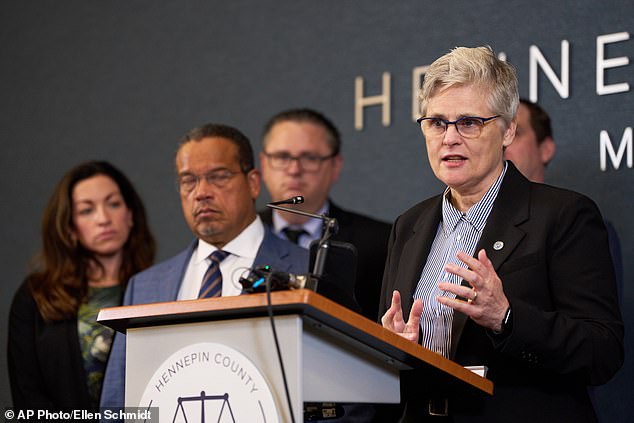
Hennepin County Attorney Mary Moriarty, aged 62, has drawn attention and criticism for spending over $500,000 on private security, leading to her being branded as “Bloody Mary” by social media users. This nickname arose from reports of several accused criminals, including alleged murderers, being released under plea agreements during her tenure.
Critics have pointed out the irony of Moriarty’s significant spending on personal security funded by taxpayer dollars, while voicing concerns about public safety. One user on X remarked, “In Minnesota she is known as ‘Bloody Mary.’ She will unleash the worst of the worst back on the streets within hours while [having] 24/7 personal security.”
Moriarty has employed private bodyguards since November 2023, as confirmed by financial records obtained by Alpha News. Hennepin County paid the security firm Relative Intel approximately $10,950 in 2023, with larger sums earmarked for the following years: $103,825 in 2024 and $183,875 in 2025.
Despite the escalating concerns surrounding crime in Minneapolis, Moriarty has maintained that the city is relatively safe. She recently contested claims made by former President Donald Trump regarding the presence of Somali gangs in the area.
Moriarty has faced scandals and criticism for her approach as a prosecutor, particularly for not filing charges against individuals accused of serious crimes. A notable incident involved Carlton Johnson II, who allegedly threatened his neighbor but subsequently went on to commit a mass shooting on September 2, injuring five people and killing two others. Johnson was killed by police at the scene.
Following Johnson’s actions, critics have raised alarms about Moriarty’s decisions, including an instance in which she allowed Abdimahat Bille Mohamed, charged with multiple kidnappings and assaults, to enter plea deals that did not result in incarceration.
In response to the backlash, Moriarty has suggested that the Justice Department’s political motivations influence their scrutiny of her office. She stated that the current federal administration has been more focused on pardons rather than ensuring public safety.
By the end of August 2023, records indicated that Moriarty had spent a staggering $214,573 on Relative Intel’s services for security. This amount surpasses last year’s total and is over double the expenditure for the year 2024. Hennepin County confirmed their agreement with Relative Intel for personal security services, asserting that the law office utilizes this service.
The county has engaged in contracts with Relative Intel worth $115,000 from October 2023 to December 2024 and a second contract totaling $500,000 for the period of January 2025 through December 2026. Despite the county’s claims of just over $425,000 in security spending, records extend to show a total of $513,223 had been paid by August 2026.
Critics, including attorney Chris Madel, denounced Moriarty’s expenditures as hypocritical, particularly as she suggests citizens shouldn’t fear crime while securing her own safety at substantial taxpayer expense. He raised concerns over other officials who face legitimate threats but do not have taxpayer-funded security detachments.
Moriarty’s term as Hennepin County Attorney has been marred by controversy, which may complicate her position as she approaches the end of her term on January 4, 2027. Recently, she drew ire for a lenient sentence negotiated for a double murderer, raising further questions about her judgement and effectiveness in office.
Overall, Moriarty’s controversial use of taxpayer money for personal security alongside a perceived leniency towards serious crimes highlights the ongoing debate regarding public safety and accountability within the legal system.
Editor’s Take
This situation underscores profound issues regarding public trust in law enforcement and criminal justice. Spending taxpayer money on personal security while overseeing a perceived rise in crime challenges the credibility of public officials. As citizens question the effectiveness of their leaders, this could influence future votes and policy reforms in law enforcement practices.
Source: www.dailymail.com