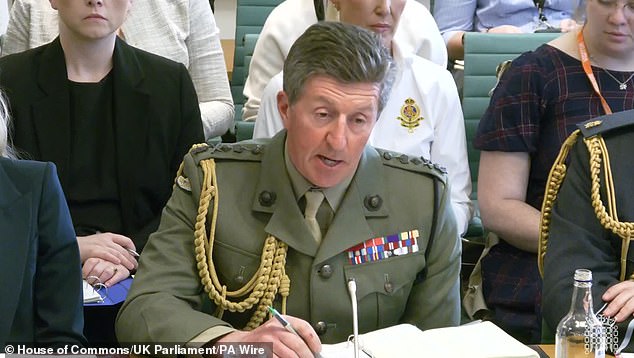

The head of the Royal Navy has issued a stark warning that the United Kingdom faces a significant risk of defeat at sea against Russia unless it bolsters its fleet with additional warships and drones. In a private address, First Sea Lord General Sir Gwyn Jenkins emphasized the urgency of enhancing the nation’s naval capabilities and “rediscovering what it means to be a maritime nation,” asserting the importance of regaining dominance in the Atlantic.
As previously reported by the Daily Mail, the UK’s once-esteemed Navy has suffered due to ongoing budgetary restrictions. The current fleet is not only the smallest in history but also many vessels and submarines are inoperable and cannot be deployed.
This past May, it was disclosed that the fleet of frigates has dwindled to a mere five following the retirement of HMS Iron Duke, which was withdrawn just three years after an extensive £103 million refurbishment due to technical issues. Moreover, numerous occasions have seen the Royal Navy’s entire group of hunter-killer submarines immobilized, leaving the UK vulnerable to potential threats.
In a recent incident, after RAF Akrotiri in Cyprus was targeted by an Iranian-made drone in March, the destroyer HMS Dragon took three weeks to reach the site, underscoring the critical state of naval readiness.

First Sea Lord, General Sir Gwyn Jenkins, warns that Britain is ‘at risk’ of losing its naval advantage to Russia.
UK submarines are increasingly undertaking extended patrols, with some missions exceeding 200 days at sea due to a shortfall in available vessels. Such extensive deployments have become normal for naval insiders. In a private event held at Admiralty House in Whitehall, General Sir Gwyn indicated that the primary threat to UK security is from Russia.
He elaborated on Russia’s capacity, noting that their advanced submarines are becoming harder to track, and they possess long-range precision weaponry along with specialized systems designed for deep-sea operations. Russian activities have intensified, with an increase of over one-third in incursions into UK waters in the past two years.
Amidst this pressing threat, the Royal Navy, alongside the Army and Royal Air Force, must contend with budget cuts imposed by Defence Secretary Wes Streeting, who has demanded £3 billion in efficiencies this fiscal year. This includes a £1.2 billion cut for the Army while the Navy and RAF face reductions totaling £1.8 billion.
Despite calls for increased military funding, conflicting messages are emerging from government officials regarding defense priorities versus social welfare. The Daily Mail’s ongoing campaign for improved military funding continues to highlight the need for enhanced national security.
In light of these budgetary challenges, General Sir Gwyn is moving forward with the integration of uncrewed systems to augment naval operations, particularly focusing on expanding drone capabilities to service helicopters, frigates, destroyers, and submarines.
Editor’s Take
This development underscores a critical juncture for military preparedness in the UK, as budget constraints threaten national security at a time of heightened geopolitical tension. Strengthening maritime capabilities is essential not only for defense but also for maintaining UK sovereignty in contested waters.
Source: www.dailymail.com