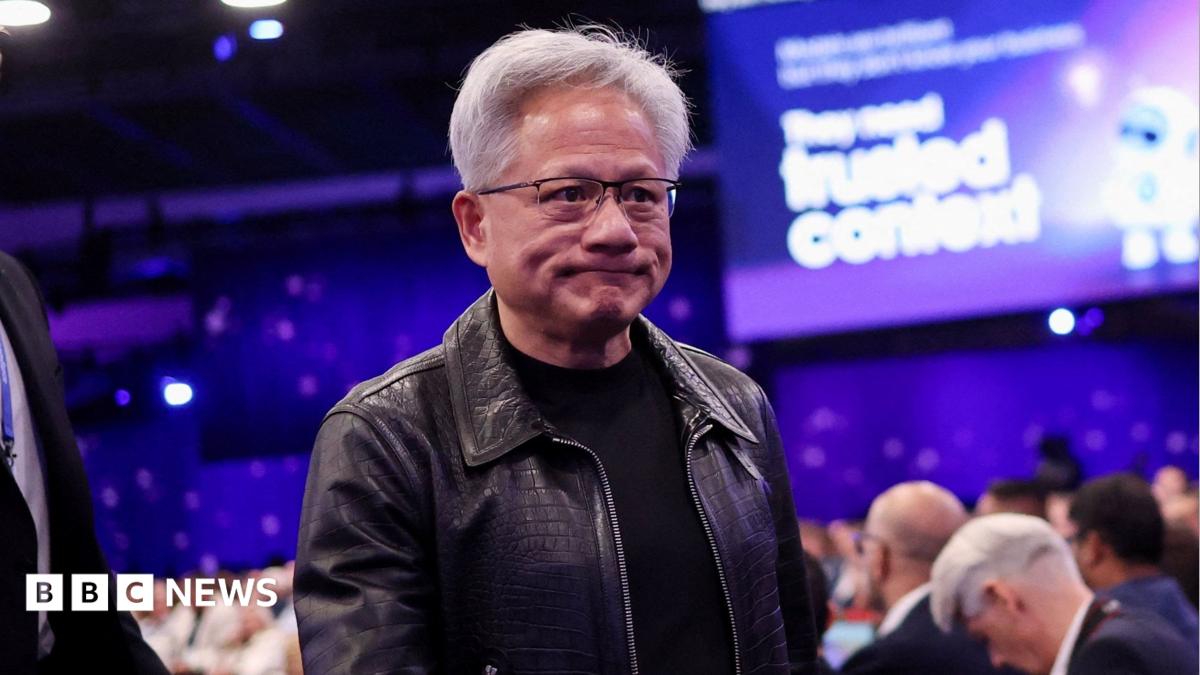

Jensen Huang, the CEO of Nvidia, has asserted that leaders within the artificial intelligence (AI) sector should take responsibility for determining when new iterations of the technology should be introduced. This declaration comes amid rising apprehensions about the potential risks AI poses to humanity.
Huang commented, “We don’t need new laws or regulations,” emphasizing that innovation speed should not be pitted against the safety of AI products. His remarks suggest a preference for industry self-regulation over stricter governmental oversight.
Under Huang’s leadership, Nvidia has surged in valuation, driven by unwavering demand for its AI computing chips.
This perspective contrasts sharply with an increasing number of voices in the tech community who are sounding alarms about AI’s potential to devastate human life. A viral post from a former researcher at AI company Anthropic recently insinuated that unchecked AI could lead to human extinction by the end of the decade.
Following this, various AI executives and specialists expressed agreement with these fears, prompting Dario Amodei, CEO of Anthropic, to advocate for a deceleration in AI development and stronger governmental regulations of the sector.
This call received support from Sam Altman, CEO of OpenAI, Demis Hassabis, co-founder of Google’s DeepMind, and Elon Musk, owner of the social media platform X and the AI assistant Grok. However, others within the industry have characterized such concerns as exaggerated, suggesting they are being exploited to generate hype around the technology.
Speaking during a recent conference in San Francisco, Huang referred to the current advancements in AI as representing “a new industrial revolution,” while maintaining that companies should regulate their own practices. He noted, “Safety is paramount. However, safety is an engineering problem.”
Huang affirmed that AI leaders must refrain from launching products if they have any doubts about their safety. “If at any time you feel the institution is not in control, take a pause,” he advised.
Nevertheless, the idea of a self-regulated industry has raised eyebrows. Jack Clark, an executive at Anthropic, criticized the notion of allowing AI to function without regulation as “rolling dice with immense risks.”
Meanwhile, Patrick Hillman, chief business officer at Logical Intelligence, commented on the lack of public trust in tech companies to act in the best interest of society. He stated, “If you believe what you are building is dangerous, show us what you are prepared to stop doing.”
Editor’s Take
Jensen Huang’s stance underscores a significant debate in the AI industry regarding self-regulation versus external oversight. As AI technology evolves rapidly, the implications of Huang’s perspective could affect safety protocols, user trust, and regulatory frameworks. This discussion is essential for businesses and developers, as it could shape future innovation and user experiences in a landscape increasingly influenced by AI.
Source: www.bbc.co.uk