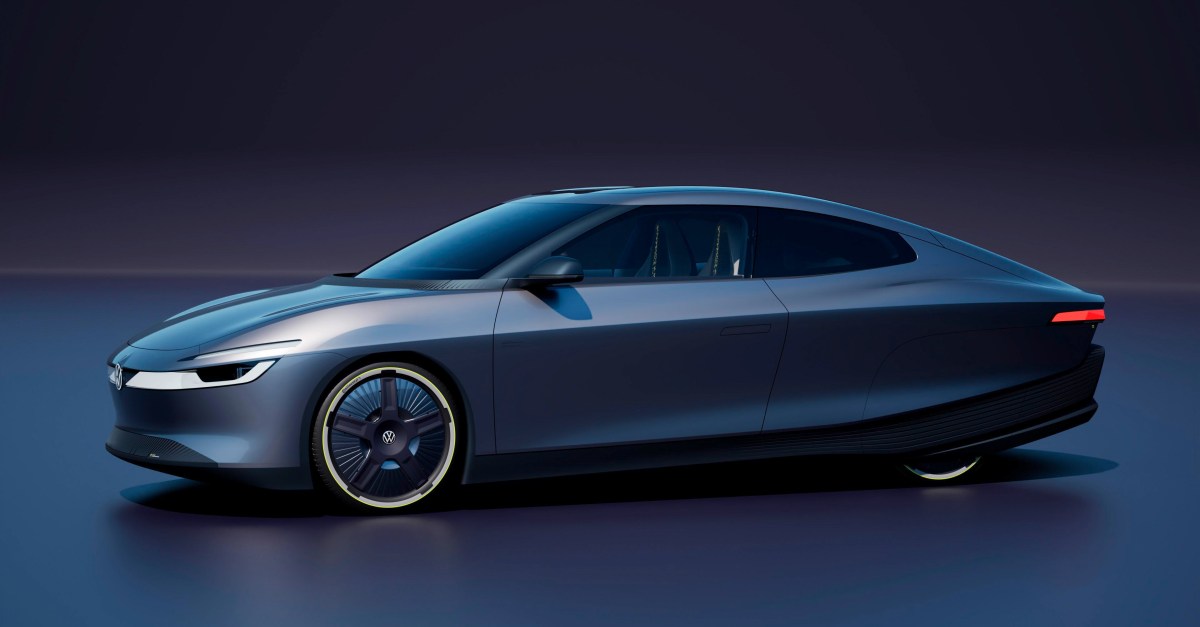

Volkswagen has unveiled its latest electric vehicle prototype, dubbed the Mission Efficiency, which aims to redefine energy efficiency standards in the automotive industry. Built on the company’s MEB+ platform, this sleek 2+2 seated electric coupe incorporates front-wheel drive components derived from upcoming models like the ID. Polo and ID. Cross.
With a remarkable drag coefficient of just 0.158, the Mission Efficiency positions itself as the most aerodynamic road-ready vehicle on the market. It has reportedly achieved a new record for energy efficiency, utilizing only 6.48 kWh of energy for every 100 kilometers during controlled driving conditions — specifically at a steady speed of 68 km/h over flat terrain, with auxiliary features such as air conditioning turned off. Thanks to its formidable design, this vehicle claims the title of “the most economical near-production electric car in its segment.”
In practical terms, what does this mean for drivers? The Mission Efficiency showcases its capability to cover long distances with minimal charging interruptions. In a recent real-world test, Volkswagen completed an impressive 1,278.36 km (794.34 miles) journey from Wolfsburg to Vienna on a single charge, utilizing its 54.9 kWh (net) battery. During this trip, the vehicle consumed an average of only 6.89 kWh/100 km (7.51 kWh/100 km when accounting for charging losses), arriving with 164 km of range still available.
The vehicle’s aerodynamic design, featuring a teardrop shape and streamlined wheel coverings, is tailored to slip through the air with minimal resistance. Notable design elements include a fully covered underbody, frameless windows, and flush door handles, all contributing to its impressive efficiency. Interestingly, the Mission Efficiency actually becomes more energy-efficient at higher speeds, showing a 30% reduction in energy consumption compared to the ID. Polo when traveling over 80 km/h.
Where Volkswagen opted not to push the boundaries of aerodynamics, it made significant efforts in reducing vehicle weight. The prototype features lighter paneling and a novel infotainment system that encourages users to bring their own devices, using a portable Bluetooth speaker and a smartphone/tablet dock instead of a central touchscreen. Additionally, integrated solar panels on the vehicle’s roof can provide up to 30 km of extra range for auxiliary systems.
This innovative prototype emphasizes that achieving groundbreaking efficiency numbers does not solely rely on advanced motors and batteries. The focus here is on clever design, showcasing what amounts to a reimagined ID. Polo with a commitment to shattering records.
This engineering approach resonates beyond Volkswagen, as automakers worldwide are increasingly motivated to elevate their EV offerings. From Ford focusing on aerodynamics for its next-generation electric truck to Mercedes-Benz, Audi, and Porsche also prioritizing aerodynamic designs, the automotive industry is keenly aware of the importance of enhancing vehicle efficiency. The critical question remains: which innovations will make it to production, and how will consumers receive these newly shaped vehicles?
Editor’s Take
The unveiling of the Mission Efficiency by Volkswagen highlights a crucial shift in the automotive sector toward sustainability and efficiency. As consumers prioritize eco-friendly options, innovations like these could greatly influence purchasing decisions. This development not only sets new benchmarks for electric vehicles but also challenges competitors to rethink design paradigms, ultimately fostering a more efficient EV landscape for the future.
Source: www.theverge.com