

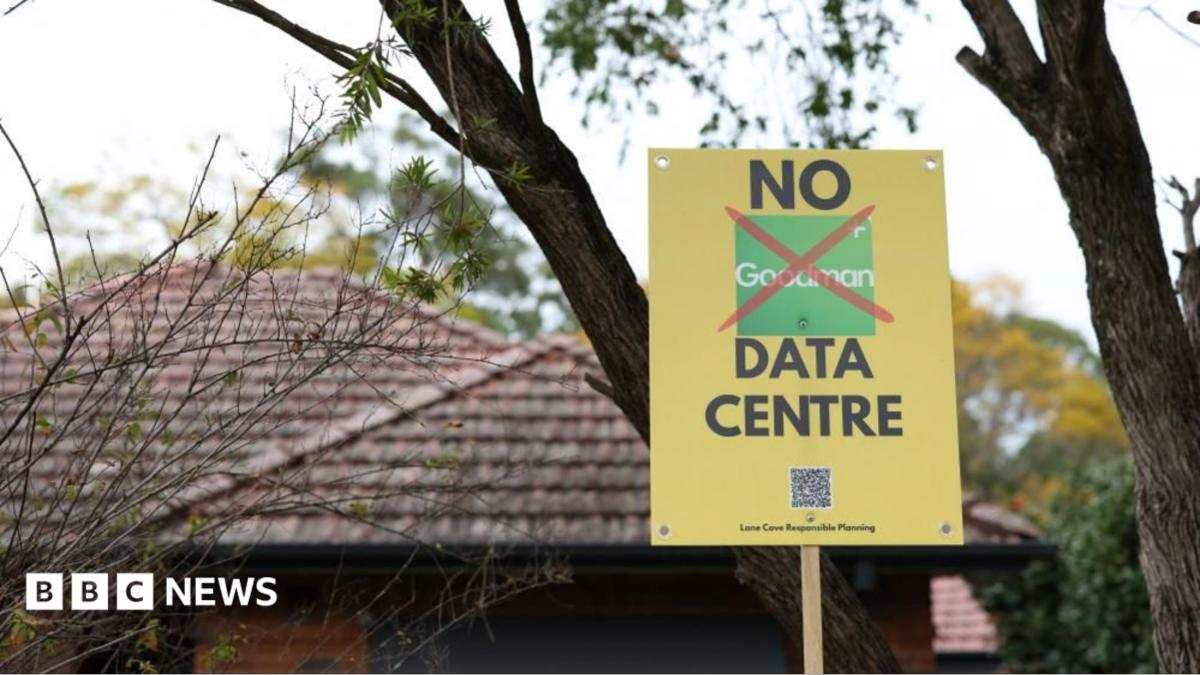

A recent town hall meeting hosted by Greenpeace Australia Pacific at the Lane Cove library has sparked significant concern among local residents regarding plans to transform their area into a hub for data centres. Attendees voiced frustrations over a lack of consultation about this development, especially given the proposed sites’ proximity to homes and schools.
One proposed data centre is set to be just 16 meters away from the nearest residence and 160 meters from a local primary school, raising alarm bells among community members.
Resident Flood expressed worries that if all four planned data centres obtain approval in the industrial park, about 50% of existing businesses may be forced to relocate, resulting in substantial job losses.
Felipe Tanaka, a manager in the industrial park, conveyed his disbelief, stating, “We never knew that something like this would happen. Thousands of jobs are going to be gone from this area in the next few years.”
While large data centres can provide substantial employment opportunities—over a thousand jobs during construction—research indicates that this figure drastically decreases to roughly 100 jobs once the centre is operational.
Tanaka highlighted the local workforce’s vulnerability, noting, “Most of our 300 to 400 workers here are locals. Having to move will probably see half of my employees gone.”
In response, NSW Treasurer Mookhey contended that the jobs associated with data centres would not just come from their direct operation, but also from businesses engaging with them. He pointed to the commitments made by tech giants like Microsoft and Amazon to bolster their skilled operations in New South Wales.
Yet, the specifics of the job creation and the intended functions of these data centres remain ambiguous. Critics have raised questions about the actual value these centres provide, particularly when much of the energy consumed supports activities that some deem trivial, such as creating cat GIFs, which purportedly use energy equivalent to that required to run a microwave for an hour.
“They’re telling us this is essential… that we need to have these centres in our neighbourhood but they’re not saying what it’s for,” Flood stated, highlighting the community’s unease.
“When our drinking water, energy, and land are being used for generative AI slop, that is not giving any value back,” he added, echoing the sentiments of many concerned locals.
*Names have been changed to protect identities
Editor’s Take
This community backlash against proposed data centres illustrates a pivotal moment in the intersection of technology development and local impact. As society leans increasingly on data-driven solutions, understanding the economic and environmental costs becomes crucial. This situation serves as a reminder for businesses to engage transparently with affected communities, balancing innovation with social responsibility.
Source: www.bbc.co.uk