

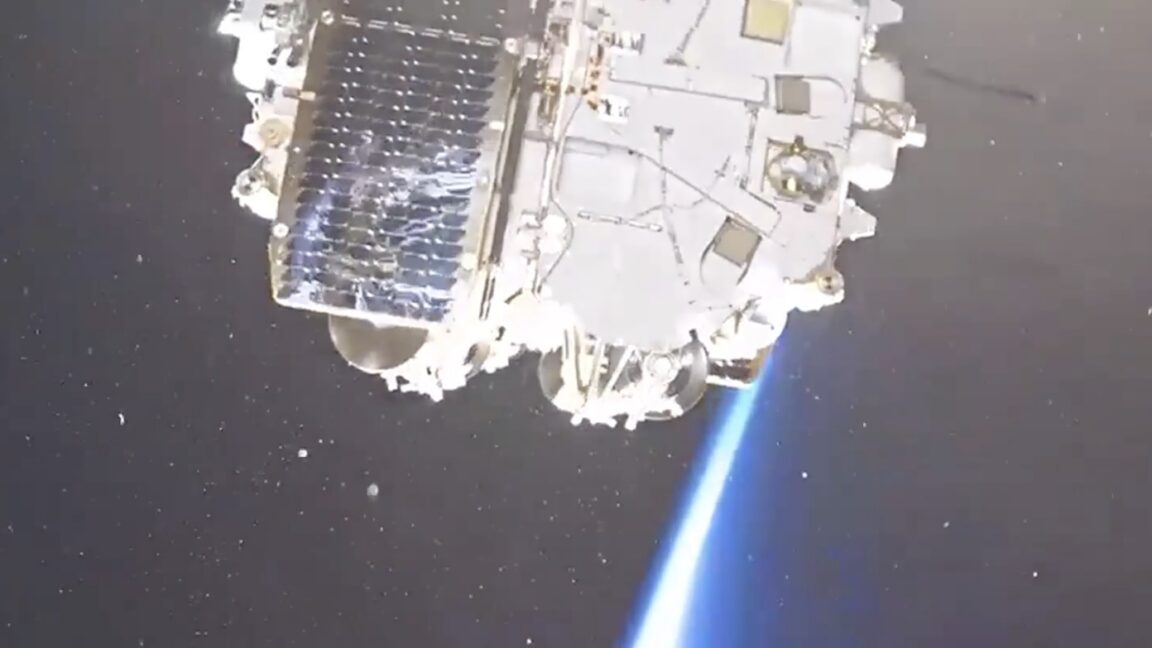

Technical challenges are becoming evident in the deployment of Russia’s Rassvet satellites, a competing system to SpaceX’s Starlink. Initial reports indicate a considerable failure rate among these satellites. Approximately 5 percent of the inaugural batch of Starlink satellites experienced immediate failures, with an overall failure rate climbing to 13 percent over time, according to space analyst McDowell. In contrast, SpaceX’s subsequent batches improved significantly, achieving a failure rate of about 3 percent in the next group of 420 satellites, and an impressive 0.01 percent in the latest Starlink Version 2 satellites.
Meanwhile, the US military’s Space Development Agency is also working on establishing its own satellite constellation to enhance capabilities related to missile targeting and command control. The agency’s first set of 42 operational satellites encountered difficulties, including thermal and propulsion issues, leading to delays in achieving their intended orbital positions.
According to a recent evaluation by the Institute for the Study of War, the Rassvet satellites from the second launch have not managed to reach their targeted operational altitudes. None have attained heights of 500 miles, and particularly concerning is that all of this second batch remains below 300 miles, while many of the initial satellites appear to have settled into stable orbits.
Despite these setbacks, there are uncertainties surrounding the operational parameters of the Rassvet satellites. Russian authorities may have opted to position them at lower altitudes for various reasons, possibly to enhance coverage closer to ground users, which could confer certain performance benefits. However, this approach demands a greater number of satellites to ensure comprehensive global coverage.
Similar to systems like Starlink and others in the market, Rassvet operates multiple orbital planes. Russian ground teams may intentionally maintain some satellites at these diminished heights to allow for gradual orbital adjustments, aligning them over time with their final target trajectories.
Establishing a massive satellite constellation is notoriously challenging. Historically, since the dissolution of the Soviet Union, Russia’s satellite manufacturing capabilities have only managed to produce a few dozen satellites annually. Yuri Borisov, the former head of Roscosmos, acknowledged this struggle, stating, “It turned out we weren’t ready for this” during an interview in 2023.
As the situation continues to develop, there is increasing demand from Russian military personnel for the Rassvet satellites, especially since SpaceX suspended access to its Starlink network in Ukraine earlier this year. This action, which cut off unregistered terminals used by Russia, underscores the urgency behind the Rassvet project. Although it had been in development for years, the launch’s timing provided Russian military leaders with renewed hope for access to expansive satellite broadband through a domestic solution.
Editor’s Take
The early difficulties faced by the Rassvet satellite program reveal the complexities inherent in deploying satellite constellations. This situation could affect military operations and communications for Russia. For users and developers, it emphasizes the importance of reliable satellite systems, potentially influencing future investments and strategies in global communications technologies.
Source: arstechnica.com