



The Impact of AI on Entry-Level Employment: Findings from Stanford Research
Recent research from Stanford University has revealed concerning trends regarding entry-level employment, particularly among younger job seekers aged 22 to 25. The study indicates that sectors heavily reliant on “automative” applications of artificial intelligence (AI) are experiencing a significant decline in job opportunities for those just starting their careers.
As part of their investigation, researchers examined the distinction between jobs that use AI in an “augmentative” capacity versus those that utilize it in a more transformative manner. The findings suggest that jobs where AI merely enhances human efforts present a more complex employment landscape, resulting in varied impacts on entry-level positions.
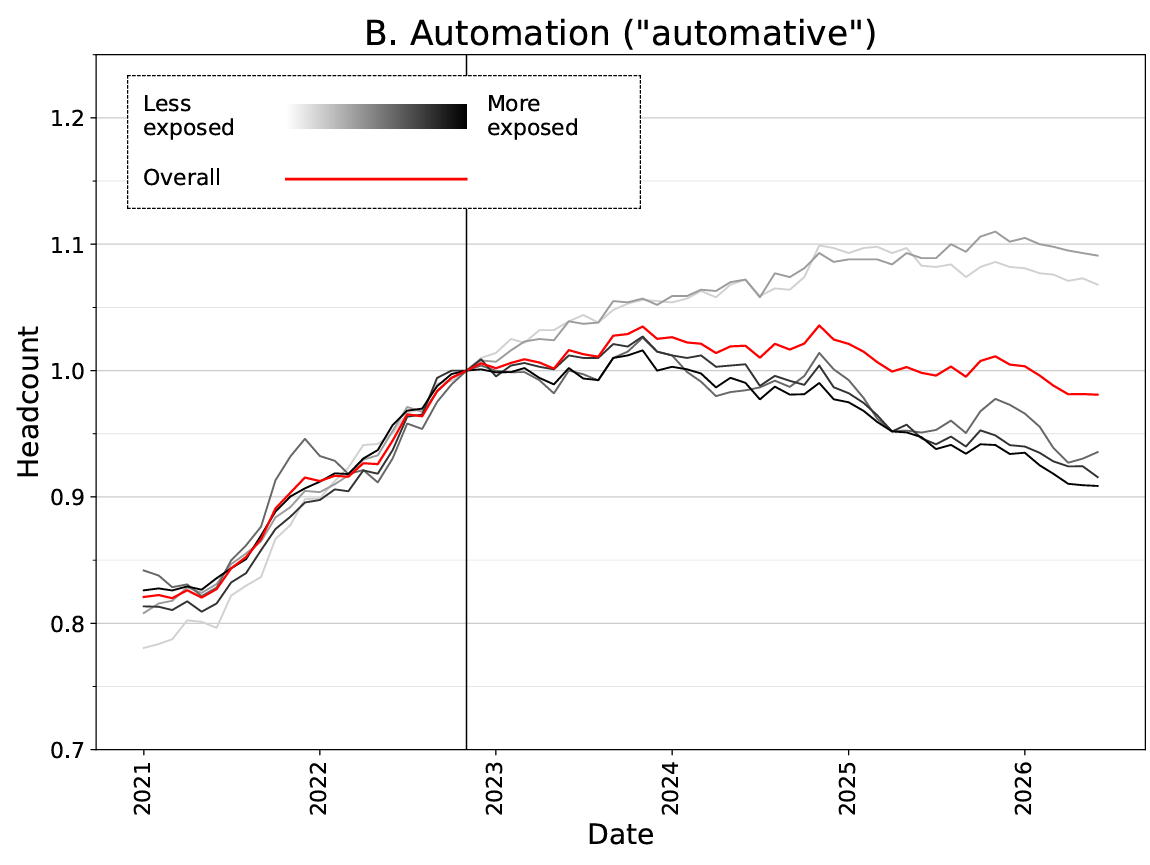
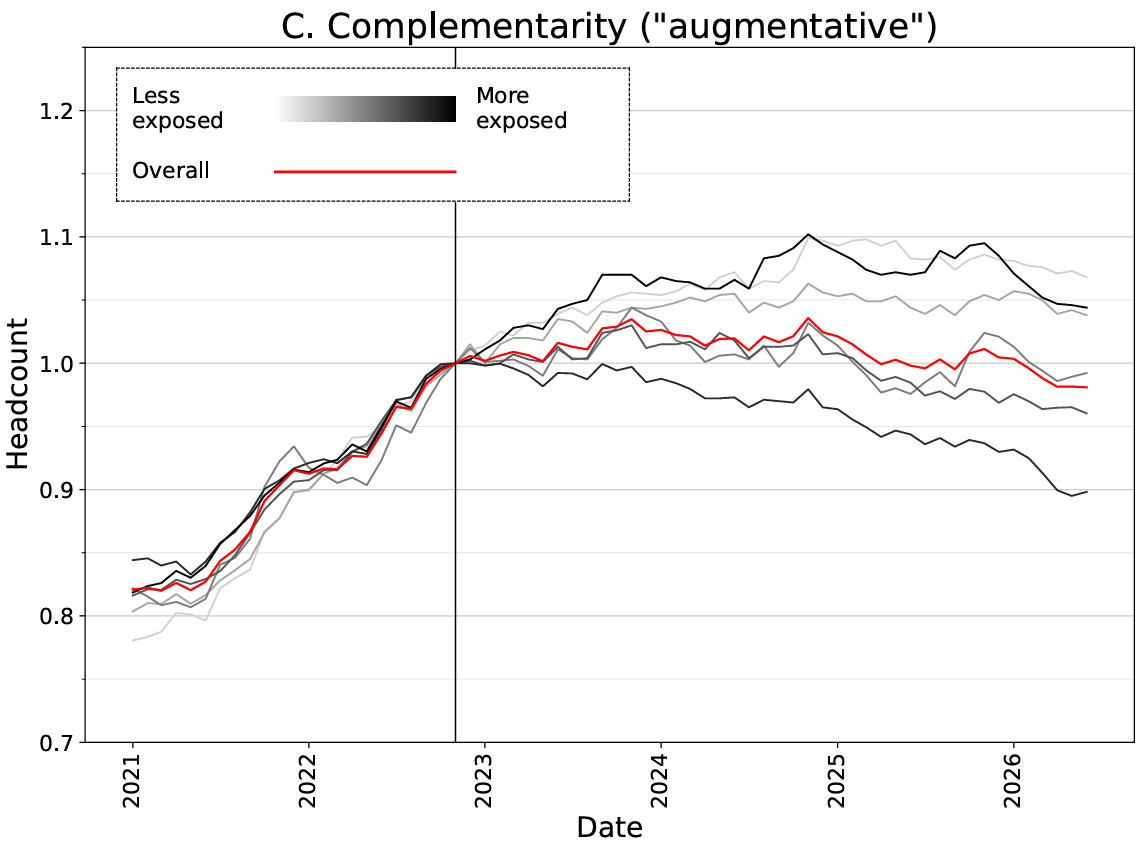
In their analysis, the researchers posited that entry-level roles could be particularly vulnerable to the ramifications of AI in jobs that demand highly “codified” knowledge. This type of knowledge comprises formal education and standardized information, contrasting with positions where AI augments an individual’s “tacit” knowledge, which is learned through hands-on experience and mentorship.
To facilitate their study, the researchers utilized O*NET’s occupational database to assess the required educational levels for various occupations as a measure of reliance on codified knowledge. The data indicated that occupations characterized by higher levels of codified knowledge saw slower growth in entry-level employment, whereas those reliant on tacit knowledge exhibited faster growth rates for mid-career and senior roles.
Interestingly, the findings also suggested that a higher education level might buffer against the adverse effects of AI on employment. In contexts where college graduates are more prevalent, the differences in employment trends between AI-exposed and less-exposed jobs were significantly less stark. Conversely, industries with minimal college-educated workers showed a troubling contrast, with jobs in the least AI-exposed sectors expanding while those in the most exposed areas diminished.
In a recent interview with The Washington Post, lead researcher Erik Brynjolfsson expressed concern regarding the current trajectory of employment prospects for younger generations. He noted, “The entry-level effects we’re measuring are real, persistent, and widening,” highlighting a precarious labor market dynamic that could keep overall employment figures steady while limiting opportunities for newcomers.
Editor’s Take
This research underscores a critical issue: as AI technology evolves, entry-level job opportunities for younger individuals may diminish, creating barriers to career entry. The implications for workforce development and policy are profound, as businesses may need to reassess hiring strategies while educational institutions respond with curricula that emphasize both codified and tacit knowledge acquisition.
Source: arstechnica.com