
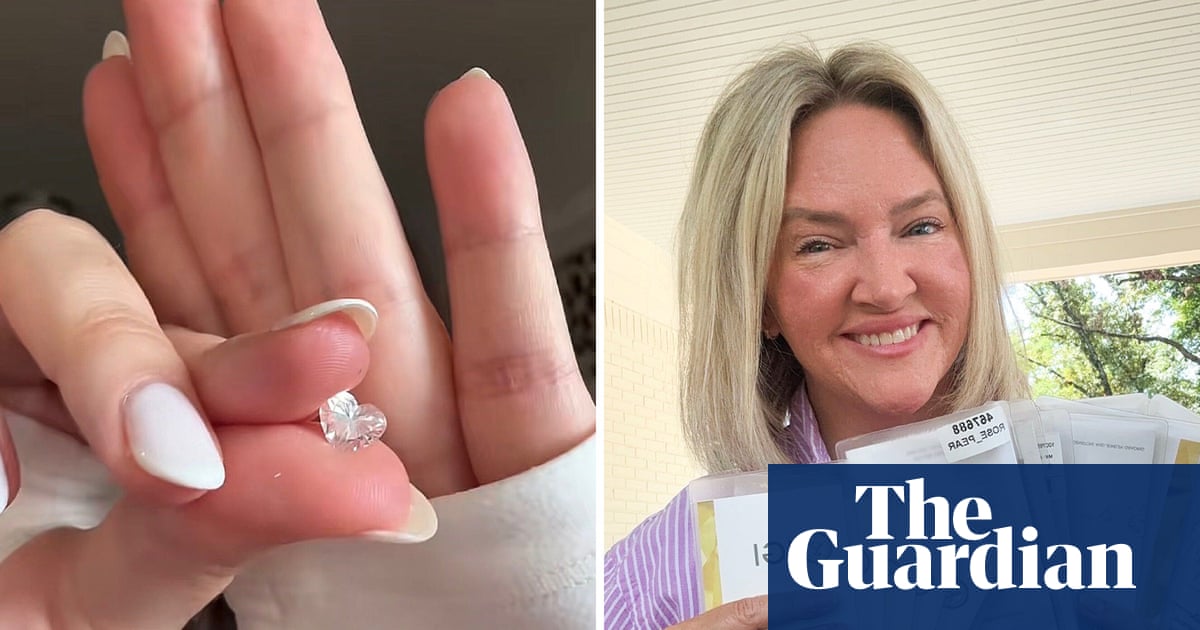

Andrea Greenhill was left amazed when she encountered livestream auctions for lab-grown diamonds on TikTok. Years ago, her engagement ring, made of natural diamonds, cost several thousand dollars, yet she found loose lab-grown diamonds being sold for a fraction of that cost in mere seconds.
“I own two rings featuring natural diamonds, and they were not cheap,” Greenhill noted. “Seeing the auction prices was mind-blowing.”
Historically, lab-grown diamonds lacked the cultural prestige of their natural counterparts despite having the same chemical makeup. However, their popularity is on the rise, with quick auctions lasting just 10 to 15 seconds gaining traction on TikTok, attracting a variety of spectators, including those seeking bargains and curious onlookers.
Prices typically range from $100 to $200 per carat, reducing barriers for consumers wanting to enter the diamond market.
“It used to be that only the affluent could afford diamonds, but now they’re available to everyone, which is incredibly exciting,” explained Kenzie Cisneros, a jeweler and owner of Diamond Hideout. “It’s thrilling to say ‘I won this for just a couple hundred bucks.’”
Livestream auctions are now commonplace on TikTok, easily accessible throughout the day. Auctioneers from regions like Florida, New York, and Los Angeles often engage viewers by expressing disbelief over incredible deals. Many auctions kick off at just $1, fostering an interactive atmosphere that invites hundreds to participate.
The excitement extends beyond active bidders. For instance, Isabella Stolberg, a 21-year-old wardrobe stylist, records her family watching auctions, sometimes projecting them on larger screens in their home. The rapid nature of the auctions creates an atmosphere of anticipation that captivates even those not bidding.
“There’s a sense of urgency—once it’s gone, it’s gone,” Stolberg remarked. “I feel this thrill even if I’m not buying anything.”
Some viewers, like Greenhill, have enthusiastically participated in bidding. The night she discovered these auctions, she bought two diamonds, and she has since acquired over 30 stones through TikTok since June.
When it comes to affordability, buyers can find small lab-grown diamonds for under $100. However, the costs associated with setting these stones in high-quality metals can add up, especially given the fluctuating prices of gold.
Most sellers focus on loose diamonds, although some assist customers in finding jewelers who can set their purchases into rings or pendants. Marie Ann Altuve, a content creator from New York, purchased two loose diamonds through TikTok, including a heart-shaped stone for $151.
Greenhill has already had some of her diamonds set in rings by a local jeweler in northern Mississippi. She shared in a TikTok video that she transformed a 3.78-carat diamond, costing about $500, into a ring, while the gold band cost around $1,100. After appraisal, the ring was valued at $5,700, a considerable bargain.
Most auctioneers present certification of lab-grown diamonds to assure potential buyers of authenticity. However, professionals warn that the fast pace and lighting during these auctions may obscure certain flaws.
“The certificate doesn’t unveil everything about the diamond,” cautioned Kim Shaul, owner of Virtue Diamonds in Idaho. “While it may be a legitimate diamond, it could be poorly cut or lack good light performance.”
Even with trustworthy sellers on TikTok, consumers may lack the knowledge to make informed purchases. “You might secure fantastic deals, but risks are involved,” Shaul added.
Cassandra Cadwell, a beauty content creator who discovered the auctions on TikTok, emphasized her desire for larger diamonds while keeping to a budget of $200 per carat to maintain control over her spending. “Who doesn’t love diamonds, right?” she stated.
Editor’s Take
This trend illustrates the evolving dynamics of the jewelry market fueled by social media platforms. The affordability and accessibility of lab-grown diamonds democratize luxury, allowing more consumers to participate. However, this also raises questions about quality assurance and informed buying decisions in a fast-paced auction environment.
Source: www.theguardian.com