

New Theban Tomb Discovery Sheds Light on Evolution of Egyptian Burial Practices

Insights into Ancient Egyptian Burial Practices Revealed
Recent archaeological findings shed new light on the burial customs of ancient Egypt, particularly how these practices evolved over time. A study co-authored by Miguel Ángel Molinero Polo from the University of La Laguna unveils fascinating discoveries that highlight the social stratification evident in ancient Egyptian funerary rites.
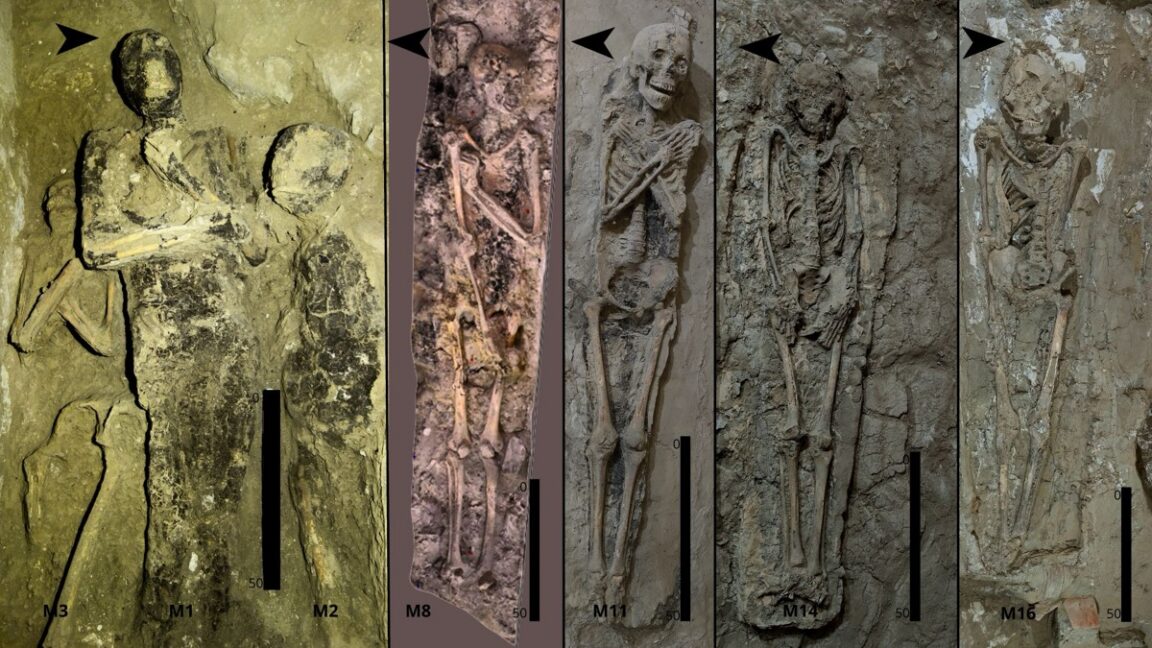
The research indicates that some of the earliest individuals interred in the site were likely of considerable social stature. These individuals were placed in coffins and accompanied by funerary nets, amulets, and valuable items, including contents from Phoenician amphorae, which were found in significant quantities near their graves.
In contrast, subsequent burials revealed bodies organized in vertical layers, notably lacking coffins but exhibiting meticulous mummification. The presence of upright jars suggests a specific ritualistic practice not previously observed in earlier burial phases within the same tomb.
Moreover, certain chambers within the site showed signs of extensive reworking, characterized by accumulated silts, sands, gravels, limestone, plaster, ceramics, and other materials. These alterations seem to have resulted from human activity and possibly from flooding events. Notably, one chamber containing the charred remains of four individuals exhibited signs of fire damage, with temperatures reaching as high as 550° Celsius (or 1,022° Fahrenheit), notably affecting the skulls and lower limbs of the remains.
The authors of the study suggest that this cemetery should not merely be understood as a static burial site. Instead, they describe it as a complex funerary environment where repeated use led to a dynamic transformation of the space’s organization, material significance, and overall meaning. This reinterpretation emphasizes that the chamber acted as an active participant in the mortuary practices over time.
The findings were published in Frontiers in Environmental Archaeology in 2026, with the study accessible under the DOI: 10.3389/fearc.2026.1888379.
Editor’s Take
This revelation about ancient burial practices provides valuable insights into social hierarchies and evolving rituals in Egyptian society. Understanding these changes not only enriches our grasp of human history but may also influence contemporary archaeological methodologies and the preservation of cultural heritage.
Source: arstechnica.com