


African Schoolgirls Set to Launch the Continent’s First Private Satellite
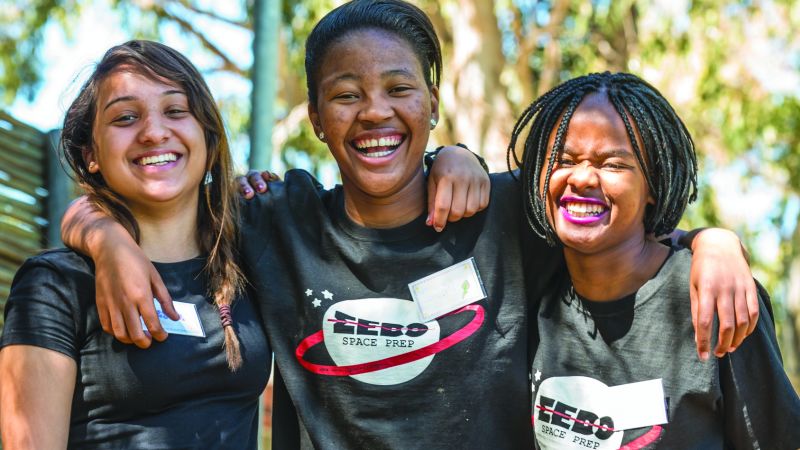
In a groundbreaking initiative, a team of high school girls from Cape Town, South Africa, is preparing to launch Africa’s first privately built satellite into space. Led by the ambitious Brittany Bull (17) and Sesam Mngqengqiswa (16), this project aims to empower young women in science, technology, engineering, and mathematics (STEM) while addressing critical issues affecting the continent.
The girls are part of a larger group that has designed payloads intended for a satellite that will orbit the Earth, focusing on scanning the African surface. Once in space, the satellite’s mission will revolve around collecting vital information related to agriculture and food security across the continent.
Bull, a student at Pelican Park High School, expressed the satellite’s potential: “Using the data transmitted, we can try to determine and predict the problems Africa will be facing in the future.” The satellite will play a crucial role in understanding agricultural trends and environmental conditions.
Insights garnered from the satellite will help address challenges such as forest fires and floods by monitoring vegetation and crops. “We can identify where food is growing and where we can plant more trees,” Bull added, emphasizing the satellite’s role in disaster prevention.
This project aligns with the efforts of South Africa’s Meta Economic Development Organization (MEDO), in collaboration with Morehead State University in the United States. If successful, it will position MEDO as the first private entity in Africa to build and deploy a satellite into orbit.
The initiative also reflects a growing commitment to closing the gender gap in STEM fields. The girls receive training from university satellite engineers, aiming to boost female representation in the sector where women currently constitute only a fraction of the workforce.
“We expect to receive a good signal, which will allow us to gather reliable data,” said Mngqengqiswa. She acknowledged the severe impact of climate events like floods and droughts, noting the economic downturn they cause. “This project is a way of identifying how we can enhance our economy,” she stated.

The project not only embraces technology but also aims to inspire girls across Africa, encouraging them to explore careers in aerospace and engineering. “We don’t need to limit ourselves. Any career is possible,” said Bull, emphasizing the importance of representation.
As the project moves forward, initial trials involving programming and launching small satellites using weather balloons have already laid the groundwork for more complex operations. The designed satellite will utilize cutting-edge technology to gather data that can mitigate future climatic disasters.
Ultimately, this initiative aspires to connect and inspire young women from various African nations, including Namibia, Malawi, Kenya, and Rwanda, promoting a sense of unity and innovation across the continent. Mngqengqiswa, who comes from a single-parent household, hopes to uplift her family through this pioneering venture, saying, “I want to experience these things for myself.”
Editor’s Take
This initiative marks a significant step toward fostering female empowerment in STEM fields within Africa. By providing young women with the opportunity to engage in satellite technology, it could spark interest in related industries and lead to broader economic impacts. As the world increasingly relies on data for decision-making, such innovative projects can play a crucial role in addressing pressing issues like climate change and food security.
Source: www.cnn.com