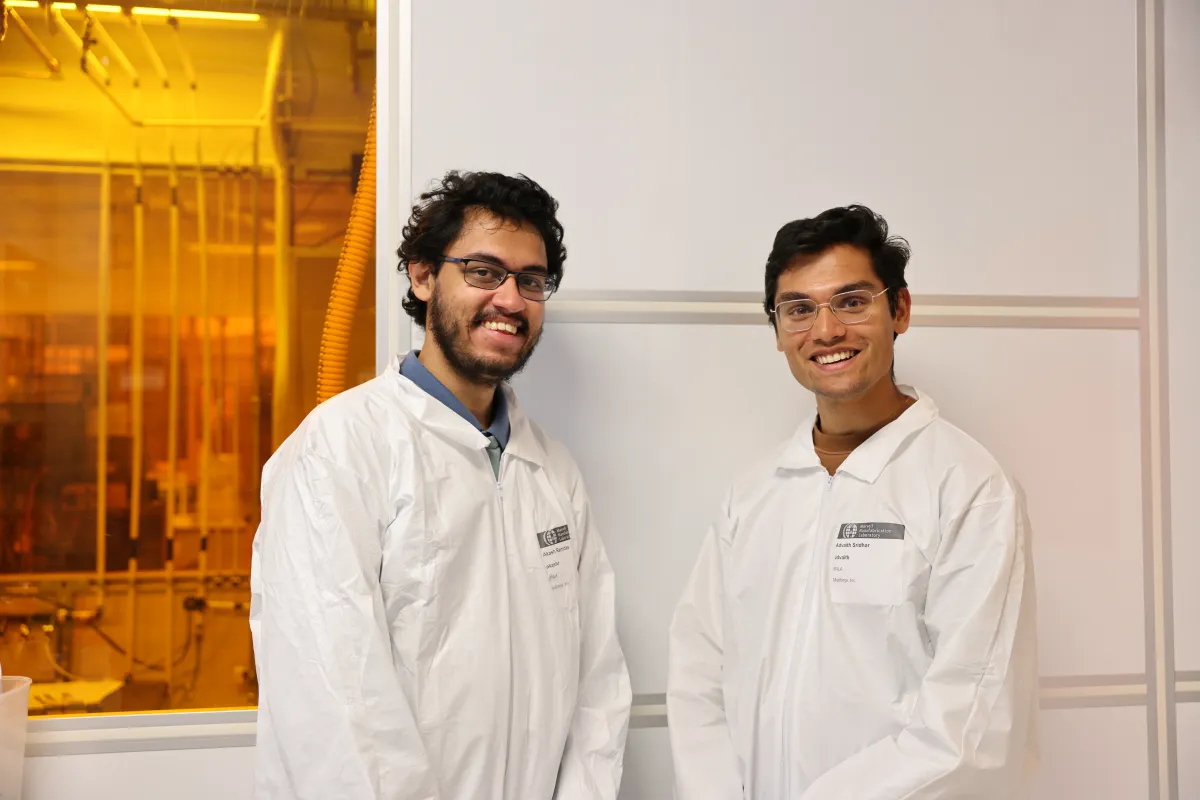

Discovered Materials, a San Francisco-based startup that emerged just months ago, is tapping into the potential of AI in the field of materials science. The company has announced a challenge boasting a prize pool of $1 million, aimed at spurring AI models to address five critical problems within the realm of advanced materials.
Despite the impressive capabilities of contemporary AI models in tackling complex mathematical and life sciences challenges, they have struggled to navigate the intricacies of advanced materials physics. Advaith Sridhar, a co-founder of Discovered Materials and participant in the Y Combinator spring 2026 cohort, remarked on the inherent difficulties of clearly delineating problems in materials science. “Unlike mathematics, where problems typically have precise definitions leading to definitive answers, materials science poses unique challenges,” he explained. “This has led us to question what constitutes the grand challenges in this field and how we can effectively measure AI’s progress.”
Though there is no direct equivalent to the Millennium Prize Problems for materials science, the startup has assembled a group of academics from prestigious global institutions to identify five significant open issues. To incentivize solutions, Discovered Materials is offering monetary awards totaling $1 million.
- A theoretical framework to elucidate cuprate superconductivity—achieving zero electrical resistance at ultra-low temperatures.
- A numerical technique to predict the structural interfaces between silicon and silicon dioxide, critical for nearly all semiconductor technologies.
- A methodology to link grain structure with thermal properties to enhance heat dissipation materials.
- A theory that explains how illuminating materials can alter their behavior, particularly concerning superconductivity.
- A numerical approach aiming to refine Density Functional Theory, an essential modeling technique in materials science.
Stanford professor Felipe Jornada, involved in defining these challenges, stated, “There are observable phenomena in materials science that remain unexplained. Gaining insights could enrich our understanding of physics and directly influence the development of future electronics and energy storage solutions.”
Prior to launching this initiative, Discovered Materials allowed leading-edge AI models to explore these challenges independently, providing them with internet access and various resources over several days. The models struggled to make any significant progress. Nonetheless, the possibility of major AI players like OpenAI or Anthropic leveraging advanced computational power to tackle these problems remains a compelling notion.
“Our objective is not solely to find solutions ourselves; it encompasses the broader goal of advancing our understanding of materials and their behaviors,” Sridhar explained. The progress of these challenges will also provide indicators of whether AI models are making strides in this specialized domain.
This initiative reflects a noteworthy shift in scientific exploration as AI technologies increasingly unveil insights and methodologies previously unrecognized by human researchers. As solutions become seemingly more accessible, the focus turns toward crafting the right questions and challenges.
“This represents a novel approach to scientific inquiry,” Sridhar noted. “We’re establishing verification metrics and challenges upfront, which allows researchers to formulate ideas and explanations afterward. Identifying the right questions is complex and critical, and that’s where the expertise of professors has been invaluable in fine-tuning our approach.”
The core mission of Discovered Materials is to innovate new materials intended for semiconductor applications, collaborating with major chip manufacturers while funding independent research projects. Reflecting on progress since the company’s seed funding announcement in August, Sridhar expressed optimism: “Our timelines have accelerated, and I now believe we can identify industrially useful materials in less than a year.”
Editor’s Take
This challenge by Discovered Materials highlights a transformative trend in materials science where AI plays a pivotal role in solving complex problems. The potential insights could reshape industries such as electronics and energy storage. For businesses and developers, this offers a unique opportunity to engage with cutting-edge scientific inquiries, fostering innovation that could benefit society at large.
Source: techcrunch.com