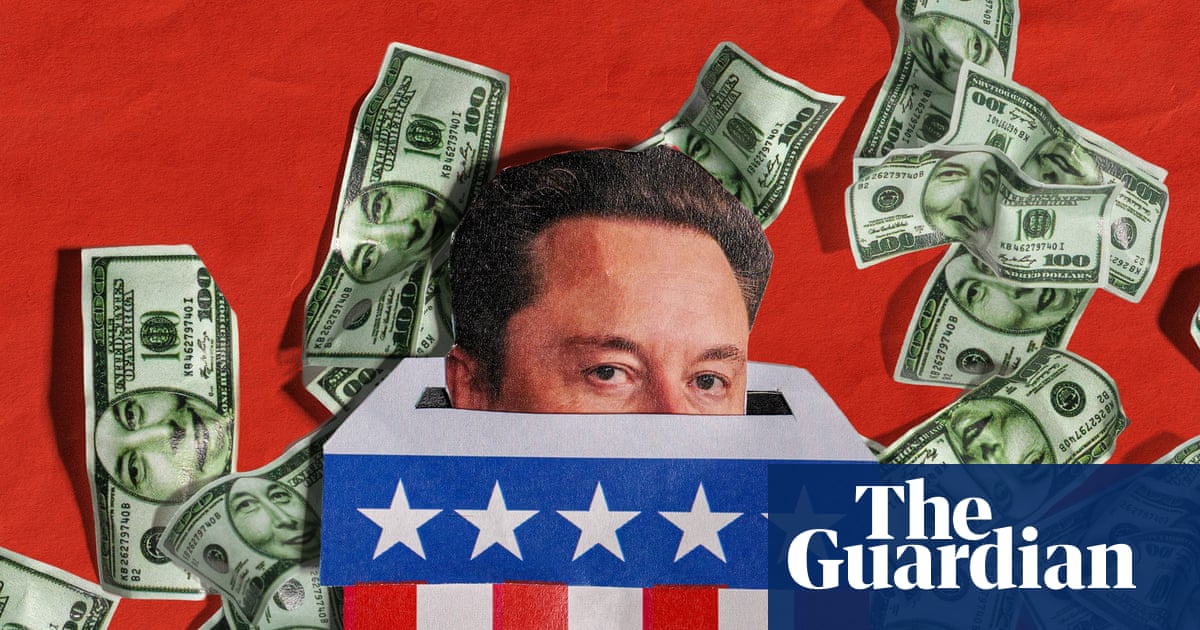

Elon Musk has set a new record in political contributions this year, investing nearly half a billion dollars to support Republican causes during the US midterm elections. However, this financial venture turned out to be a costly misstep.
The CEO of SpaceX and Tesla funneled at least $446 million into Republican-aligned Super PACs and organizations, focusing on key Senate races to help maintain the Trump administration’s hold on Congress. This figure surpassed his 2024 political spending of about $290 million. Despite Musk’s significant financial backing, Democrats emerged victorious across the board on election night, leaving Musk with little return on his massive investments.
In fact, the Democrats triumphed in all five Senate races where Musk’s America Pac targeted Republican candidates most heavily. In his home state of Texas, where he concentrated his political efforts, Republicans lost not only the Senate race but also the governor’s office and are poised to lose control of the state legislature.
Musk’s political expenditures were substantial; they included donations to at least eight Republican-aligned Super PACs, with the largest single contribution of $216 million directed to his own America Pac. Additionally, he contributed $168 million to the Senate Leadership Fund, which supported a range of Republican candidates, including Ken Paxton, the Texas Republican.
The most significant focus of Musk’s financial backing was on the Texas Senate race between Ken Paxton and James Talarico. America Pac alone spent over $28 million on anti-Talarico advertising. Musk took to social media to amplify attacks against Talarico, which included incendiary claims about his policies.
Following Talarico’s decisive win, he took a moment in his victory speech to remark, “We just proved that all the money in the world is no match for the people of Texas,” sending a clear message to billionaires and mega-donors.
Similar outcomes unfolded in Senate races across Michigan, Maine, Ohio, and Iowa, where Democratic candidates triumphed despite significant financial backing from America Pac for Republican campaigns, which focused heavily on issues like transgender rights and accusations of radical socialism against Democrats.
Despite Musk’s lack of success this election cycle, the overwhelming sums he invested contributed to several of the priciest races in US history, potentially setting a new standard for campaign financing in future elections, including the presidential race in 2028. This situation will likely fuel ongoing discussions about the extent of financial influence in political campaigns.
Musk has reaped considerable benefits from favorable contracts with the Trump administration, coupled with a generally relaxed regulatory environment regarding artificial intelligence. However, with the incoming Democratic administration in Texas led by Gina Hinojosa, Musk may soon face much stricter scrutiny. Hinojosa has advocated for a moratorium on datacenters and has been embroiled in a legal effort to access unredacted communications between Governor Greg Abbott and Musk.
The shift in political dynamics could mean more investigations into Musk’s dealings, especially regarding his previous role in the so-called “department of government efficiency”. House Democrats have indicated their intention to scrutinize funding directed to Musk’s businesses going forward.
Editor’s Take
This development highlights the unpredictable nature of political investments, as vast sums of money do not guarantee electoral success. For users and businesses, the shift in political power could lead to increased scrutiny and regulation, especially in the tech sector. As the political landscape evolves, it may reshape the dynamics of funding and influence in politics.
Source: www.theguardian.com