
Physical Review Letters, 2026. DOI: 10.1103/gbkc-6nlj.
Innovative Invisible Tattoos Revealed Under UV Light
For many, tattoos are a form of self-expression, but there are circumstances where concealing them is preferable. A groundbreaking advancement in tattoo technology may soon eliminate this concern. Researchers have developed innovative multicolored inks that remain invisible to the naked eye, becoming visible only under UV light. This intriguing finding was elaborated upon in a recent publication in the journal Matter & Light.
According to co-author Carson Bruns of the University of Colorado, Boulder, who is notably adorned with a green lion tattoo, this innovation challenges the stigma surrounding body art, emphasizing the cultural significance of tattoos.
As highlighted in previous reports, similar technologies known as epidermal electronics, or e-tattoos, have existed for over a decade. These devices attach to the skin without adhesives and are nearly imperceptible. They are designed to facilitate electrical measurements through ultra-thin polymers embedded with circuit elements. Notably, in 2024, researchers introduced special conductive inks that can be printed on the scalp for brain wave monitoring, potentially enabling mobile EEG applications beyond clinical environments.
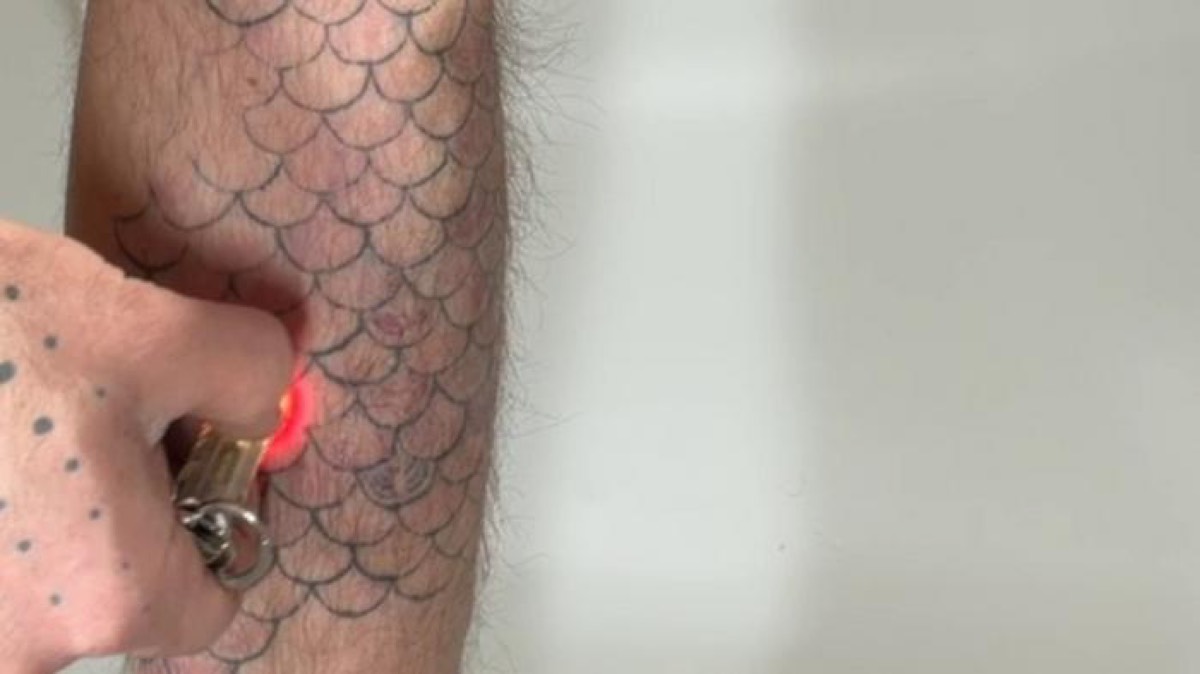
Bruns and his team have coined their invention PhotoTat, crafted from color-changing dyes encapsulated in tiny spheres of polymethyl methacrylate (PMMA)—a polymer commonly used in medical applications. By mixing primary-colored dyes, they can create vibrant, full-color images. Remarkably, these tattoos are invisible until exposed to UV light, at which point they exhibit hues of blue, magenta, or yellow. However, they fade gradually, especially under prolonged exposure to bright LED light. In initial tests, Bruns applied the inks to his skin, resulting in a design of fish scales that change colors under UV illumination.
This innovative ink technology also holds promise for cancer patients undergoing radiation therapy. The small tattoos required for treatment guidance would be rendered invisible through the PhotoTat process until treatment is administered.
Editor’s Take
This innovative development in tattoo technology not only offers a unique form of self-expression but also has practical implications for medical applications, including patient care in radiation therapy. The ability to create temporarily visible tattoos could change how we approach body art and its acceptance in various cultural contexts, appealing to individuals who desire discreet personal expression.
Source: arstechnica.com