Startup Explores Mass Production of AI Data Centers Similar to Car Manufacturing

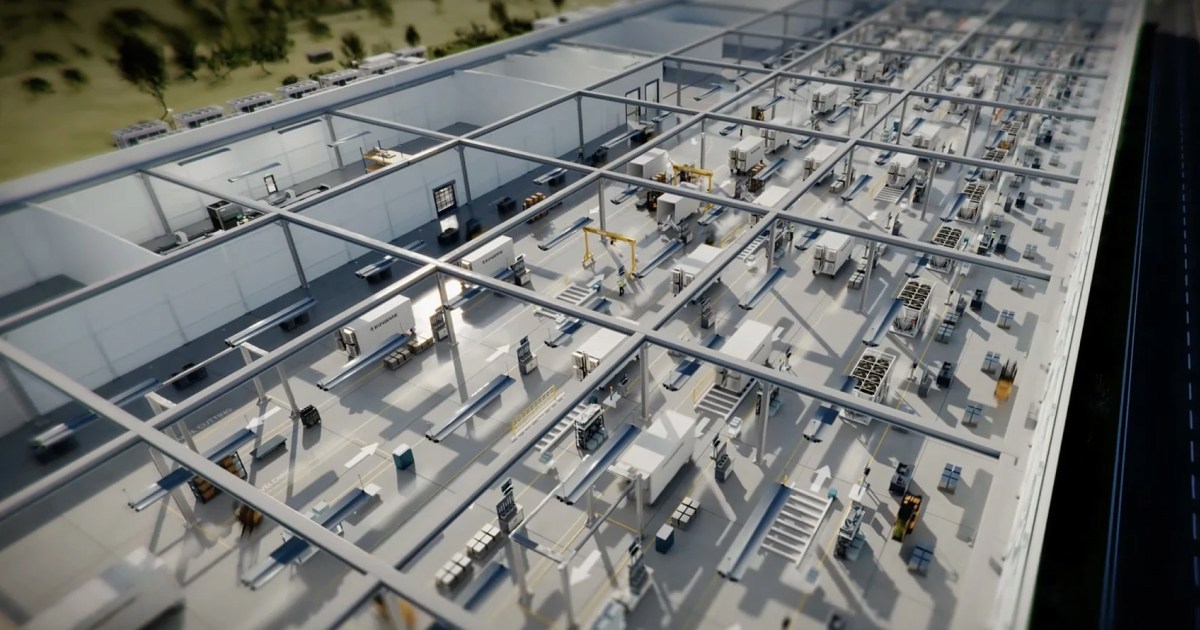
Runware, an innovative player in AI infrastructure, is generating buzz following its recent introduction of the Sonic Inference Pod, a factory-built, modular data center designed for swift customer setup. The company is now ambitiously planning to establish a production facility that can assemble these pods on a production line akin to automotive manufacturing.
This approach is not entirely groundbreaking, as companies like Crusoe and Schneider Electric also offer prefabricated data center solutions. However, Runware asserts it can expedite delivery times for its pods.
Flaviu Fadulescu, co-founder and CEO of Runware, shared with TechCrunch that the company’s goal is to escalate production at its facility in Romania to 30 megawatts of data center capacity daily by 2028, accumulating nearly 1 gigawatt each month. This ambitious target means that, over a year, Runware could produce as much capacity as the entire U.S. was expected to add in data center power for this year—around 10 gigawatts. This reflects a broader industry drive for faster, more efficient data center deployment.
Earlier this year, Nvidia introduced the Vera Rubin AI factories and the DSX POD, which similarly aim to streamline the construction of AI data centers. However, Runware claims it has actually developed a factory capable of producing these systems rather than merely conceptualizing infrastructure for others.
Fadulescu confirmed that production will ramp up beginning next year, and the company currently operates two facilities: one for existing pod production and another under construction, set to begin operations early next year. Runware plans to manufacture the modular data centers using an assembly line. Customers can either offer their own locations for setup or let Runware find a suitable site. The company aims to have pods operational within 48 hours, a significant improvement from the previous assembly time of three weeks, which it projects to reduce to just one day as production scales.
The modular pods can also be tailored to specific customer needs and incorporate the latest GPU technologies, which can often have long lead times. Fadulescu noted that Runware’s pod delivery timelines are shorter than GPU lead times, giving the company flexibility to adjust their infrastructure accordingly. Additionally, the in-house hardware team can rapidly design, build, and test new components to keep pace with GPU advancements.
While Runware’s ambitions are impressive, the execution of these plans will be critical. The factory will require substantial workforce resources, inventory management, supply chain logistics, and funding. Previous ventures into reinventing manufacturing, like the electric vehicle startup Arrival, which faced hefty production challenges, serve as cautionary tales. To date, Runware has raised over $60 million, with plans to initiate a Series B funding round soon, following a successful $50 million Series A raised last December.
Fadulescu highlighted the distinctiveness of Runware’s cost structure in comparison to Arrival. He explained that while there are expenses related to workforce and materials, their cost-effectiveness is enhanced by the value generated from deploying computing power for AI tasks. Furthermore, by designing their own systems and procuring widely available components, they aim to minimize costs. Runware has also hired an experienced plant manager from the automotive sector to ensure execution aligns with their ambitious goals.
Nonetheless, sourcing components may present challenges. Runware claims to have control over the design and construction of its cooling systems and other pod components but still relies on suppliers for specific parts, like pumps and fans, from Germany, in addition to needing Nvidia for networking components. Despite these hurdles, Runware reports receiving $1 billion in committed interest for its Sonic pods since their introduction to the market, which represents over 20 megawatts of demand that they are currently working to fulfill.
The energy consumption of data centers has faced scrutiny for its impact on both the grid and environmental resources. In response, Fadulescu stated that the company’s pods require only a power supply and internet connection. They utilize a closed-loop liquid cooling system with air-cooled radiators, eliminating the need for water connections. Runware is actively collaborating with energy providers on a pipeline that would cover 397 megawatts, with the potential to expand to 1.2 gigawatts. The small footprint of their modular data centers allows for deployment in locations already equipped with power, aiming to avoid additional strain on existing energy resources.
Fadulescu also expressed a commitment to sustainability, mentioning that the pods operate silently at temperatures up to 86 degrees Fahrenheit and prioritize energy sourced from renewable providers. Runware is intent on advancing its energy partnerships and expanding its network, with aspirations for renewables to comprise their primary energy source.
As Runware gears up to launch its new factory early next year, it plans to expand its operations into the U.S. and other global markets. Fadulescu believes that modular systems represent the future of data centers, ushering in an era where companies can plan hyperscale data centers that are operational in months, rather than years.
Editor’s Take
The establishment of a factory for modular data centers represents a significant shift in the AI infrastructure landscape. If successful, it could redefine how quickly companies scale AI capabilities, addressing urgent demands in the tech industry. Furthermore, Runware’s focus on efficiency and sustainability positions it well amid rising scrutiny over data centers’ environmental impact. As the industry evolves, such innovations may become essential for businesses seeking agility in their data center strategies.
Source: techcrunch.com