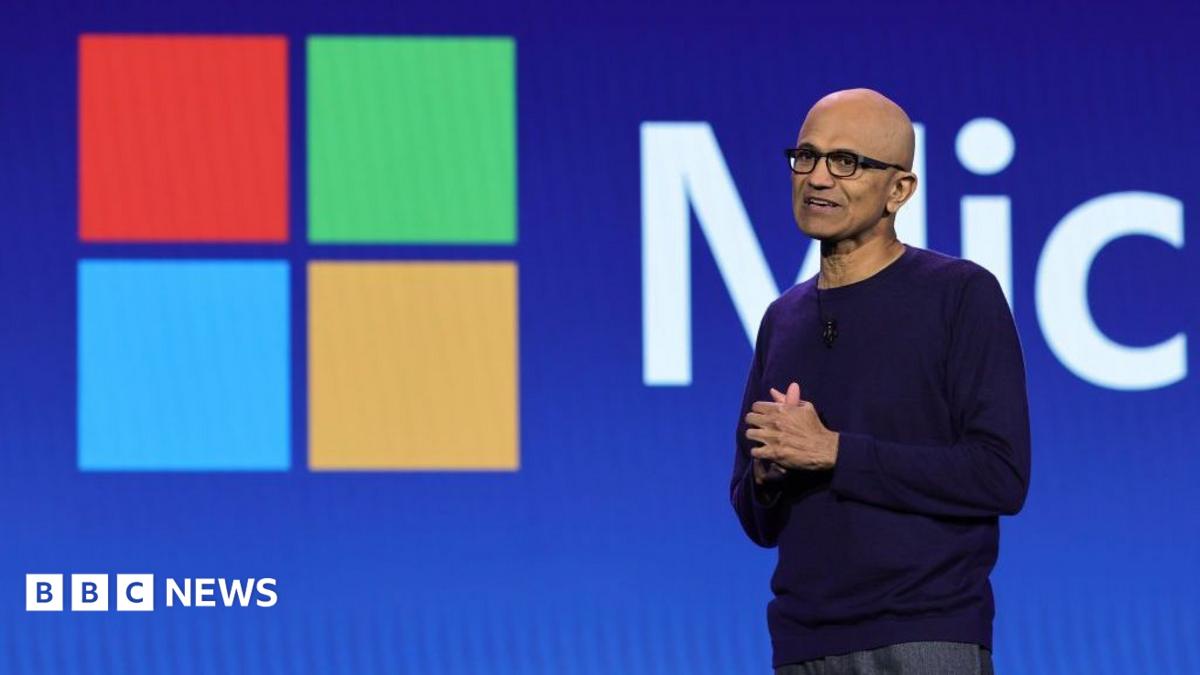

Microsoft has reported a significant surge in profits, exceeding $36.6 billion (£27.5 billion) for the quarter ending in September. This announcement comes on the heels of the company’s decision to reduce its workforce by over a quarter.
Earlier this week, the tech giant revealed plans to offer voluntary buyouts to approximately 60,000 employees as part of a strategy to manage costs while heavily investing in artificial intelligence (AI).
Similar to various prominent tech firms, Microsoft is pouring substantial resources into the infrastructure that supports AI development, despite ongoing debates regarding the returns on such massive expenditures.
Following the financial report, Microsoft‘s shares climbed nearly 2.9% in after-hours trading in New York, signaling positive investor sentiment.
Investors are closely monitoring the financial outcomes of major tech enterprises, trying to ascertain the sustainability of heavy investments in AI technologies.
Industry leaders, including Amazon, Meta, and Alphabet, are projected to spend over $700 billion this year on AI-related components and requisite infrastructure, such as data centers.
Microsoft also disclosed that its quarterly revenue jumped to $92.3 billion, marking a 19% increase compared to the previous year, primarily fueled by robust growth in its cloud computing sector.
Notably, the company experienced a 30% rise in revenue within its Microsoft Cloud division, which encompasses various enterprise technology services.
However, the corporation did highlight potential risks associated with its substantial investments in AI amidst other uncertainties that could affect its financial outlook.
Satya Nadella, the firm’s CEO, noted that advancements in AI have significantly contributed to its growing adoption, creating “real-world impact across every industry.”
Editor’s Take
This financial growth amid workforce reductions underscores the shifting landscape in tech where companies prioritize AI investments over employment stability. For users and businesses, this could signal enhanced capabilities and services, yet raises questions about job security in the sector. Developers may find increased opportunities in AI, but must also navigate a competitive and evolving market.
Source: www.bbc.co.uk