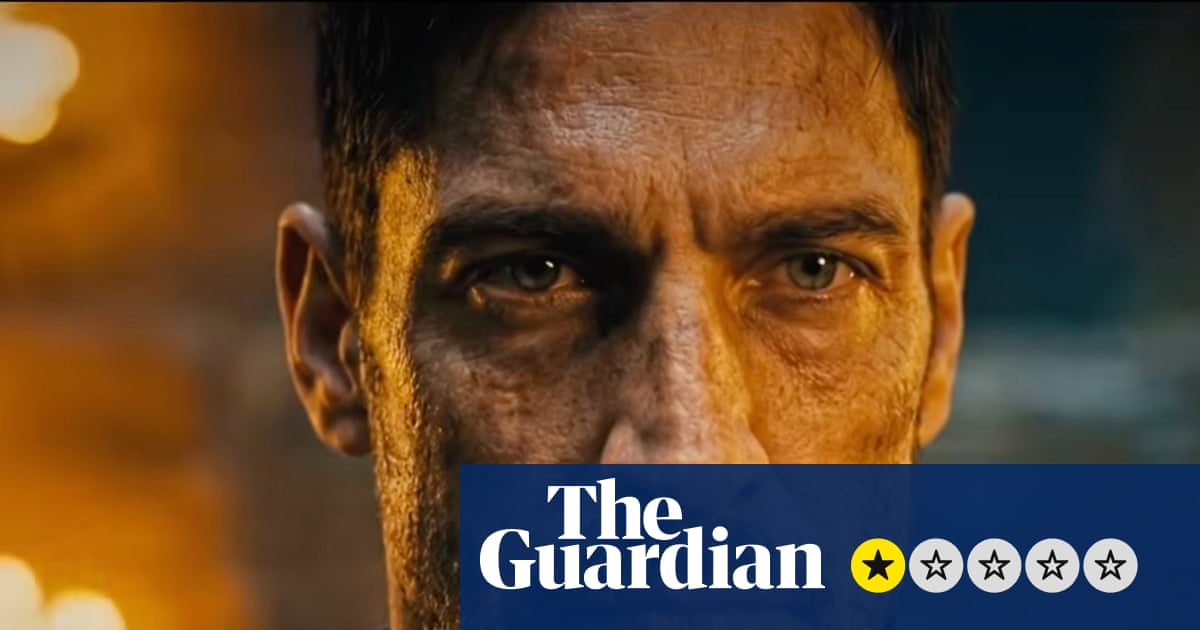

The entertainment landscape has been shaken by the recent debut of Prime Video’s AI-generated series, Castle Walls. Produced by the Turkish studio Ay Yapım, this series is touted as the first fully AI-created show to hit a major streaming platform. Following closely on the heels of Elon Musk’s controversial AI-driven film, The Odyssey, Castle Walls aims to push the boundaries of storytelling using generative technology.
Unlike Musk’s brief seven-minute project, Castle Walls spans two 17-minute episodes set against the backdrop of 11th-century Alamut Castle. Despite its historical premise, the series struggles to invest viewers in its sense of time and place. Initial visuals intrigue with a rich palette of blues and mustard yellows; however, the characters’ appearance—described as resembling melted wax figures—rapidly diminishes this appeal.
The show features numerous cinematic moments, yet they often come off as excessively staged. One particularly illustrative sequence begins with an eagle being transported through a desert, quickly escalating into a series of grandiose, overly dramatic visuals. Each scene seems to demand an increasingly cinematic approach, possibly emphasizing spectacle over substance.
Among the key figures introduced is the enigmatic character of Hasan Sabbah, known as a “freak” with the extraordinary ability not to eat or drink. While he is portrayed as a charismatic leader who gathers a following, his digital representation leaves much to be desired, appearing awkward and artificial.
Imagery throughout the series is laden with hyperbolic visual metaphors—sunsets, moonlight, and golden sunlight streaming through doors accompany pivotal narrative moments. Yet, the seemingly endless array of grand visuals seems to overwhelm the unfolding story.
Despite the innovative technology driving this endeavor, it risks provoking a cynical response among audiences. Many viewers appear more concerned about what AI-generated content might take away from the artistic realm rather than the advancements it heralds. This speaks to a broader unease regarding technology’s impact on human creativity.
While the potential of AI in filmmaking is undeniable, particularly as projects like Castle Walls are among the first to explore this territory, there are concerns that such works may ultimately serve as mere novelties—akin to the initial marvels of silent cinema that eventually gave way to more refined productions. This raises a vital question about the essence of artistic expression in the age of AI.
Looking ahead, a balanced approach involving both human creativity and machine assistance may be the most productive path. Notably, Castle Walls does utilize human voice actors and was scripted by live writers, emphasizing that technology can complement rather than replace creative skills. However, some critiques suggest that the dialogue and narrative execution are lacking, leaving viewers questioning the artistry behind the project.
Editor’s Take
The launch of AI-generated content like Castle Walls signifies a pivotal shift in media production. As we observe its implications, both viewers and creatives must navigate the balance between technological innovation and the irreplaceable human touch that imbues art with emotional depth. This development raises critical questions about the future of storytelling in a world increasingly populated by AI.
Source: www.theguardian.com