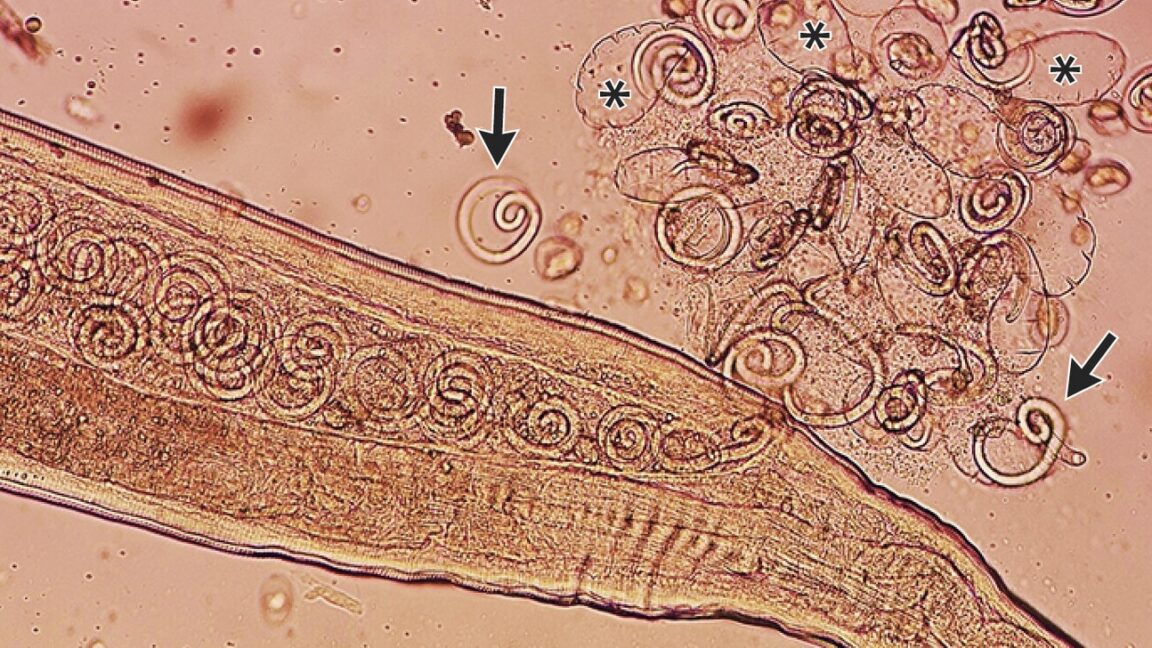

Recent reports have highlighted a fascinating yet unsettling aspect of T. callipaeda, a parasitic worm known to invade the eyes of unsuspecting hosts. The life cycle of these parasites relies heavily on flies that feed on the tears and secretions from infected animals. During this feeding process, the flies can pick up the initial stage of the worms’ larvae, which use the insects as a mode of transportation and development.
Within the fly, these larvae undergo two molts, transforming into third-stage larvae before migrating to the insect’s mouthparts. Ready for a new habitat, the larvae then disembark onto a suitable host’s eyeball, where they settle and mature into adult worms. These adult parasites can live and reproduce directly on the victim’s eyeballs.
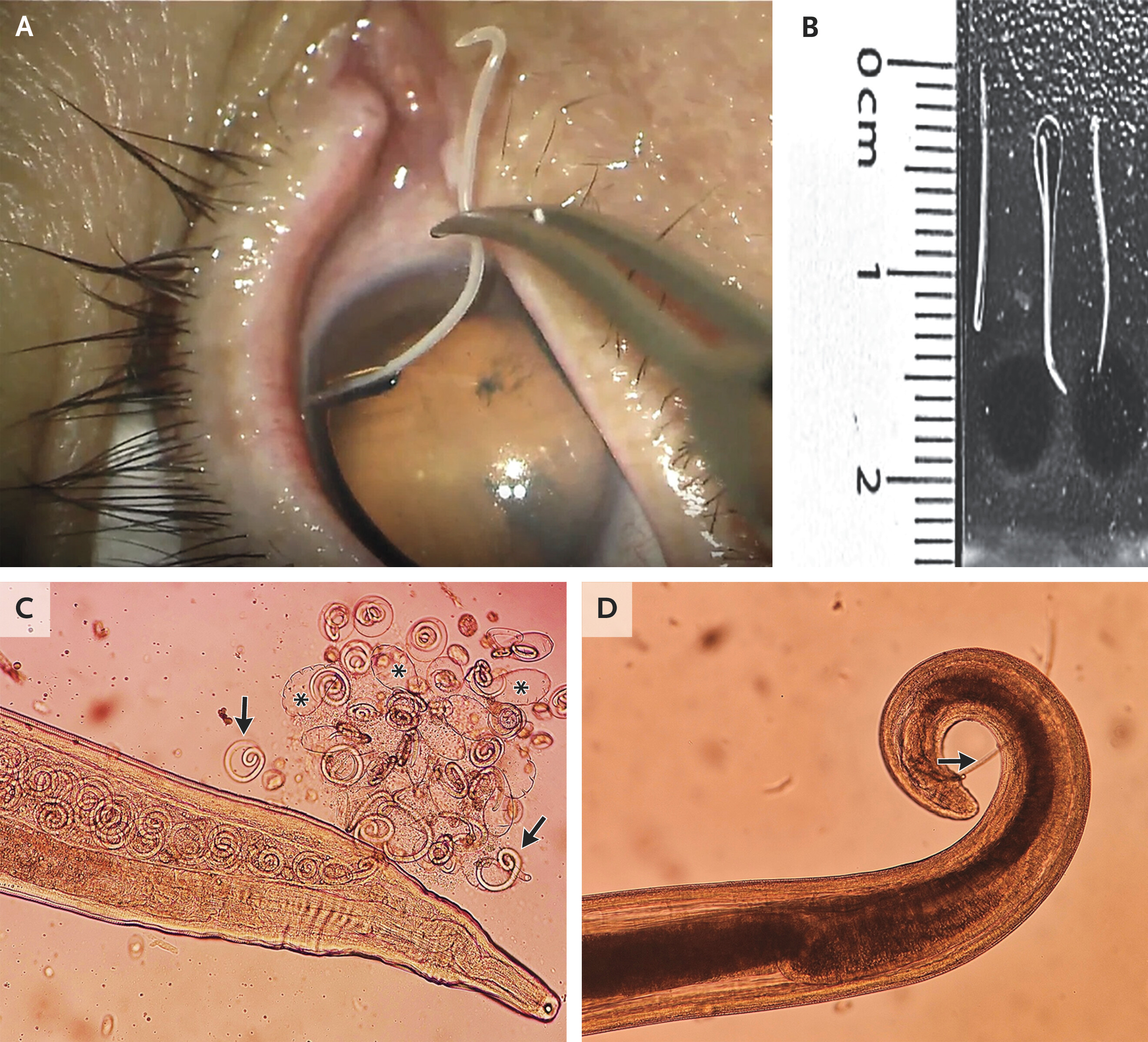
Credit: New England Journal of Medicine, 2026
In a recent case involving a man infected with these parasites, physicians removed adult worms from his eyes. Some of these female worms were notably swollen with embryonated eggs. Alarmingly, as they were extracted, coiled larvae began to emerge from some of them. Meanwhile, the male worms were identified by distinct structures used for mating.
The good news for the patient was that the complete removal of adult worms meant the end of the infection, eliminating the need for antiparasitic medications, even though some larvae remained. A follow-up appointment two months later confirmed his recovery, with all eye-related symptoms gone and no remaining worms.
Editor’s Take
This troubling case underscores the complexities of parasitic infections and their impact on human health. Understanding the lifecycle of such parasites can aid in developing preventive measures and effective treatments. For the medical community, cases like these highlight the significance of early diagnosis and intervention. The implications extend beyond health to raise awareness of hygiene and environmental factors that may facilitate such infections.
Source: arstechnica.com