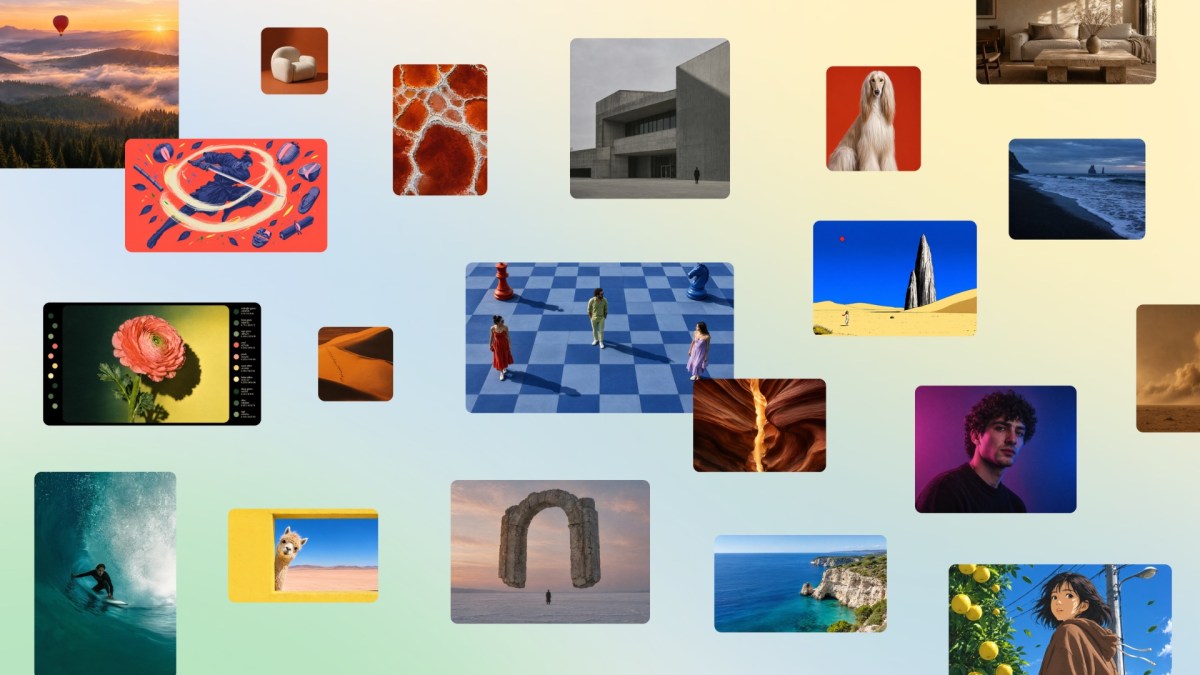

Canva has unveiled its inaugural image generation model, named Canva Craft, developed by its internal research team to compete with established models from tech giants such as Google, OpenAI, ByteDance, and Meta.
The innovative model operates in two phases. Initially, it interprets user prompts to create a detailed plan, encompassing elements like spatial relationships, relative scale, visual hierarchy, and text generation information. In the second phase, Canva Craft is capable of generating images with a resolution of up to 2K, in as many as 30 different aspect ratios to cater to various platforms.
According to the company, this method yields images that capture intricate object details and produce clear text. Users will enjoy the ability to make precise edits without disrupting other components of the image.
Notably, the model was trained not on standard photographs but on a library of human-designed templates from Canva, including layouts for posters, social media posts, presentations, infographics, menus, as well as typography-intensive designs.
This means images created with Canva Craft can be transformed into layered designs using Canva Magic, the platform’s image-to-design tool introduced last year. This new functionality reinforces Canva’s commitment to enhancing user experience within its suite of tools.
The new model is now accessible to all users on the Canva platform, found under the Dream Lab tab. Additionally, it will be integrated into the Canva API and will support image generation in third-party chatbots such as ChatGPT and Gemini through the company’s new MCP.
Previously, Canva utilized various image generation models, making this development particularly beneficial for cost management. The introduction of Canva Craft is expected to not only reduce API expenses but also enhance the quality and speed of output.
In a notable move last year, Canva acquired Leonardo.ai, a media generation platform, leveraging the expertise of its researchers to bolster its new image model.
Furthermore, the company is poised to launch two more versions of the model, referred to as Craftfast and Craft-ultrafast, aimed at providing cost-effective solutions.
Despite projecting an impressive $4 billion in revenue last year, Canva had to revise its growth forecast for 2026, leading to a notable decline in its valuation from $42 billion to $35 billion, as reported by analysts.
Editor’s Take
The release of Canva Craft marks a significant stride for the platform in its quest to enhance user capabilities and compete in the rapidly evolving field of AI-generated content. This development promises to empower users to create more detailed and tailored designs, catering to the growing demand for unique visual content. As businesses and developers adapt to these advancements, the implications for user creativity and workflow efficiency are substantial.
Source: techcrunch.com