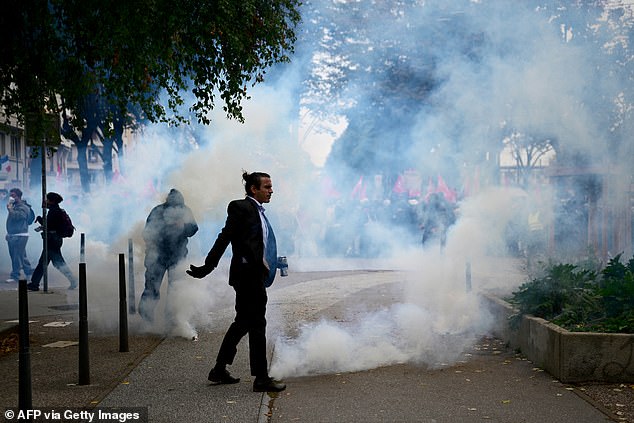

On Saturday, French law enforcement employed tear gas against demonstrators in an effort to curb violence during protests over the escalating cost of living. Authorities heightened security measures in major cities to prevent the disruptions witnessed the previous week.
In Lyon, riot police used tear gas to disperse approximately 150 protesters who attempted to block a road in a designated no-protest area. A 21-year-old student who joined the protest remarked, “The police are extremely proactive… They break up marches before they even happen.”
Beyond Lyon, authorities confiscated weapons and gas masks in anticipation of the protests, deploying around 70,000 riot officers nationwide. There is growing pressure on the government to maintain order following accusations of losing control in certain areas during the previous weekend’s violence, where town halls were attacked, shops looted, and buildings set ablaze.
So far, 135 arrests were reported nationwide on Saturday. In Paris, police discovered a variety of ‘prohibited items’ such as knives and batons, and conducted extensive checks aimed at deterring those with malicious intentions.
Members of the gilets jaunes movement joined students and trade unionists on the streets, while President Emmanuel Macron announced stricter regulations for upcoming protests. Similar demonstrations took place in other European cities, including Brussels and Tirana.
The protests saw mixed attendance reports; while organizers estimated around 26,000 participants in Orléans, police recorded closer to 13,000. In Nantes, the police utilized water cannons and tear gas to keep protesters from restricted areas.
Shops in Paris and other cities were boarded up ahead of expected unrest, and popular tourist sites like the Louvre and Orsay Museum were shut down. Major events such as a home match for PSG were rescheduled to Monday, with many metro stations also closed.
Despite the government crackdown, hundreds of protests were anticipated, with an online resource linked to the gilets jaunes outlining over 500 planned events. In Orléans, a significant deployment of police was present to ensure public safety as the right-wing Rassemblement National held a two-day congress in the city.
French soldiers and police were heavily deployed in central Paris and other major cities, countering the unrest that saw over 2,400 arrests last Saturday and many injuries, particularly among protesters and residents. Injuries caused by police actions have raised alarms, prompting calls for investigations and criticisms over the use of riot control measures.
The current policing strategy has come under scrutiny, with critics arguing that the use of riot gear and aggressive tactics may exacerbate tensions. Demands for a reconsideration of methods used during protests have intensified, reflecting a broader dissatisfaction with the government’s approach.
Editor’s Take
This escalation in protests reflects widespread discontent over economic conditions and policing tactics. The implications for public safety, government accountability, and civil rights are significant. As global attention turns to France’s handling of dissent, this could influence how authorities in other nations approach similar challenges.
Source: www.dailymail.com